

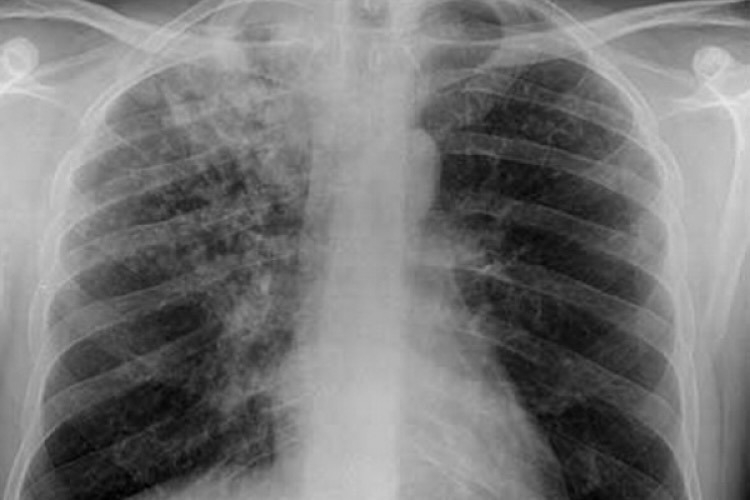
New TB diagnostics technologies to be implemented in Moldova

New technologies for diagnosing tuberculosis will be implemented in the Republic of Moldova. There will be used portative and mobile radiological equipment with artificial intelligence software that provides a preventive response during about 3 minutes so that the persons suspected of having tuberculosis are examined further, Valentina Vilc, coordinator of the National Tuberculosis Response Program, stated in a news conference held in connection with World TB Day, IPN reports.

Until the end of 2022, all the four reference laboratories, including those of the Transnistrian region, will be outfitted with equipment that enables to determine resistance to anti-TB medications during about two hours. The new devices enable to test susceptibility to first-line anti-TB medications and to second-line medications too. This allows promptly initiating treatment for drug-resistant tuberculosis, stated the coordinator.

As to the fact that Moldova continues to be among the top 30 countries with a high burden of drug-resistant tuberculosis, Valentina Vilc said that with the use of new technology, the diagnosis and treatment of TB became faster and easier. The implemented measures contribute to stopping the spread of tuberculosis in society. “The patients’ adherence to treatment and the treatment success rate grow,” stated the specialist.

Multidrug-resistant tuberculosis is a special form of TB infection caused by bacteria that are resistant to treatment with at least two of the most powerful first-line anti-TB medications, isoniazid and rifampin. Some forms of TB are also resistant to second-line medications, and are called extensively drug-resistant TB. Since September 2020, short treatment regimens for drug-resistant TB have been implemented in Moldova. Treatment is shortened to nine months, as opposed to 18-24 moths the previous years.


New TB diagnostics technologies to be implemented in Moldova

The overpriced purchase of a food warehouse intended for military personnel caused a loss of nearly three million euros to...

Acest material este disponibil doar pe bază de abonament.
Abonează-te pentru a avea acces la mai multe materiale și funcționalități exclusive!

0 FacebookTwitterPinterestEmail


New TB diagnostics technologies to be implemented in Moldova

New technologies for diagnosing tuberculosis will be implemented in the Republic of Moldova. There will be used portative and mobile radiological equipment with artificial intelligence software that provides a preventive response during about 3 minutes so that the persons suspected of having tuberculosis are examined further, Valentina Vilc, coordinator of the National Tuberculosis Response Program, stated in a news conference held in connection with World TB Day, IPN reports.

Until the end of 2022, all the four reference laboratories, including those of the Transnistrian region, will be outfitted with equipment that enables to determine resistance to anti-TB medications during about two hours. The new devices enable to test susceptibility to first-line anti-TB medications and to second-line medications too. This allows promptly initiating treatment for drug-resistant tuberculosis, stated the coordinator.

As to the fact that Moldova continues to be among the top 30 countries with a high burden of drug-resistant tuberculosis, Valentina Vilc said that with the use of new technology, the diagnosis and treatment of TB became faster and easier. The implemented measures contribute to stopping the spread of tuberculosis in society. “The patients’ adherence to treatment and the treatment success rate grow,” stated the specialist.

Multidrug-resistant tuberculosis is a special form of TB infection caused by bacteria that are resistant to treatment with at least two of the most powerful first-line anti-TB medications, isoniazid and rifampin. Some forms of TB are also resistant to second-line medications, and are called extensively drug-resistant TB. Since September 2020, short treatment regimens for drug-resistant TB have been implemented in Moldova. Treatment is shortened to nine months, as opposed to 18-24 moths the previous years.


450 thousand pages of historical newspapers are available in digital format from Tuesday, July 21. According to the National Archives Agency, the collection includes publications issued between the years 1874 and 2010, from the Tsarist, interwar, Soviet and post-Soviet periods. This can be consulted for free on the computers in the study room of the institution, reports IPN.

Among the publications included are the complete collection of the newspaper Official Monitor of the Bessarabia Governorate, published between the years 1874 and 1917. Also available is the full collection of Cuvantul Moldovenesc, one of the most important newspapers of the national movement during the Tsarist Empire and the interwar years, as well as the collection Literature and Art, which includes editions starting from the year 1977.

The collection also includes all editions of the newspapers Moldova Suverana, for the period 1990-2010, and Независимая Молдова, published between the years 1994 and 2010. According to ANA, the entire ARCANUM database contains approximately 25 million pages of publications in Romanian, out of the over 100 million pages of newspapers from Eastern European countries.

The new materials added to the ARCANUM database come from the collections held by the National Archives Agency. These include publications in Romanian and Russian. The materials can be consulted for free from the ANA study room, located in the headquarters of the institution, on Gheorghe Asachi Street 67B in Chisinau. Those who wish to study the publications from home must create an account directly on the ARCANUM platform and can opt for one of the available subscriptions. The platform offers both free access, with limited features, and paid subscriptions, which allow the consultation and download of digitized collections.

0 FacebookTwitterPinterestEmail


1 IANUARIE, 2025
1 IANUARIE, 2025