

National legislation does not offer guarantees to foreign asylum seekers, study

 The national mechanisms that regulate the status of foreigners are centered on the identification of reasons for distancing foreigners from Moldova, not on the ensuring of their protection. The national legislation does not offer guarantees to asylum seekers, while the administrative bodies often abuse their powers, says a study carried out by the Ombudsman’s Office in cooperation with the Lawyers’ Law Center, IPN reports.

According to the study, the faults of the national legislation allow taking foreigners back to areas where they risk being subject to torture, inhuman and degrading treatment. The legal provisions on the status and regime of foreigners and the commitments undertaken by ratifying international treaties in this regard are not observed. The Border Police use different measures to detain foreigners at the border. The principle of non-refoulement according to the Geneva Convention is not always respected and Moldova can be thus accused of violating the accord.

The study shows that the largest number of violations are committed at the border crossing point “Chisinau International Airport”. The applications for asylum are most of the times ignored and no access is offered to asylum procedures. The persons are returned immediately or are detained on the airport’s territory for a longer period.

Lawyers’ Law Center executive director Oleg Palii, co-author of the study, said the Administrative Code took effect on April 1 this year. Almost five months have passed since then, but the border legislation and the legislation on foreigners haven’t been yet adjusted to the requirements of the Code. The adjustment of the legislative and normative framework would eliminate some of the identified shortcomings.

Ombudsman Mihai Cotorobai said the expulsion of the Turkish teachers last September was the apogee of the serious violations of the national and international legislation on the status and regime of foreigners on the territory of a state. As regards the protection of foreign citizens, the Moldovan authorities take measures to swifter get rid of these by different methods, not to offer them assistance.

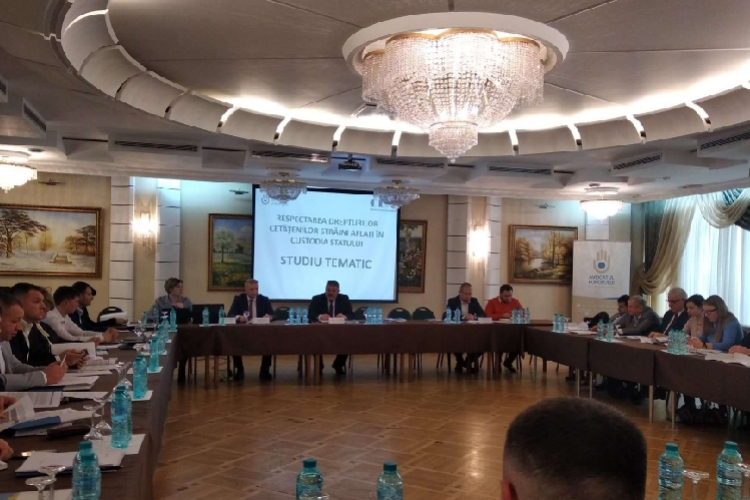
The study of the observance of the rights of foreigners in state custody was launched on the eve of the International Migrants Day that is marked on December 18.

Mihai Cotorobai despre protectia strainilor in Moldova


Official documents issued in the Republic of Moldova and Germany may now be used in each other’s countries with only an apostille, without the need for the legalization procedure. The measure enters into force following the Federal Republic of Germany’s withdrawal of the reservation it made in 2007 when the Republic of Moldova acceded to the Hague Apostille Convention, IPN reports.

The Ministry of Foreign Affairs states that the decision was made following steps taken by Deputy Prime Minister Mihai Popsoi, Minister of Foreign Affairs, during his May 18–19 meeting with his German counterpart, Johann David Wadephul.

The ministry emphasizes that the new system will eliminate the need to visit multiple institutions or diplomatic missions to have documents legalized, which will reduce both the time required and the costs incurred by citizens. The simplified procedure will apply to official documents such as birth, marriage, divorce, and death certificates, criminal records, academic diplomas, and diploma supplements.

The Hague Convention on the Apostille entered into force for the Republic of Moldova on March 16, 2007. With its implementation in relations with Germany, the Republic of Moldova will benefit from the same simplified procedure for the recognition of official documents as it does with all 130 states and entities that are parties to the convention.

0 FacebookTwitterPinterestEmail


National legislation does not offer guarantees to foreign asylum seekers, study

 The national mechanisms that regulate the status of foreigners are centered on the identification of reasons for distancing foreigners from Moldova, not on the ensuring of their protection. The national legislation does not offer guarantees to asylum seekers, while the administrative bodies often abuse their powers, says a study carried out by the Ombudsman’s Office in cooperation with the Lawyers’ Law Center, IPN reports.

According to the study, the faults of the national legislation allow taking foreigners back to areas where they risk being subject to torture, inhuman and degrading treatment. The legal provisions on the status and regime of foreigners and the commitments undertaken by ratifying international treaties in this regard are not observed. The Border Police use different measures to detain foreigners at the border. The principle of non-refoulement according to the Geneva Convention is not always respected and Moldova can be thus accused of violating the accord.

The study shows that the largest number of violations are committed at the border crossing point “Chisinau International Airport”. The applications for asylum are most of the times ignored and no access is offered to asylum procedures. The persons are returned immediately or are detained on the airport’s territory for a longer period.

Lawyers’ Law Center executive director Oleg Palii, co-author of the study, said the Administrative Code took effect on April 1 this year. Almost five months have passed since then, but the border legislation and the legislation on foreigners haven’t been yet adjusted to the requirements of the Code. The adjustment of the legislative and normative framework would eliminate some of the identified shortcomings.

Ombudsman Mihai Cotorobai said the expulsion of the Turkish teachers last September was the apogee of the serious violations of the national and international legislation on the status and regime of foreigners on the territory of a state. As regards the protection of foreign citizens, the Moldovan authorities take measures to swifter get rid of these by different methods, not to offer them assistance.

The study of the observance of the rights of foreigners in state custody was launched on the eve of the International Migrants Day that is marked on December 18.

Mihai Cotorobai despre protectia strainilor in Moldova

Maritime schools could be opened in Moldova following the full transposition of relevant European legislation. The statement was made by Deputy Prime Minister Vladimir Bolea, Minister of Infrastructure and Regional Development, who noted that there is growing interest in such programs, including from Ukrainian citizens affected by the war, according to IPN.

Vladimir Bolea stated that the new regulations will allow seaman’s books to be issued based on studies completed in the Republic of Moldova at authorized institutions.

The minister told the press that, at present, no ships are sailing under the flag of the Republic of Moldova, but the authorities are working to transpose European legislation and develop the legal framework necessary for the development of this sector.

According to him, the state and the Naval Agency could generate significant revenue both from ships sailing under the Moldovan flag and from institutions that train seafarers.

0 FacebookTwitterPinterestEmail


1 IANUARIE, 2025
1 IANUARIE, 2025