

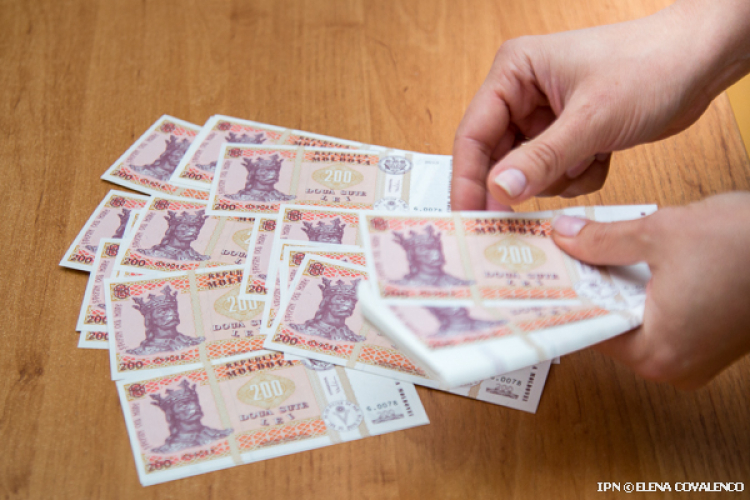
Informal financing of parties – a widespread practice in Moldova, ADEPT study

Informal financing of political parties remains a widespread practice, and Moldova is one of the most exposed countries in the region to external influence in an electoral context. This is one of the findings of the study conducted by the ADEPT Association, reports IPN.

“The aim of the research was to identify the factors that weaken the democratic and informational system in Moldova, and the analysis was conducted on five major blocks, which encompass all the areas that can be affected,” explained Petru Culeac, a member of Adept and one of the authors of the study.

The study “Mapping the premises and incentives of FIMI in the electoral context in the Republic of Moldova” has elucidated that the transparency of legislation regarding party financing remains limited, and the control authorities, such as the Central Electoral Commission and the National Integrity Agency, do not have sufficient tools to verify the origin of the declared funds. Many resources are masked through small donations, foundations or public associations.

“I thought we knew and had seen it all, but in 2023 came innovations in electoral corruption, through the introduction of new technologies,” commented the director of ADEPT, Igor Botan.

According to the study, some political formations have been identified with indirect external sources of funding, concealed through NGOs, advertising contracts, or repeated donations from the same donors in the regional business environment, especially in the south and north of the country.

The report also mentions that only 20% of the monitored media institutions adhere to the standards of editorial balance during the election period.

The authors of the study recommend modernizing the legal framework regarding the control of party financing, real-time publication of electoral donations, as well as interconnecting tax databases to verify financial sources.


Official documents issued in the Republic of Moldova and Germany may now be used in each other’s countries with only an apostille, without the need for the legalization procedure. The measure enters into force following the Federal Republic of Germany’s withdrawal of the reservation it made in 2007 when the Republic of Moldova acceded to the Hague Apostille Convention, IPN reports.

The Ministry of Foreign Affairs states that the decision was made following steps taken by Deputy Prime Minister Mihai Popsoi, Minister of Foreign Affairs, during his May 18–19 meeting with his German counterpart, Johann David Wadephul.

The ministry emphasizes that the new system will eliminate the need to visit multiple institutions or diplomatic missions to have documents legalized, which will reduce both the time required and the costs incurred by citizens. The simplified procedure will apply to official documents such as birth, marriage, divorce, and death certificates, criminal records, academic diplomas, and diploma supplements.

The Hague Convention on the Apostille entered into force for the Republic of Moldova on March 16, 2007. With its implementation in relations with Germany, the Republic of Moldova will benefit from the same simplified procedure for the recognition of official documents as it does with all 130 states and entities that are parties to the convention.

0 FacebookTwitterPinterestEmail


Informal financing of parties – a widespread practice in Moldova, ADEPT study

Informal financing of political parties remains a widespread practice, and Moldova is one of the most exposed countries in the region to external influence in an electoral context. This is one of the findings of the study conducted by the ADEPT Association, reports IPN.

“The aim of the research was to identify the factors that weaken the democratic and informational system in Moldova, and the analysis was conducted on five major blocks, which encompass all the areas that can be affected,” explained Petru Culeac, a member of Adept and one of the authors of the study.

The study “Mapping the premises and incentives of FIMI in the electoral context in the Republic of Moldova” has elucidated that the transparency of legislation regarding party financing remains limited, and the control authorities, such as the Central Electoral Commission and the National Integrity Agency, do not have sufficient tools to verify the origin of the declared funds. Many resources are masked through small donations, foundations or public associations.

“I thought we knew and had seen it all, but in 2023 came innovations in electoral corruption, through the introduction of new technologies,” commented the director of ADEPT, Igor Botan.

According to the study, some political formations have been identified with indirect external sources of funding, concealed through NGOs, advertising contracts, or repeated donations from the same donors in the regional business environment, especially in the south and north of the country.

The report also mentions that only 20% of the monitored media institutions adhere to the standards of editorial balance during the election period.

The authors of the study recommend modernizing the legal framework regarding the control of party financing, real-time publication of electoral donations, as well as interconnecting tax databases to verify financial sources.


Maritime schools could be opened in Moldova following the full transposition of relevant European legislation. The statement was made by Deputy Prime Minister Vladimir Bolea, Minister of Infrastructure and Regional Development, who noted that there is growing interest in such programs, including from Ukrainian citizens affected by the war, according to IPN.

Vladimir Bolea stated that the new regulations will allow seaman’s books to be issued based on studies completed in the Republic of Moldova at authorized institutions.

The minister told the press that, at present, no ships are sailing under the flag of the Republic of Moldova, but the authorities are working to transpose European legislation and develop the legal framework necessary for the development of this sector.

According to him, the state and the Naval Agency could generate significant revenue both from ships sailing under the Moldovan flag and from institutions that train seafarers.

0 FacebookTwitterPinterestEmail


1 IANUARIE, 2025
1 IANUARIE, 2025