

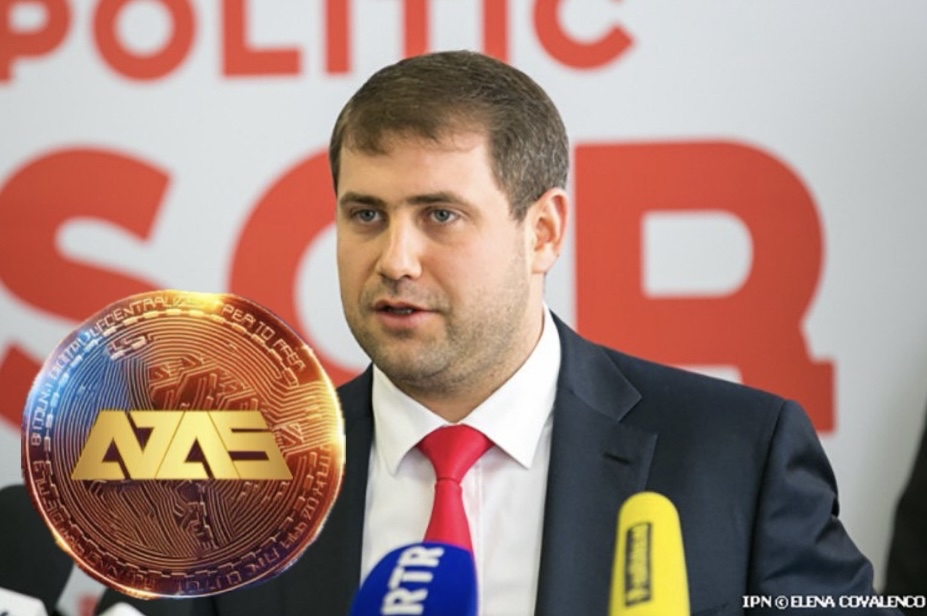
Ilan Shor’s companies, affiliated with Russia, have been sanctioned by the United Kingdom as well, following the United States

The United Kingdom of Great Britain and Northern Ireland has imposed sanctions against several entities affiliated with the Russian Federation and the Kyrgyz Republic. Among them are companies belonging to oligarch Ilan Shor, which aim to conceal real money flows and avoid Western sanctions against Russia. These are the companies “A7”, “A71” and “A7-AGENT”, about which IPN recently wrote.

“If the Kremlin thinks it can hide its desperate attempts to soften the blow of our sanctions by laundering transactions through dubious crypto networks, it is sorely mistaken,” stated the British Minister for Europe and North America, Stephen Doughty.

According to British authorities, the sanctioned companies have used financial infrastructures, such as cryptocurrencies, to conceal the real source of the funds and to facilitate Russia’s financial transfers, bypassing the imposed international sanctions.

One way in which these entities contributed to the evasion of sanctions was by creating and operating the Grinex cryptocurrency exchange – created by employees of the Garantex platform, after it was subjected to international sanctions – with the main purpose of continuing Garantex operations, under a new identity, that of facilitating the transfer of billions of dollars in cryptocurrencies.

Therefore, the A7A5 token was created – a stablecoin created by the “A7” company, the main holder being Ilan Șor, and the second major shareholder is the Russian state bank Promsvyazbank, already under international sanctions. Its basic principle is simple: 1 (coin) A7A5 = 1 Russian ruble. Officially, it is promoted as a “new financial technology”, but in reality it represents a means of conducting transactions bypassing restrictions.

In July 2025, Elliptic reported a spectacular increase in transaction volumes: over $1 billion per day, with a total volume exceeding $41 billion, and the token’s market capitalization tripled, reaching $521 million in just two weeks.

However, shortly after the US imposed sanctions on these companies on August 14, the A7A5 market price fell sharply by 13%. The shock to the cryptocurrency triggered a chain reaction: the prices and trading volumes of other digital assets, including ETH (against which A7A5 is traded) and BTC, fell, and exchanges connected to A7A5 reported reduced liquidity and suspension of operations.


The Central Court of Appeal has ordered the dissolution of the parties “Șansă”, “Renastere”, “Victorie” and “Alternative and Salvation Force of Moldova”, finding that they are successors of the “Shor” Party, declared unconstitutional in 2023. The court ruled after examining the requests submitted by the Ministry of Justice, reports IPN.

In other cases, the Court of Appeal has ordered the limitation of the activities of the FASM Party and the “Renastere” Party for a period of six months. At the same time, the activity of the “Moldova Mare” Party was limited for 12 months.

The leader of the “Șansă” Party, Alexei Lungu, present at the court hearing, criticized the court’s decision and declared that the party will challenge the decision at the Supreme Court of Justice, and subsequently, if necessary, will appeal to the European Court of Human Rights.

The decisions of the Court of Appeal can be contested under the conditions provided by law.

0 FacebookTwitterPinterestEmail


Ilan Shor’s companies, affiliated with Russia, have been sanctioned by the United Kingdom as well, following the United States

The United Kingdom of Great Britain and Northern Ireland has imposed sanctions against several entities affiliated with the Russian Federation and the Kyrgyz Republic. Among them are companies belonging to oligarch Ilan Shor, which aim to conceal real money flows and avoid Western sanctions against Russia. These are the companies “A7”, “A71” and “A7-AGENT”, about which IPN recently wrote.

“If the Kremlin thinks it can hide its desperate attempts to soften the blow of our sanctions by laundering transactions through dubious crypto networks, it is sorely mistaken,” stated the British Minister for Europe and North America, Stephen Doughty.

According to British authorities, the sanctioned companies have used financial infrastructures, such as cryptocurrencies, to conceal the real source of the funds and to facilitate Russia’s financial transfers, bypassing the imposed international sanctions.

One way in which these entities contributed to the evasion of sanctions was by creating and operating the Grinex cryptocurrency exchange – created by employees of the Garantex platform, after it was subjected to international sanctions – with the main purpose of continuing Garantex operations, under a new identity, that of facilitating the transfer of billions of dollars in cryptocurrencies.

Therefore, the A7A5 token was created – a stablecoin created by the “A7” company, the main holder being Ilan Șor, and the second major shareholder is the Russian state bank Promsvyazbank, already under international sanctions. Its basic principle is simple: 1 (coin) A7A5 = 1 Russian ruble. Officially, it is promoted as a “new financial technology”, but in reality it represents a means of conducting transactions bypassing restrictions.

In July 2025, Elliptic reported a spectacular increase in transaction volumes: over $1 billion per day, with a total volume exceeding $41 billion, and the token’s market capitalization tripled, reaching $521 million in just two weeks.

However, shortly after the US imposed sanctions on these companies on August 14, the A7A5 market price fell sharply by 13%. The shock to the cryptocurrency triggered a chain reaction: the prices and trading volumes of other digital assets, including ETH (against which A7A5 is traded) and BTC, fell, and exchanges connected to A7A5 reported reduced liquidity and suspension of operations.


Three people were detained, and seven others are being investigated at large in a case of abuse of office and fraudulently obtaining foreign funds. During the investigation, officers of the National Anticorruption Center conducted about 30 searches, after allegedly discovering a scheme to favor certain companies in public tenders, with an estimated damage of over 14.5 million lei, IPN reports.

According to the CNA, the scheme was allegedly implemented starting in 2020 by a representative of a company specializing in the design of water supply and sewage systems. He allegedly developed the technical documentation and specifications for public procurement so that they corresponded to the products of a specific supplier.

Consequently, the contracts were allegedly awarded to predetermined companies, and the contracting authorities purchased materials and equipment at prices higher than those that would have been formed under real competition.

The CNA states that the scheme would have caused considerable damage to the state budget and external funds intended for water supply and sewage projects. The investigation continues to establish all the circumstances and identify the individuals involved.

0 FacebookTwitterPinterestEmail


1 IANUARIE, 2025
1 IANUARIE, 2025