

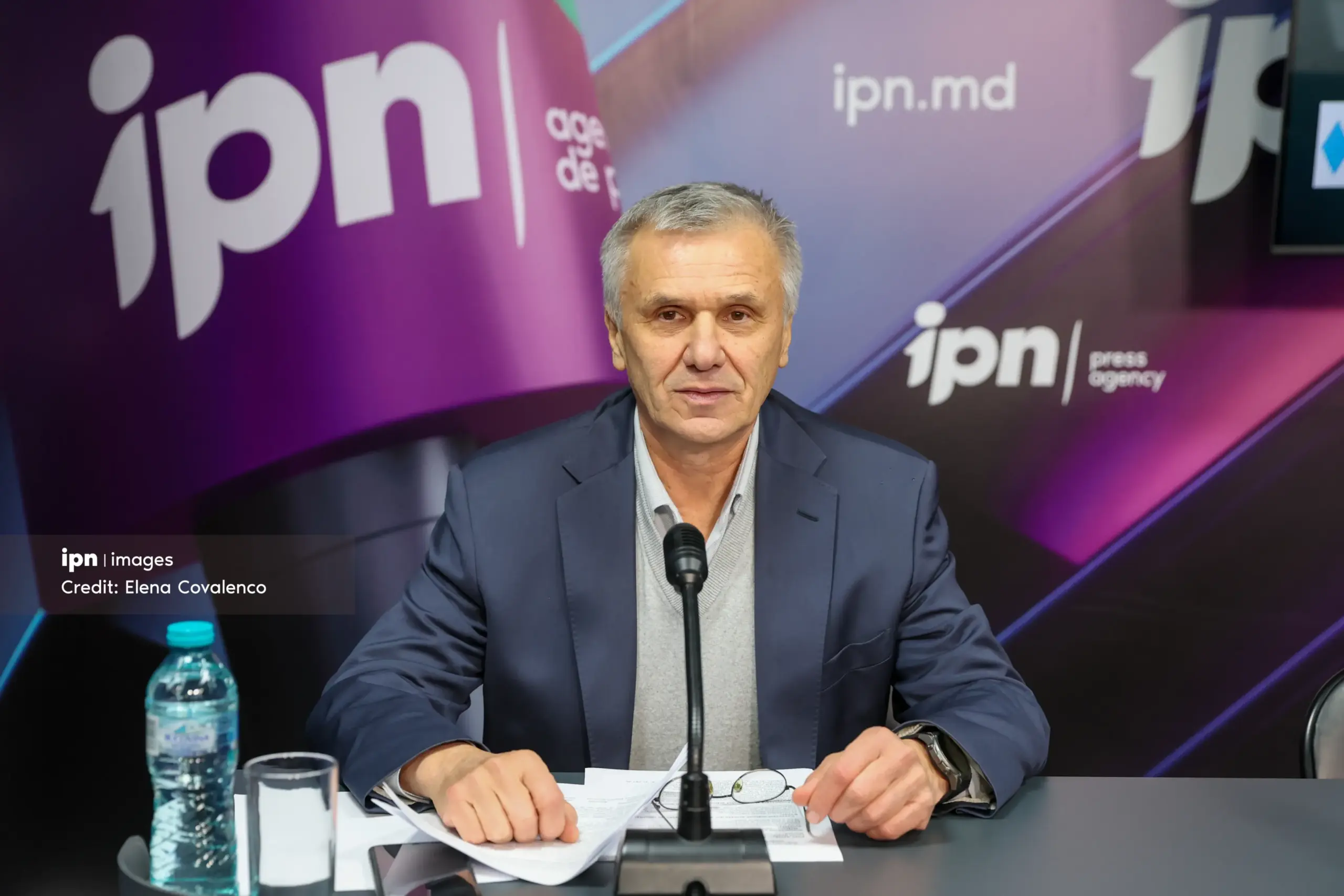
Igor Botan: Russia is using the bolsheviks’ methods of destabilization

The Russian Federation continues to use destabilization tactics similar to those employed by the Bolshevik regime during the interwar period to justify its territorial claims, albeit under different pretexts. Expert Igor Botan expressed this view during the public debate “The Tatar Bunar Uprising as a Model of External Instigation,” organized by the IPN News Agency. He argued that the events of a century ago should also be examined in light of Russia’s current imperial ambitions, as it seeks to justify its territorial claims by invoking so-called historical rights.

The expert drew a parallel between the Tatarbunary uprising of 1924 and the events in Crimea, where subversive activities by local groups preceded Russia’s military intervention. In his view, local actions were used in both cases to create the appearance of an internal revolt that would later serve to justify Russian intervention. “The conclusion I draw, at least, is that the methods are the same. Of course, they are dressed up in different justifications,” Igor Botan said.

He pointed out that, even today, some political parties in the Republic of Moldova promote Soviet historiographical interpretations of the Tatar Bunar uprising, portraying it as a revolt by workers and peasants against the Romanian administration. According to the expert, these narratives are brought back into the public eye every September.

Igor Boțan believes that such interpretations must be examined in the context of Russia’s policy of laying claim to territories it considers part of the former Russian Empire. He referred to Vladimir Putin’s remarks about reuniting Russian lands and warned that such claims are also backed by certain political groups in the Republic of Moldova.

“What matters is that Russia wants to reannex territories it considers to have once been part of the Russian Empire and over which it now claims certain rights. But certain groups are being used as bait look at how they talk about Ukraine and the Republic of Moldova. There are political parties that support such claims,” the expert noted.

The expert also drew attention to the limited public interest in the Republic of Moldova in the Tatar Bunar uprising. He said he was unsure how extensively the event was covered and analyzed in school history textbooks, and stressed the need for a better understanding of this historical episode, which remains highly relevant today.

The public debate “The Tatar Bunar Uprising as a Model of External Instigation” is the 67th event in the series “The Impact of the Past on Trust-Building and Peacebuilding Processes.” The project is supported by Germany’s Hanns Seidel Foundation.


The Public Health Emergency Operations Centre has been equipped with IT equipment, modern communication tools and emergency response kits. According to the authorities, these will help detect and manage health emergencies more quickly, including outbreaks of infectious diseases. The donation, worth more than $500,000, was provided through a project funded by the US Government, IPN reports.

Speaking at the equipment handover ceremony, Nicolae Jelamschi, Director of the National Agency for Public Health (ANSP), said that the equipment provided to the agency’s Operations Centre would enable its specialists to respond more effectively to public health threats and make data-driven decisions.

Health Minister Alexandru Gasnas said that the 30 members of the centre’s rapid response teams will be provided with emergency response kits, communication equipment and uniforms. These will help ensure they arrive better prepared at the scene of an emergency.

The United States Ambassador to the Republic of Moldova, Joseph Burkhalter, noted that the support provided to Moldova is part of the U.S. government’s commitment to strengthening global health security. The diplomat emphasized that the main goal is to enhance the country’s capacity to prevent and combat infectious diseases.

The donation is part of the “EpiC” project, implemented with U.S. support to prevent, detect, and respond effectively to epidemiological threats.

0 FacebookTwitterPinterestEmail


Igor Botan: Russia is using the bolsheviks’ methods of destabilization

The Russian Federation continues to use destabilization tactics similar to those employed by the Bolshevik regime during the interwar period to justify its territorial claims, albeit under different pretexts. Expert Igor Botan expressed this view during the public debate “The Tatar Bunar Uprising as a Model of External Instigation,” organized by the IPN News Agency. He argued that the events of a century ago should also be examined in light of Russia’s current imperial ambitions, as it seeks to justify its territorial claims by invoking so-called historical rights.

The expert drew a parallel between the Tatarbunary uprising of 1924 and the events in Crimea, where subversive activities by local groups preceded Russia’s military intervention. In his view, local actions were used in both cases to create the appearance of an internal revolt that would later serve to justify Russian intervention. “The conclusion I draw, at least, is that the methods are the same. Of course, they are dressed up in different justifications,” Igor Botan said.

He pointed out that, even today, some political parties in the Republic of Moldova promote Soviet historiographical interpretations of the Tatar Bunar uprising, portraying it as a revolt by workers and peasants against the Romanian administration. According to the expert, these narratives are brought back into the public eye every September.

Igor Boțan believes that such interpretations must be examined in the context of Russia’s policy of laying claim to territories it considers part of the former Russian Empire. He referred to Vladimir Putin’s remarks about reuniting Russian lands and warned that such claims are also backed by certain political groups in the Republic of Moldova.

“What matters is that Russia wants to reannex territories it considers to have once been part of the Russian Empire and over which it now claims certain rights. But certain groups are being used as bait look at how they talk about Ukraine and the Republic of Moldova. There are political parties that support such claims,” the expert noted.

The expert also drew attention to the limited public interest in the Republic of Moldova in the Tatar Bunar uprising. He said he was unsure how extensively the event was covered and analyzed in school history textbooks, and stressed the need for a better understanding of this historical episode, which remains highly relevant today.

The public debate “The Tatar Bunar Uprising as a Model of External Instigation” is the 67th event in the series “The Impact of the Past on Trust-Building and Peacebuilding Processes.” The project is supported by Germany’s Hanns Seidel Foundation.


The Council of the European Union has decided to impose sanctions on 30 individuals and two entities for spreading foreign information manipulation and disinformation. According to a Council press release, the list includes the Social Design Agency, a Moscow-based public relations firm that carries out large-scale projects funded and overseen by the Kremlin administration, IPN reports.

The Social Design Agency (SDA) systematically manipulates public opinion through the media and social networks and spreads pro-Russian propaganda and disinformation, according to the Council’s statement. The SDA is also accused of orchestrating disinformation campaigns targeting EU member states, such as France and Germany, and European institutions, as well as seeking to undermine European support for Ukraine. These manipulation and disinformation operations also took place during the European Parliament elections.

The list includes 24 people working for the Social Design Agency, as well as propagandists such as television personalities Vitaly Yeliseyev and Pyotr Marchenko, military analyst Yuri Podolyaka, and Russia Today journalist Chay Bowes. All are accused of manipulation and spreading narratives that legitimize and support Russia’s war of aggression against Ukraine.

The Council’s decision to impose sanctions on those responsible for hybrid attacks against EU member states and partner countries comes amid an increase in Russia’s hybrid activities aimed at destabilising societies across Europe, the statement further notes.

The list also includes the Russian hacker group Noname057(16), which is responsible for attacks on government institutions, critical infrastructure and private companies in Ukraine, the United States and EU member states. Within the EU, Noname057(16) has targeted websites and portals in the financial, energy and transport sectors, the Council of the EU notes.

Everyone on the list will have their assets frozen and will be barred from entering the EU, even in transit. In addition, EU citizens and companies are prohibited from transferring funds to them, directly or indirectly.
All sanctions have been published in the Official Journal of the European Union.

The framework for imposing sanctions in response to Russia’s destabilising actions was established in October 2024. It targets all those involved in Russian government actions and policies that undermine or threaten democracy, the rule of law, and the stability and security of the European Union and its member states. The sanctions regime also covers those responsible for hybrid activities targeting partner countries and international organisations. With the sanctions package adopted on Monday, the European Union’s blacklist now includes a total of 111 individuals and 21 companies.

0 FacebookTwitterPinterestEmail


1 IANUARIE, 2025
1 IANUARIE, 2025