

Foreign official language

IPN analysis: Which is yet the official language – Moldovan or Romanian? This symptomatic question for our society becomes more ‘acute’ before the Our Language holiday. In some corners of our country, where the language of the Moldovan nation is the least spread, the day of August 31 has become an occasion for asking another, more important question: has the official language a future?

Region with largest number of Russian speakers

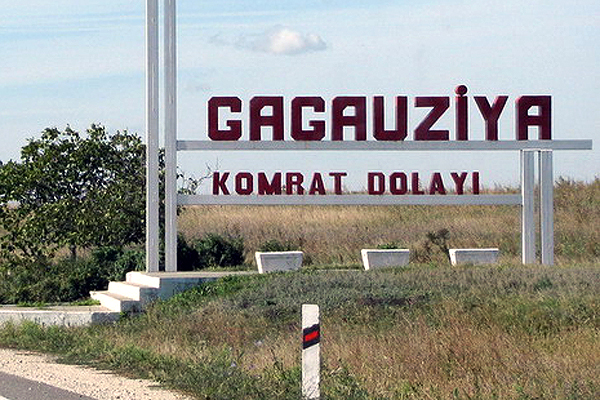
The Gagauz autonomous unit is known as the region with the largest number of Russian speakers in Moldova, where the majority of the population does not know the official language (in order not to distract attention and not to develop the subject of the correct name, I consciously chose to use the name of ‘official language’ in this article, allowing everyone to interpret this phrase). The given assertion is correct only partially. In reality, judging by the opinion polls, most of the residents of the region consider that Gagauz is their mother tongue. As regards the official language, it is indeed hard to find a person with a good command of it in this region.

According to statistics, there are about 7,500 Moldovans in Gagauzia. This is less than 5% of the region’s population of about 160,000. The official language is studied in all the education institutions of the region. However, the subjects are taught in the official language only at two private Moldovan-Turkish high schools and at two state high schools. It is thus not surprising that the people here know the official language the least compared with the people in other regions of Moldova.

Obligation to know and obligation to help

The ‘linguistic problem’ exists here and the authorities of the region do not hide this. The General Education Division of the Executive Committee of Gagauzia provides two explanations for the insufficient spread of the official language – inexistence of linguistic environment and the inappropriate preparedness of teachers, for many of whom the official language is not the mother tongue. Certain progress has been made over the last few years as regards the qualification of teachers, but no linguistic environment has been yet created.

The senior authorities of Gagauzia admit that knowledge of the official language is an obligation for every citizen. But they remind about the obligations of the state. According to the Governor of Gagauzia Mihail Formuzal, who stated his opinion in an interview for IPN earlier, the country’s authorities, before imposing such conditions on the people, are obligated to help all those who want to study the official language to do this.

“We prepare by ourselves all the official language studying programs. The official Chisinau provides practically no support in this respect. There are no state programs for teaching the elderly people. No financial assistance is offered for attracting young teachers of Moldovan nationality to Gagauzia,” he stated.

But the administration of the autonomous region is rather optimistic in this sense. As Formuzal stated, the situation in the region can change, but not in the immediate future.

“We realize that knowledge of the official language is first of all a matter concerning the competitiveness of our youth. Without this knowledge, our children will encounter difficulties in making a career. That’s why we count on our youth and make effort to create the necessary conditions,” the Gagauz leader said in the interview for IPN.

A new strategy is needed

Knowledge of the official language by the population represents one of the important factors of the unity and integrity of our country. From this viewpoint, it’s hard not to agree with the assertion that the official language should be first all supported and spread by the Government of Moldova.   

The realities in Gagauzia and other regions of the country point to the necessity of reviewing the policy regarding the promotion of the official language among the national minorities. What is more efficient in this matter: the constraining atmosphere and the patriotic-caricaturist appeals or the economic motivation? I think the formula for a successful strategy is on the surface. The most important thing is for the authorities to want to work the strategy out and to implement it.

For the time being, we have what we have. According to the Constitution, Moldovan is the official language of Moldova. It is one of the three official languages on the territory of Gagauzia, which is an inalienable part of Moldova. However, the given language is in fact a foreign language for the absolute majority of the residents of the Gagauz autonomous unit.

Veaceslav Craciun, for IPN


The municipality of Balti has over 1,400 hectares of land recorded in its accounting, valued at around 3 billion lei, but the property rights are only registered for about 860 hectares. At the same time, the local authorities do not have a complete record of the patrimony, and some lands are undervalued by over 19 million lei. These findings are contained in the Court of Accounts’ report on the financial audit of the municipality for the year 2025, reports IPN.

The auditors identified issues also with the record of assets transferred to the management of enterprises and municipal institutions, valued at over 911 million lei. Additionally, public infrastructure worth nearly 186 million lei was incorrectly recorded, and for fixed assets of about 233 million lei, depreciation was not calculated for the period 2017-2025.

Representatives of the Balti City Hall have stated that the municipality will inventory its assets and take measures for their registration. However, the Court of Accounts has warned that similar problems recur and require an approach at the level of the entire municipal heritage.

The audit revealed deficiencies in public procurement as well. In one case, similar services worth 895 thousand lei were contracted on the same day through seven small-value contracts, which presents a risk of dividing the acquisition. For other works and services worth over 55 million lei, the City Hall would not have sufficiently justified their necessity.

In the case of some road maintenance contracts, auditors found that only 42 out of the initially planned 289 types of works were carried out. Moreover, in another case, asphalt works were paid at a higher price than the one stipulated in the contract, generating additional payments of approximately 136 thousand lei. The city hall maintains that the difference was caused by the application of a thicker layer of asphalt.

The Court of Auditors also noted the lack of sufficient mechanisms for monitoring the wastewater treatment system concession contract. According to the audit, the confirmed investments for the verified period were approximately 31.3 million lei less than anticipated. The City Hall states that it is discussing with the private partner the return of the sewerage service to the municipality’s management.

Uncertainties were also found in the case of a debt of approximately 32 million lei for the accommodation of refugees at the Balti Hotel. The Ministry of Labor and Social Protection maintains that some expenses were not eligible or did not have supporting documents, while the City Hall says it is trying to clarify the situation.

Following the audit, the Court of Auditors issued an adverse opinion on the financial reports of the city of Balti, noting that the identified issues affect the evidence of assets, expenditures, and the organization of accounting.

0 FacebookTwitterPinterestEmail


Foreign official language

IPN analysis: Which is yet the official language – Moldovan or Romanian? This symptomatic question for our society becomes more ‘acute’ before the Our Language holiday. In some corners of our country, where the language of the Moldovan nation is the least spread, the day of August 31 has become an occasion for asking another, more important question: has the official language a future?

Region with largest number of Russian speakers

The Gagauz autonomous unit is known as the region with the largest number of Russian speakers in Moldova, where the majority of the population does not know the official language (in order not to distract attention and not to develop the subject of the correct name, I consciously chose to use the name of ‘official language’ in this article, allowing everyone to interpret this phrase). The given assertion is correct only partially. In reality, judging by the opinion polls, most of the residents of the region consider that Gagauz is their mother tongue. As regards the official language, it is indeed hard to find a person with a good command of it in this region.

According to statistics, there are about 7,500 Moldovans in Gagauzia. This is less than 5% of the region’s population of about 160,000. The official language is studied in all the education institutions of the region. However, the subjects are taught in the official language only at two private Moldovan-Turkish high schools and at two state high schools. It is thus not surprising that the people here know the official language the least compared with the people in other regions of Moldova.

Obligation to know and obligation to help

The ‘linguistic problem’ exists here and the authorities of the region do not hide this. The General Education Division of the Executive Committee of Gagauzia provides two explanations for the insufficient spread of the official language – inexistence of linguistic environment and the inappropriate preparedness of teachers, for many of whom the official language is not the mother tongue. Certain progress has been made over the last few years as regards the qualification of teachers, but no linguistic environment has been yet created.

The senior authorities of Gagauzia admit that knowledge of the official language is an obligation for every citizen. But they remind about the obligations of the state. According to the Governor of Gagauzia Mihail Formuzal, who stated his opinion in an interview for IPN earlier, the country’s authorities, before imposing such conditions on the people, are obligated to help all those who want to study the official language to do this.

“We prepare by ourselves all the official language studying programs. The official Chisinau provides practically no support in this respect. There are no state programs for teaching the elderly people. No financial assistance is offered for attracting young teachers of Moldovan nationality to Gagauzia,” he stated.

But the administration of the autonomous region is rather optimistic in this sense. As Formuzal stated, the situation in the region can change, but not in the immediate future.

“We realize that knowledge of the official language is first of all a matter concerning the competitiveness of our youth. Without this knowledge, our children will encounter difficulties in making a career. That’s why we count on our youth and make effort to create the necessary conditions,” the Gagauz leader said in the interview for IPN.

A new strategy is needed

Knowledge of the official language by the population represents one of the important factors of the unity and integrity of our country. From this viewpoint, it’s hard not to agree with the assertion that the official language should be first all supported and spread by the Government of Moldova.   

The realities in Gagauzia and other regions of the country point to the necessity of reviewing the policy regarding the promotion of the official language among the national minorities. What is more efficient in this matter: the constraining atmosphere and the patriotic-caricaturist appeals or the economic motivation? I think the formula for a successful strategy is on the surface. The most important thing is for the authorities to want to work the strategy out and to implement it.

For the time being, we have what we have. According to the Constitution, Moldovan is the official language of Moldova. It is one of the three official languages on the territory of Gagauzia, which is an inalienable part of Moldova. However, the given language is in fact a foreign language for the absolute majority of the residents of the Gagauz autonomous unit.

Veaceslav Craciun, for IPN


A young man drowned in the Dniester River, after disappearing in the water on Friday morning, in the beach area of Vadul lui Voda. The lifeless body of the victim was found by the divers of the General Inspectorate for Emergency Situations near the locality of Parata, reports IPN.

According to preliminary information, the victim was swimming with a group of young people, and at one point went into the water and did not resurface. The other young people alerted the emergency services.

Divers from the Regional Search and Rescue Directorate No. 1 of the IGSU intervened on the spot, carrying out underwater search operations. The circumstances of the incident are yet to be determined.

0 FacebookTwitterPinterestEmail


1 IANUARIE, 2025
1 IANUARIE, 2025