

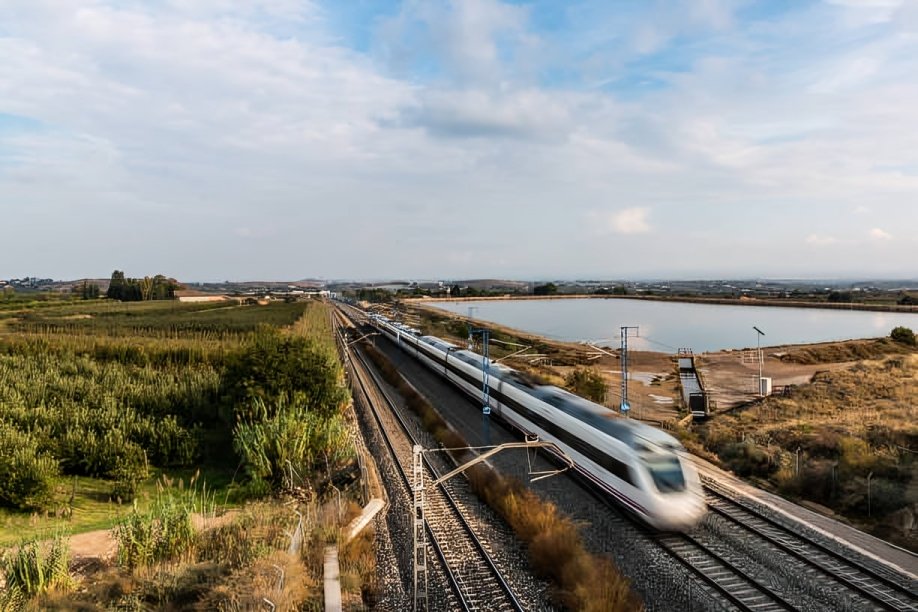
European Public Prosecutor’s Office investigates suspected EU funding fraud on the Madrid–Seville rail line

Photo credit: iStock

The European Public Prosecutor’s Office has opened a new investigation into suspected fraud involving EU funds earmarked for upgrading Spain’s Madrid–Seville high-speed rail line. The inquiry focuses on work on safety, signalling and communications systems, and European prosecutors have carried out investigative measures at three Spanish institutions, IPN reports, citing 2eu.brussels.

According to the European Public Prosecutor’s Office (EPPO), the operations took place on Friday at the premises of Spain’s railway infrastructure manager, the State Railway Safety Agency and the Court of Auditors. The investigation is being coordinated by European prosecutors in Madrid, with support from a specialist unit of Spain’s Civil Guard.

Prosecutors are seeking to determine whether EU funds allocated to the renovation and modernisation of safety, signalling and communications systems were used fraudulently. So far, the EPPO has not disclosed the amount of funding under investigation, any potential losses or the identities of any suspects.

This is the second investigation opened by the European Public Prosecutor’s Office into suspected fraud involving EU funds allocated to the Madrid–Seville railway line. The first, announced on 20 March, concerns the possible fraudulent use of European funds for maintenance work on a section of track near the town of Adamuz, in the province of Córdoba.

At the end of October, a serious accident occurred on this railway line, leaving at least 69 people dead and more than 100 injured. According to information released by the Spanish authorities, the tragedy is believed to have been caused by a failure in the computerized safety system, followed by human error in managing rail traffic. Several carriages derailed after two trains collided.

0 FacebookTwitterPinterestEmail


European Public Prosecutor’s Office investigates suspected EU funding fraud on the Madrid–Seville rail line

Photo credit: iStock

The European Public Prosecutor’s Office has opened a new investigation into suspected fraud involving EU funds earmarked for upgrading Spain’s Madrid–Seville high-speed rail line. The inquiry focuses on work on safety, signalling and communications systems, and European prosecutors have carried out investigative measures at three Spanish institutions, IPN reports, citing 2eu.brussels.

According to the European Public Prosecutor’s Office (EPPO), the operations took place on Friday at the premises of Spain’s railway infrastructure manager, the State Railway Safety Agency and the Court of Auditors. The investigation is being coordinated by European prosecutors in Madrid, with support from a specialist unit of Spain’s Civil Guard.

Prosecutors are seeking to determine whether EU funds allocated to the renovation and modernisation of safety, signalling and communications systems were used fraudulently. So far, the EPPO has not disclosed the amount of funding under investigation, any potential losses or the identities of any suspects.

This is the second investigation opened by the European Public Prosecutor’s Office into suspected fraud involving EU funds allocated to the Madrid–Seville railway line. The first, announced on 20 March, concerns the possible fraudulent use of European funds for maintenance work on a section of track near the town of Adamuz, in the province of Córdoba.

At the end of October, a serious accident occurred on this railway line, leaving at least 69 people dead and more than 100 injured. According to information released by the Spanish authorities, the tragedy is believed to have been caused by a failure in the computerized safety system, followed by human error in managing rail traffic. Several carriages derailed after two trains collided.


Traffic through the Costești-Stânca border crossing will be suspended on Saturday from 11:00 AM to 03:00 PM due to scheduled maintenance work on the dam, IPN reports.

Drivers planning to cross the border between Moldova and Romania are advised to plan their journeys in advance and use alternative border crossings.

According to the Customs Service, alternative border crossings are available at Lipcani, Leuseni, Sculeni, Cahul and Leova.

0 FacebookTwitterPinterestEmail


1 IANUARIE, 2025
1 IANUARIE, 2025