

How will citizens be able to check whether their data was accessed in the cyberattack

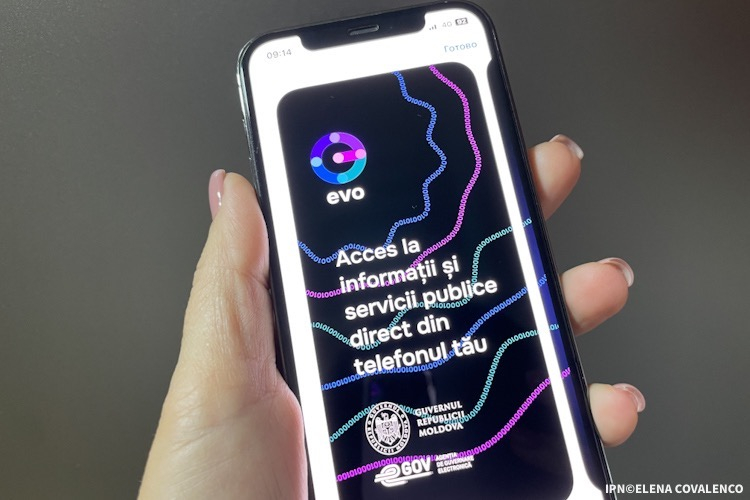
Citizens will be able to find out whether any of their personal data was accessed without authorisation during the cyberattack on government systems, and which data was affected, through a feature available in the EVO app from 27 November. The information can also be requested directly from the e-Governance Agency, IPN reports.

According to AGE, the feature will be available both in the EVO app and in users’ personal accounts on the evo.gov.md portal. After logging in with an electronic signature, users will be able to check whether their data has been accessed without authorization and which information was involved. The agency notes that users will be able to carry out this check themselves in a secure environment, without submitting a separate request.

Individuals who do not use EVO will be able to request the information by submitting an electronically signed petition via the edemocratie.gov.md platform or by email to [email protected]. Alternatively, the petition may be signed by hand and sent by post or submitted in person at AGE’s headquarters.

AGE notes that petitions will be reviewed within the time limits prescribed by law, and responses will include verified information available at the time of communication. Further information may be provided as the checks are completed.

The cyberattack on government systems took place between October 19 and 23. According to the authorities, the personal data of approximately 450,000 citizens was accessed without authorization, but banking data was not compromised. In response, President Maia Sandu convened the National Security Council, which decided to establish a working group led by Prime Minister Vasile Tofan to develop solutions to address cybersecurity vulnerabilities.


Reactor 1 at Romania’s Cernavodă nuclear power plant has been restarted after a three-month shutdown, according to real-time data published by Transelectrica. Two days ago, Nuclearelectrica announced that it had begun restart procedures after the minimum requirements for safe operation had been met. Meanwhile, restarting Reactor 2 still depends on a rise in the Danube’s water level, IPN reports.

At 05:30 PM, Transelectrica data showed nuclear power output at 74 MW, accounting for 1.30% of Romania’s total electricity generation, which stood at 5,686 MW at the time.

These are the first megawatts of nuclear power supplied to the national grid after nearly three months during which both reactors at the plant were shut down. As part of the restart procedures, Reactor 1’s output will be increased gradually until it reaches normal operating levels, expected on Saturday at around 07:00 PM. The unit has a nominal capacity of approximately 700 MW.

The reactors at the Cernavoda nuclear power plant were shut down in August due to low water flow in the Danube.

0 FacebookTwitterPinterestEmail


How will citizens be able to check whether their data was accessed in the cyberattack

Citizens will be able to find out whether any of their personal data was accessed without authorisation during the cyberattack on government systems, and which data was affected, through a feature available in the EVO app from 27 November. The information can also be requested directly from the e-Governance Agency, IPN reports.

According to AGE, the feature will be available both in the EVO app and in users’ personal accounts on the evo.gov.md portal. After logging in with an electronic signature, users will be able to check whether their data has been accessed without authorization and which information was involved. The agency notes that users will be able to carry out this check themselves in a secure environment, without submitting a separate request.

Individuals who do not use EVO will be able to request the information by submitting an electronically signed petition via the edemocratie.gov.md platform or by email to [email protected]. Alternatively, the petition may be signed by hand and sent by post or submitted in person at AGE’s headquarters.

AGE notes that petitions will be reviewed within the time limits prescribed by law, and responses will include verified information available at the time of communication. Further information may be provided as the checks are completed.

The cyberattack on government systems took place between October 19 and 23. According to the authorities, the personal data of approximately 450,000 citizens was accessed without authorization, but banking data was not compromised. In response, President Maia Sandu convened the National Security Council, which decided to establish a working group led by Prime Minister Vasile Tofan to develop solutions to address cybersecurity vulnerabilities.


Nine men aged between 22 and 43 have been detained in Chișinău at a call centre running a fraudulent investment scheme. The employees and the alleged ringleader are suspected of defrauding pensioners in Canada, the United Kingdom and Belgium. The arrests followed a joint operation by the National Investigation Inspectorate and prosecutors from the Prosecutor’s Office for Combating Organised Crime and Special Cases (PCCOCS), supported by the Fulger special police brigade, IPN reports.

The Prosecutor’s Office for Combating Organised Crime and Special Cases said the suspects advertised investment opportunities in stocks and cryptocurrencies online, promising substantial, quick returns. Victims, particularly older people, were instructed to transfer money through fake investment and trading platforms.

Prosecutors allege that the group operated under the guise of a company with a credible-sounding name, whose employees posed as financial experts. According to law enforcement officials, recruits were subjected to polygraph tests to prevent them from disclosing information about the scheme.

The nine people detained are citizens of the Republic of Moldova, Romania and Ukraine. Prosecutors are expected to request their pre-trial detention as investigations continue to identify everyone involved.

0 FacebookTwitterPinterestEmail


1 IANUARIE, 2025
1 IANUARIE, 2025