

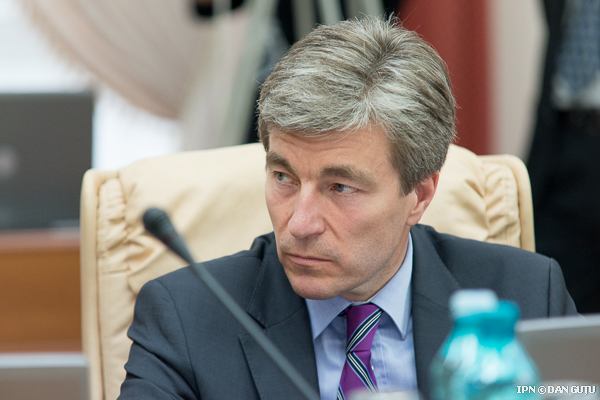
Eugen Carpov: 5+2 format is inefficient by its composition too

The 5+2 format of the Transnistrian conflict settlement talks is already inefficient by its composition too because two mediators, which should normally cooperate to facilitate the resolution of a dispute, are at war. This is the Russian Federation and Ukraine, MP of the European People’s Party of Moldova Eugen Carpov, ex-deputy prime minister for reintegration, stated in the talk show “Emphasis on today” on TVR Moldova channel, IPN reports.

“The key problem of this format is the fact that it does not have an alternative for the reason that the most powerful international players are involved in this and it is thus impossible to replace them,” stated the politician.

According to him, not many social and economic projects related to the Transition settlement have been implemented since 2011 until now. If the practical problems are dealt with, a reunification will not be ultimately needed as the problems will be solved, the contacts with the outer world will be legalized, the circulation outside with recognized license numbers and documents will be authorized and the settlement of the conflict by agreeing a legal status will be almost impossible thus. “From this viewpoint, not much progress has been made and we permanently pleaded for resuming discussions on the Third Basket, which means political, legal and security aspects,” stated Eugen Carpov.

Security expert Rosian Vasiloi said the Moldovan authorities continue to throw lifebuoys to the Transnistrian administration in all spheres. At economic level, they enable the Transnistrians to trade mainly with the EU, but no taxes from this activity reach the state budget. The Moldovan authorities contribute to the excessive strengthening of the Transnistrian region by purchasing in excess electric power from the Cuchurgan Power Plant that is situated on the left side of the Nistru.

According to the expert, clear rules of the game should be laid down within the Transnistrian conflict settlement process. The constitutional authorities should inform the citizens about the possible risks related to the fact that a part of the country’s territory is not controlled by the Republic of Moldova.


Official documents issued in the Republic of Moldova and Germany may now be used in each other’s countries with only an apostille, without the need for the legalization procedure. The measure enters into force following the Federal Republic of Germany’s withdrawal of the reservation it made in 2007 when the Republic of Moldova acceded to the Hague Apostille Convention, IPN reports.

The Ministry of Foreign Affairs states that the decision was made following steps taken by Deputy Prime Minister Mihai Popsoi, Minister of Foreign Affairs, during his May 18–19 meeting with his German counterpart, Johann David Wadephul.

The ministry emphasizes that the new system will eliminate the need to visit multiple institutions or diplomatic missions to have documents legalized, which will reduce both the time required and the costs incurred by citizens. The simplified procedure will apply to official documents such as birth, marriage, divorce, and death certificates, criminal records, academic diplomas, and diploma supplements.

The Hague Convention on the Apostille entered into force for the Republic of Moldova on March 16, 2007. With its implementation in relations with Germany, the Republic of Moldova will benefit from the same simplified procedure for the recognition of official documents as it does with all 130 states and entities that are parties to the convention.

0 FacebookTwitterPinterestEmail


Eugen Carpov: 5+2 format is inefficient by its composition too

The 5+2 format of the Transnistrian conflict settlement talks is already inefficient by its composition too because two mediators, which should normally cooperate to facilitate the resolution of a dispute, are at war. This is the Russian Federation and Ukraine, MP of the European People’s Party of Moldova Eugen Carpov, ex-deputy prime minister for reintegration, stated in the talk show “Emphasis on today” on TVR Moldova channel, IPN reports.

“The key problem of this format is the fact that it does not have an alternative for the reason that the most powerful international players are involved in this and it is thus impossible to replace them,” stated the politician.

According to him, not many social and economic projects related to the Transition settlement have been implemented since 2011 until now. If the practical problems are dealt with, a reunification will not be ultimately needed as the problems will be solved, the contacts with the outer world will be legalized, the circulation outside with recognized license numbers and documents will be authorized and the settlement of the conflict by agreeing a legal status will be almost impossible thus. “From this viewpoint, not much progress has been made and we permanently pleaded for resuming discussions on the Third Basket, which means political, legal and security aspects,” stated Eugen Carpov.

Security expert Rosian Vasiloi said the Moldovan authorities continue to throw lifebuoys to the Transnistrian administration in all spheres. At economic level, they enable the Transnistrians to trade mainly with the EU, but no taxes from this activity reach the state budget. The Moldovan authorities contribute to the excessive strengthening of the Transnistrian region by purchasing in excess electric power from the Cuchurgan Power Plant that is situated on the left side of the Nistru.

According to the expert, clear rules of the game should be laid down within the Transnistrian conflict settlement process. The constitutional authorities should inform the citizens about the possible risks related to the fact that a part of the country’s territory is not controlled by the Republic of Moldova.


Maritime schools could be opened in Moldova following the full transposition of relevant European legislation. The statement was made by Deputy Prime Minister Vladimir Bolea, Minister of Infrastructure and Regional Development, who noted that there is growing interest in such programs, including from Ukrainian citizens affected by the war, according to IPN.

Vladimir Bolea stated that the new regulations will allow seaman’s books to be issued based on studies completed in the Republic of Moldova at authorized institutions.

The minister told the press that, at present, no ships are sailing under the flag of the Republic of Moldova, but the authorities are working to transpose European legislation and develop the legal framework necessary for the development of this sector.

According to him, the state and the Naval Agency could generate significant revenue both from ships sailing under the Moldovan flag and from institutions that train seafarers.

0 FacebookTwitterPinterestEmail


1 IANUARIE, 2025
1 IANUARIE, 2025