

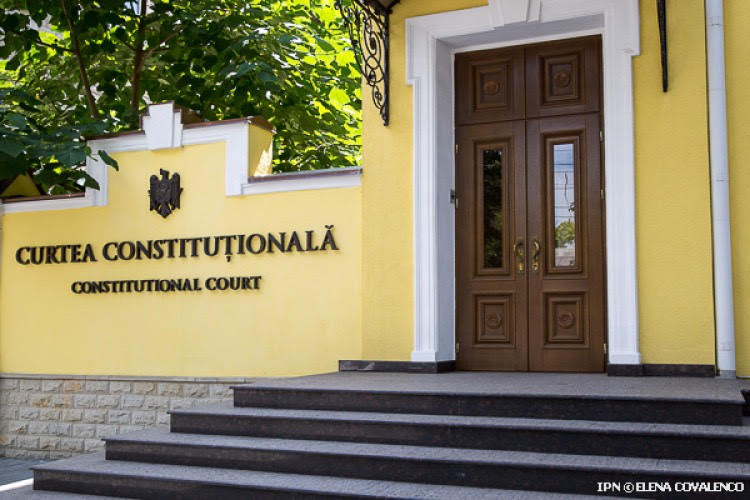
Constitutional Court rejects complaints about postal voting as inadmissible

The Constitutional Court rejected as inadmissible the complaints about the establishment of the constitutionality of the law on the partial implementation of postal voting. The complaints were submitted by MPs of the Bloc of Communists and Socialists and MPs affiliated to fugitive Ilan Shor, IPN reports.

The authors of the two complaints challenge the law on the partial implementation of postal voting, mainly stating that the principle according to which the fundamental elements of the electoral law should not be amended earlier than one year before the elections was violated.

Also, the authors claimed that the citizens of the Republic of Moldova with the right to vote from the few states in which the law will be implemented will be advantaged over their fellow citizens from other states with large areas or where many Moldovan citizens eligible to vote live, where postal voting should also be applied. The authors also noted that the Cabinet’s approval for the bill that was the basis of the challenged law is missing, but the implementation of the law involves budgetary expenditures.

The Constitutional Court held that by instituting the procedure for the right to vote by mail, there is imposed no restriction of the exercise of the right to vote. On the contrary, the voting methods are diversified. One cannot speak of the existence of interference in the right to vote. Also, an analysis cannot be started on the basis of Article 16 of the Constitution, which can be applied only when the applicability of a substantial fundamental right is demonstrated.

“The authors of the complaint claim that the challenged law does not ensure the secrecy of postal voting, given that there is no monitoring or guarantee of the observance of the secrecy of the vote expressed in this way. With reference to this aspect, the Venice Commission in its Opinion noted that states are obliged to ensure compliance with the principle of secret ballot. It is an inherent challenge for postal voting, as well as for other remote voting methods, such as internet voting,” said the Court.

The Court’s decision is final, cannot be appealed, enters into force on the date of adoption and is published in the Official Gazette. Judges Sergei Turcan and Vladimir Turcan formulated separate opinions on this decision, which have not yet been published.


Official documents issued in the Republic of Moldova and Germany may now be used in each other’s countries with only an apostille, without the need for the legalization procedure. The measure enters into force following the Federal Republic of Germany’s withdrawal of the reservation it made in 2007 when the Republic of Moldova acceded to the Hague Apostille Convention, IPN reports.

The Ministry of Foreign Affairs states that the decision was made following steps taken by Deputy Prime Minister Mihai Popsoi, Minister of Foreign Affairs, during his May 18–19 meeting with his German counterpart, Johann David Wadephul.

The ministry emphasizes that the new system will eliminate the need to visit multiple institutions or diplomatic missions to have documents legalized, which will reduce both the time required and the costs incurred by citizens. The simplified procedure will apply to official documents such as birth, marriage, divorce, and death certificates, criminal records, academic diplomas, and diploma supplements.

The Hague Convention on the Apostille entered into force for the Republic of Moldova on March 16, 2007. With its implementation in relations with Germany, the Republic of Moldova will benefit from the same simplified procedure for the recognition of official documents as it does with all 130 states and entities that are parties to the convention.

0 FacebookTwitterPinterestEmail


Constitutional Court rejects complaints about postal voting as inadmissible

The Constitutional Court rejected as inadmissible the complaints about the establishment of the constitutionality of the law on the partial implementation of postal voting. The complaints were submitted by MPs of the Bloc of Communists and Socialists and MPs affiliated to fugitive Ilan Shor, IPN reports.

The authors of the two complaints challenge the law on the partial implementation of postal voting, mainly stating that the principle according to which the fundamental elements of the electoral law should not be amended earlier than one year before the elections was violated.

Also, the authors claimed that the citizens of the Republic of Moldova with the right to vote from the few states in which the law will be implemented will be advantaged over their fellow citizens from other states with large areas or where many Moldovan citizens eligible to vote live, where postal voting should also be applied. The authors also noted that the Cabinet’s approval for the bill that was the basis of the challenged law is missing, but the implementation of the law involves budgetary expenditures.

The Constitutional Court held that by instituting the procedure for the right to vote by mail, there is imposed no restriction of the exercise of the right to vote. On the contrary, the voting methods are diversified. One cannot speak of the existence of interference in the right to vote. Also, an analysis cannot be started on the basis of Article 16 of the Constitution, which can be applied only when the applicability of a substantial fundamental right is demonstrated.

“The authors of the complaint claim that the challenged law does not ensure the secrecy of postal voting, given that there is no monitoring or guarantee of the observance of the secrecy of the vote expressed in this way. With reference to this aspect, the Venice Commission in its Opinion noted that states are obliged to ensure compliance with the principle of secret ballot. It is an inherent challenge for postal voting, as well as for other remote voting methods, such as internet voting,” said the Court.

The Court’s decision is final, cannot be appealed, enters into force on the date of adoption and is published in the Official Gazette. Judges Sergei Turcan and Vladimir Turcan formulated separate opinions on this decision, which have not yet been published.


Maritime schools could be opened in Moldova following the full transposition of relevant European legislation. The statement was made by Deputy Prime Minister Vladimir Bolea, Minister of Infrastructure and Regional Development, who noted that there is growing interest in such programs, including from Ukrainian citizens affected by the war, according to IPN.

Vladimir Bolea stated that the new regulations will allow seaman’s books to be issued based on studies completed in the Republic of Moldova at authorized institutions.

The minister told the press that, at present, no ships are sailing under the flag of the Republic of Moldova, but the authorities are working to transpose European legislation and develop the legal framework necessary for the development of this sector.

According to him, the state and the Naval Agency could generate significant revenue both from ships sailing under the Moldovan flag and from institutions that train seafarers.

0 FacebookTwitterPinterestEmail


1 IANUARIE, 2025
1 IANUARIE, 2025