

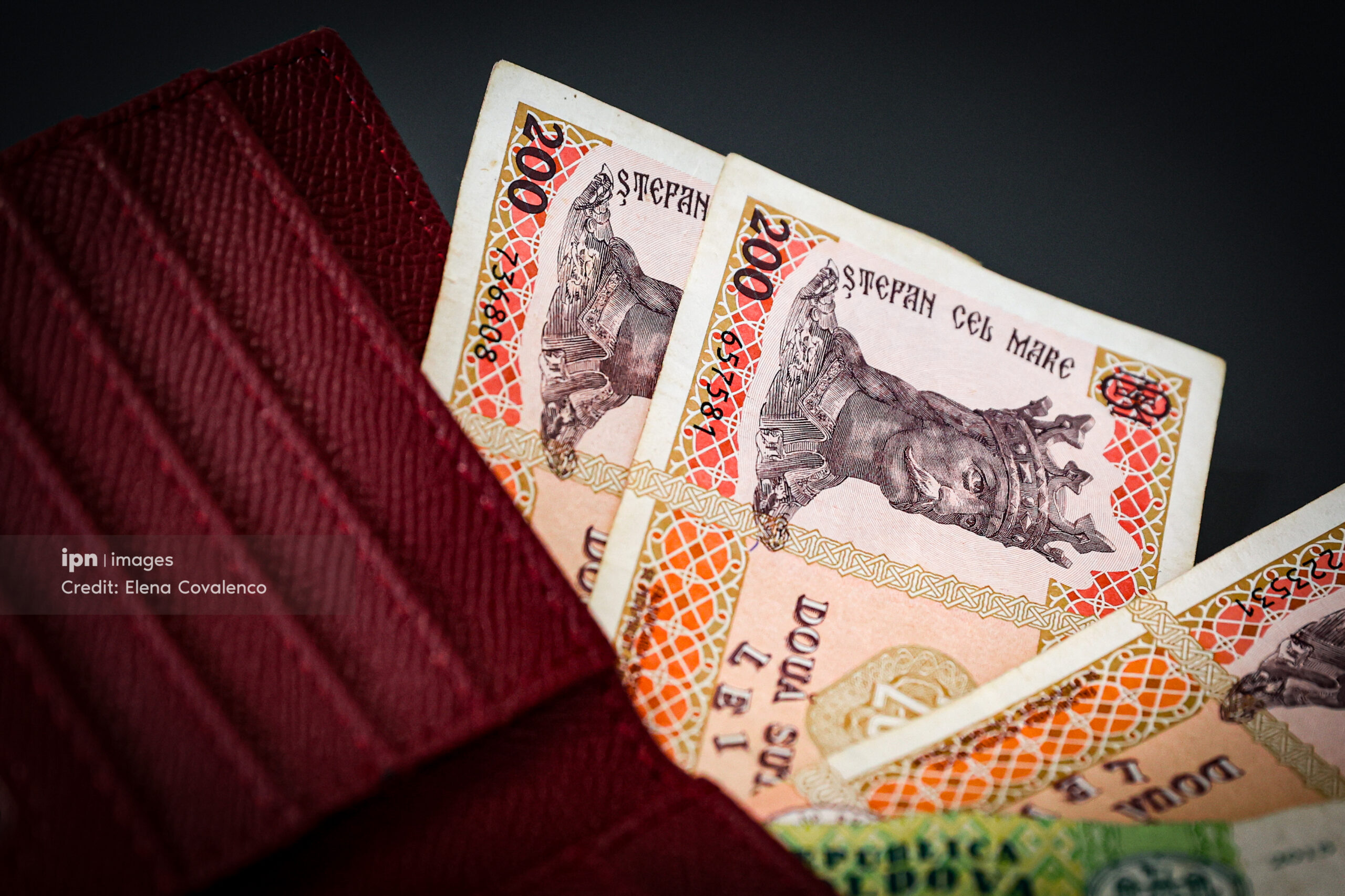
Budgets from the left bank of the Dniester, four times smaller than on the right bank

The budgetary revenues per capita in the Transnistrian region for the current year are estimated at approximately 14.8 thousand lei, almost four times less than on the right bank of the Nistru, where it is expected to reach about 57 thousand lei. The data was resented by the expert in economic policies Veaceslav Ionita, who highlighted the significant differences between the two banks in terms of budgetary resources available for citizens, reports IPN.

According to the expert, these differences are reflected not only in the level of income, but also in the structure of public budgets. On the right bank, the public budget includes the state budget, local budgets, the social insurance budget, and the health insurance budget. In contrast, on the left bank of the Dniester, there is only the regional budget and local budgets, without separate funds for insurance systems.

Veaceslav Ionita points out that the tax pressure is much lower in the Transnistrian region. “If in the Republic of Moldova budget revenues represent about 35% of the GDP, on the left bank of the Dniester they amount to about 20%; moreover, there is no VAT in the region, the main source of income for the Republic of Moldova’s budget,” explains the economist.

The differences are also evident at the level of public expenditures. For the current year, officially these are estimated at about 66,1 thousand lei per capita, while in the Transnistrian region they amount to 25 thousand lei. At the same time, the economist emphasizes that the budget deficit on the left bank of the Dniester is very high, reaching almost half of the total budget, and the way of covering it is not transparent.


Update: The Ministry of Foreign Affairs in Chișinău has confirmed that Ambassador Lilian Darii was summoned to the Russian Ministry of Foreign Affairs. The ministry reiterated, in light of recent developments between the two sides, that all actions taken regarding diplomatic missions accredited in the Republic of Moldova are carried out in strict accordance with the provisions of the Vienna Convention on Diplomatic Relations and Moldovan law. At the same time, the Ministry of Foreign Affairs stated that the Republic of Moldova fulfills its international obligations in good faith and will continue to act in full compliance with the norms of international law and the principle of reciprocity in diplomatic relations.

Original report: Lilian Darii, the Ambassador of the Republic of Moldova to the Russian Federation, was summoned to the Russian Ministry of Foreign Affairs. The diplomat was handed a note of protest regarding alleged violations of the Vienna Convention on Diplomatic Relations, in connection with two incidents involving staff and vehicles of the Russian Embassy in Chisinau, IPN reports.

According to Russian diplomatic sources, the first incident reportedly took place on July 19 in Chisinau, when law enforcement officers allegedly stopped a bus belonging to the diplomatic mission under the pretext of a document check and confiscated its diplomatic license plates without explanation. Russia claims that, during this incident, the police used force and threatened to detain embassy staff. Moscow also claims that the embassy’s request for the Moldovan Ministry of Foreign Affairs to send a representative to the scene of the incident to clarify the situation was ignored.

The second incident reportedly occurred on the night of July 20–21 at the Leuseni border crossing, where embassy employees leaving the Republic of Moldova to transport official cargo to Russia were allegedly detained, without cause, for more than four hours.

The Russian Foreign Ministry stated that Ambassador Darii was informed of a serious violation of fundamental provisions of the Vienna Convention, under which the host state is obligated to provide all necessary assistance for the diplomatic mission to carry out its functions. Russian diplomats also noted that they reserve the right to take symmetrical retaliatory measures.

Officials from the Ministry of Foreign Affairs in Chisinau said they would issue an official statement later.

0 FacebookTwitterPinterestEmail


Budgets from the left bank of the Dniester, four times smaller than on the right bank

The budgetary revenues per capita in the Transnistrian region for the current year are estimated at approximately 14.8 thousand lei, almost four times less than on the right bank of the Nistru, where it is expected to reach about 57 thousand lei. The data was resented by the expert in economic policies Veaceslav Ionita, who highlighted the significant differences between the two banks in terms of budgetary resources available for citizens, reports IPN.

According to the expert, these differences are reflected not only in the level of income, but also in the structure of public budgets. On the right bank, the public budget includes the state budget, local budgets, the social insurance budget, and the health insurance budget. In contrast, on the left bank of the Dniester, there is only the regional budget and local budgets, without separate funds for insurance systems.

Veaceslav Ionita points out that the tax pressure is much lower in the Transnistrian region. “If in the Republic of Moldova budget revenues represent about 35% of the GDP, on the left bank of the Dniester they amount to about 20%; moreover, there is no VAT in the region, the main source of income for the Republic of Moldova’s budget,” explains the economist.

The differences are also evident at the level of public expenditures. For the current year, officially these are estimated at about 66,1 thousand lei per capita, while in the Transnistrian region they amount to 25 thousand lei. At the same time, the economist emphasizes that the budget deficit on the left bank of the Dniester is very high, reaching almost half of the total budget, and the way of covering it is not transparent.


Budgets from the left bank of the Dniester, four times smaller than on the right bank

Protests against the dismissal of the former Ukrainian Defense Minister, Mihailo Fedorov, amid disagreements with the army commander, Oleksandr Sirski,...

Acest material este disponibil doar pe bază de abonament.
Abonează-te pentru a avea acces la mai multe materiale și funcționalități exclusive!

0 FacebookTwitterPinterestEmail


1 IANUARIE, 2025
1 IANUARIE, 2025