



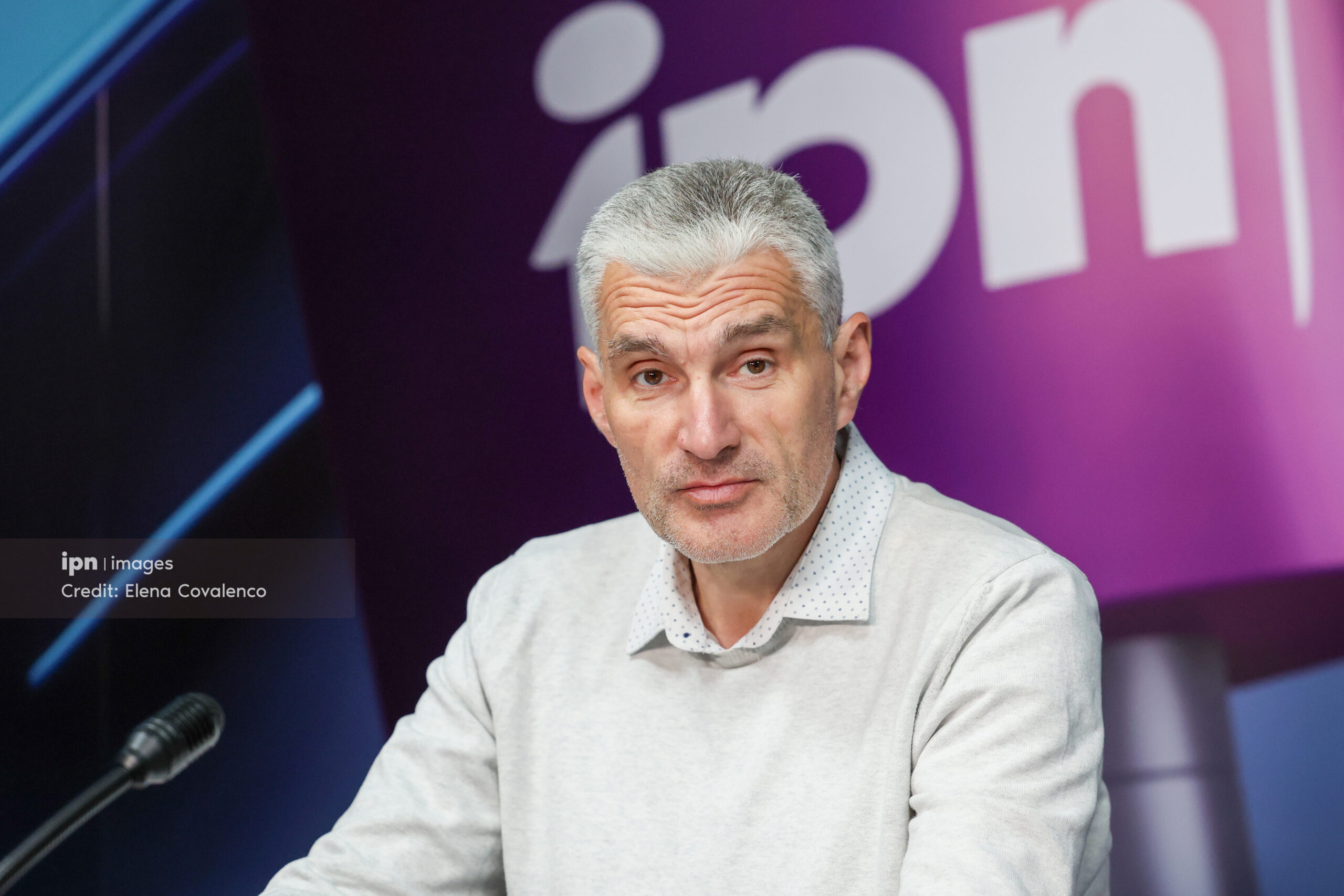
The civil aviation of the Republic of Moldova is entirely dependent on Lukoil, and this is its most vulnerable point. The opinion belongs to the member of the Energocom joint-stock company council, Alexandr Slusari, and was expressed during the public debate “The Solutions of the Republic of Moldova for the US sanctions on Russian Lukoil”, organized by the IPN Press Agency. The statement of the former deputy Slusari comes in the context of the international sanctions applied to the Russian company Lukoil, which will come into effect on November 21.
Alexandr Slusari explained that Lukoil is a company that has been present in the Republic of Moldova since 1995 and holds significant shares in the fuel market. “The activity of Lukoil company is multidimensional in the Republic of Moldova. It is one of the three importers of petroleum products. Only three companies import petroleum products in the Republic of Moldova, because they have three refineries in Romania. These are Lukoil, Rompetrol, and Petrom. Lukoil holds 50% of the wholesale diesel market and 20% of the wholesale gasoline market. In addition, in the retail sale of petroleum products, Lukoil has over 100 gas stations, out of a total of 600. That is, it has a significant share, but it does not have a dominant position,” said Alexandr Slusari, former deputy of the Parliament of the Republic of Moldova.
Although this share gives him significant influence, Slusari mentioned that Lukoil “does not have a dominant position” in the retail segment of petroleum products. However, major vulnerabilities appear in other critical areas, such as civil aviation.
“The situation is even worse in the field of civil aviation. Here, Lukoil is the only supplier of fuel – kerosene for airplanes. In addition, Lukoil owns the infrastructure for storing petroleum products at the Airport. That is, civil aviation in the Republic of Moldova is totally dependent on Lukoil. This is the most vulnerable point,” explained Alexandr Slusari.
According to Slusari, with the implementation of international sanctions, this dependency risks generating major blockages or additional costs, if viable alternatives are not quickly identified.
“Ever since the war began, this issue has been treated with negligence. We can find excuses. We can say that not only Moldova continued to procure petroleum products from Lukoil and remain dependent on this company. A similar problem exists in Romania, Bulgaria, and other countries. But that does not help us solve our problem. It is clear that there was negligence on the part of the state,” said the former deputy.
The public debate “Moldova’s Solutions for the US Sanctions on Russian Lukoil” is the 338th edition in the series “Developing Political Culture in Public Debates”. The project is supported by the German Foundation “Hanns Seidel”.
