

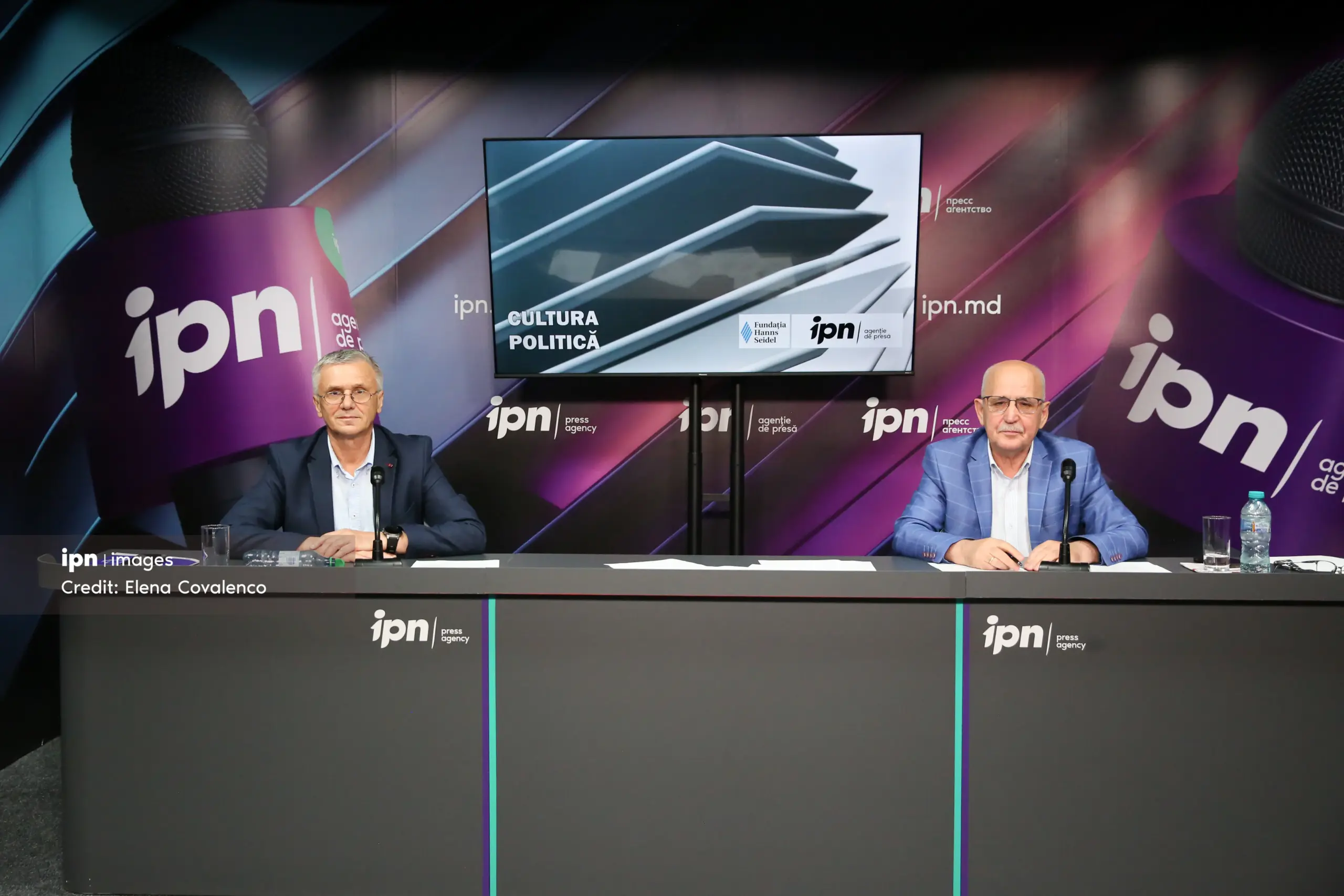
The new mass media law: updates, benefits, risks. IPN Debate

The need to adopt a new media law, the alignment of legislation with European standards, and the financial challenges facing the media in the Republic of Moldova were the main issues addressed during the public debate “The new media law: updates, benefits, risks”, organized by the IPN News Agency. Journalists and experts pointed out that the new law, which has been approved in its first reading, aims to create a clearer framework for both traditional and online media.

The project’s permanent expert, Igor Boțan, explained why the new law must take into account the diversification of platforms through which content is distributed. According to him, the media landscape is no longer limited to television, radio and print media, but also includes digital services.

“Media services represent the totality of channels and platforms that transmit information, entertainment, or culture to a broad audience. These include television, radio, print media and digital platforms, primarily classified into linear services (live broadcasts, such as TV/radio stations) and non-linear services (streaming or VOD platforms). VOD (Video on Demand) platforms are digital services that allow users to watch movies, series and shows at any time, without depending on a fixed broadcast schedule”, stated Igor Botan.

Tatiana Puiu, the Council of Europe’s media expert, noted that the current legislation no longer meets the realities of the journalistic environment. According to her, the draft of the new law is also designed to align the Republic of Moldova with European standards on media freedom and pluralism.

“Currently, the print press is regulated by the Press Law which was adopted back in 1994. At that time, the media space was dominated by printed publications and press agencies. Now for the online press, we largely have a legislative void. The project of the new mass media law is elaborated also in the context of recent developments of the European normative framework in the field of mass media. In the expansion reports of the European Commission, for the third year in a row, the need for the Republic of Moldova to consolidate the normative framework regarding the freedom and pluralism of the mass media was highlighted, including through the adoption of a modern law that ensures the transparency of mass media ownership”, explained Tatiana Puiu.

In the same context, journalist Viorica Zaharia noted that the small advertising market in the Republic of Moldova makes it difficult for editorial offices to self-finance, which is why they are forced to diversify their income sources and resort to external funding.

“Moldova is a small country, respectively with a small market. On such a market, it is very difficult to develop the media, so as to make a business out of it. Therefore, media institutions will always have this constant concern for survival. The media tries to diversify its sources of funding because you can hardly cover your expenses from subscriptions and advertising alone. Therefore, the press accesses grants, where possible, from development partners”, said Viorica Zaharia, the president of the Council of Experts, mandated by the Press Council to examine complaints about the violation of the provisions of the Journalist’s Code of Ethics.

The public debate “The new media law: updates, benefits, risks” is the 353rd edition in the series “Developing political culture in public debates”. The IPN Agency carries out this series with the support of the German Hanns Seidel Foundation.


Official documents issued in the Republic of Moldova and Germany may now be used in each other’s countries with only an apostille, without the need for the legalization procedure. The measure enters into force following the Federal Republic of Germany’s withdrawal of the reservation it made in 2007 when the Republic of Moldova acceded to the Hague Apostille Convention, IPN reports.

The Ministry of Foreign Affairs states that the decision was made following steps taken by Deputy Prime Minister Mihai Popsoi, Minister of Foreign Affairs, during his May 18–19 meeting with his German counterpart, Johann David Wadephul.

The ministry emphasizes that the new system will eliminate the need to visit multiple institutions or diplomatic missions to have documents legalized, which will reduce both the time required and the costs incurred by citizens. The simplified procedure will apply to official documents such as birth, marriage, divorce, and death certificates, criminal records, academic diplomas, and diploma supplements.

The Hague Convention on the Apostille entered into force for the Republic of Moldova on March 16, 2007. With its implementation in relations with Germany, the Republic of Moldova will benefit from the same simplified procedure for the recognition of official documents as it does with all 130 states and entities that are parties to the convention.

0 FacebookTwitterPinterestEmail


The new mass media law: updates, benefits, risks. IPN Debate

The need to adopt a new media law, the alignment of legislation with European standards, and the financial challenges facing the media in the Republic of Moldova were the main issues addressed during the public debate “The new media law: updates, benefits, risks”, organized by the IPN News Agency. Journalists and experts pointed out that the new law, which has been approved in its first reading, aims to create a clearer framework for both traditional and online media.

The project’s permanent expert, Igor Boțan, explained why the new law must take into account the diversification of platforms through which content is distributed. According to him, the media landscape is no longer limited to television, radio and print media, but also includes digital services.

“Media services represent the totality of channels and platforms that transmit information, entertainment, or culture to a broad audience. These include television, radio, print media and digital platforms, primarily classified into linear services (live broadcasts, such as TV/radio stations) and non-linear services (streaming or VOD platforms). VOD (Video on Demand) platforms are digital services that allow users to watch movies, series and shows at any time, without depending on a fixed broadcast schedule”, stated Igor Botan.

Tatiana Puiu, the Council of Europe’s media expert, noted that the current legislation no longer meets the realities of the journalistic environment. According to her, the draft of the new law is also designed to align the Republic of Moldova with European standards on media freedom and pluralism.

“Currently, the print press is regulated by the Press Law which was adopted back in 1994. At that time, the media space was dominated by printed publications and press agencies. Now for the online press, we largely have a legislative void. The project of the new mass media law is elaborated also in the context of recent developments of the European normative framework in the field of mass media. In the expansion reports of the European Commission, for the third year in a row, the need for the Republic of Moldova to consolidate the normative framework regarding the freedom and pluralism of the mass media was highlighted, including through the adoption of a modern law that ensures the transparency of mass media ownership”, explained Tatiana Puiu.

In the same context, journalist Viorica Zaharia noted that the small advertising market in the Republic of Moldova makes it difficult for editorial offices to self-finance, which is why they are forced to diversify their income sources and resort to external funding.

“Moldova is a small country, respectively with a small market. On such a market, it is very difficult to develop the media, so as to make a business out of it. Therefore, media institutions will always have this constant concern for survival. The media tries to diversify its sources of funding because you can hardly cover your expenses from subscriptions and advertising alone. Therefore, the press accesses grants, where possible, from development partners”, said Viorica Zaharia, the president of the Council of Experts, mandated by the Press Council to examine complaints about the violation of the provisions of the Journalist’s Code of Ethics.

The public debate “The new media law: updates, benefits, risks” is the 353rd edition in the series “Developing political culture in public debates”. The IPN Agency carries out this series with the support of the German Hanns Seidel Foundation.


Maritime schools could be opened in Moldova following the full transposition of relevant European legislation. The statement was made by Deputy Prime Minister Vladimir Bolea, Minister of Infrastructure and Regional Development, who noted that there is growing interest in such programs, including from Ukrainian citizens affected by the war, according to IPN.

Vladimir Bolea stated that the new regulations will allow seaman’s books to be issued based on studies completed in the Republic of Moldova at authorized institutions.

The minister told the press that, at present, no ships are sailing under the flag of the Republic of Moldova, but the authorities are working to transpose European legislation and develop the legal framework necessary for the development of this sector.

According to him, the state and the Naval Agency could generate significant revenue both from ships sailing under the Moldovan flag and from institutions that train seafarers.

0 FacebookTwitterPinterestEmail


1 IANUARIE, 2025
1 IANUARIE, 2025