

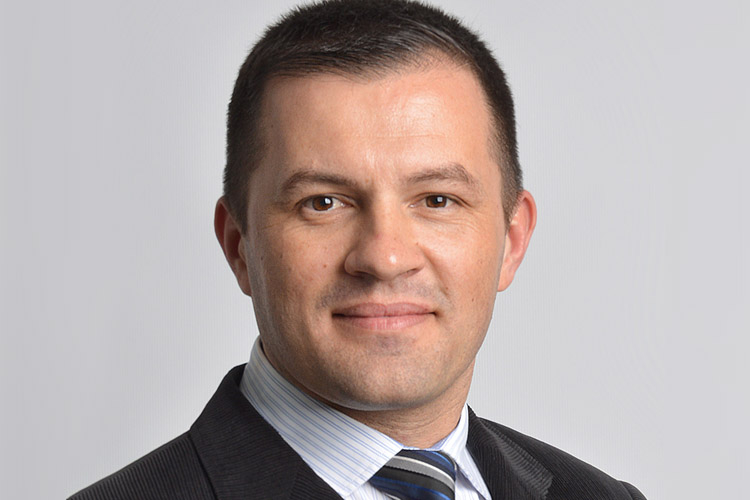
Pavel Moraru: Signing of Molotov-Ribbentrop Pact led to start of World War II

The signing of the Molotov-Ribbentrop Pact led to the start of World War II. The war turned global after Germany attacked Poland as two colonial empires, France and Great Britain, became directly involved in the war after Germany’s attack. Great Britain consisted then of the largest countries in history and played a huge role in the final victory, doctor habilitate of history Pavel Moraru stated in a public debate hosted by IPN.

The historian said the Molotov-Ribbentrop pact consisted of two parts – the nonaggression pact and the secret additional protocol. Germany, seeing that the Soviet Union initiated negotiations with Great Britain and France, proposed signing a non-aggression treaty with the Soviet Union, but the Soviets demanded that the nonaggression treaty should have an additional secret protocol. The nonaggression treaty can be considered illegal as the given protocol referred to third parties. A nonaggression treaty is signed between two, three or more sides, but does not refer to the fate of other countries.

The Molotov-Ribbentrop Pact was a diplomatic and territorial success for the Soviet Union. Under this, the Soviet Union managed to bring territories of the former Russian Empire inside its borders. It was an achieved objective. Also, the Molotov-Ribbentrop Pact hit the German-Japanese alliance. On August 23, 1939, when the Molotov-Ribbentrop Pact was signed in Moscow, Japan was suffering a defeat to the Soviet Union on the Khalkhin Gol lake in Mongolia. For Japan, the signing of the pact was a betrayal on the part of the German ally and immediately after its signing, Japan said that it would not become involved in the war in Europe.

According to Pavel Moraru, by signing the Molotov- Ribbentrop Pact, the Soviet Union didn’t aim to put off the start of the war. This is a Soviet myth formulated earlier as the Soviet Union didn’t have reasons to delay it. On the contrary, it wanted to start to take action as swiftly as possible, aiming to communize the whole Europe. Another myth is that the Soviet Union wasn’t ready for war and was taken by surprise by the German attack of June 22, 1941. In reality, the Soviet Union intensely prepared for an offensive war, not for a defensive war.

The doctor of history noted that after the dismemberment of the Soviet Union, the Soviet regime didn’t undergo purification, wasn’t condemned at international level. The current Russian Federation practically inherited what was there in the Soviet Union. The Russian Federation when the Soviet Union collapsed didn’t go through this de-communization, pacification process and there was a particular percentage of citizens in Russia who aspired to revenge. After the dismemberment of the Soviet Union, Russia became a revanchist state and, owing to propaganda, that percentage of 20-30% passed the level of 50%. The Russian propaganda currently speaks about the role of Russia, the Soviet Union in the fight against Nazism, trying to monopolize that victory of the allies against Nazi Germany,” concluded Pavel Moraru.

The public debate entitled “Truth and lie about beginning of World War II” was the 18th installment of IPN’s project “Impact of the Past on Confidence and Peace Building Processes” that is supported by the Hanns Seidel Foundation of Germany.


Official documents issued in the Republic of Moldova and Germany may now be used in each other’s countries with only an apostille, without the need for the legalization procedure. The measure enters into force following the Federal Republic of Germany’s withdrawal of the reservation it made in 2007 when the Republic of Moldova acceded to the Hague Apostille Convention, IPN reports.

The Ministry of Foreign Affairs states that the decision was made following steps taken by Deputy Prime Minister Mihai Popsoi, Minister of Foreign Affairs, during his May 18–19 meeting with his German counterpart, Johann David Wadephul.

The ministry emphasizes that the new system will eliminate the need to visit multiple institutions or diplomatic missions to have documents legalized, which will reduce both the time required and the costs incurred by citizens. The simplified procedure will apply to official documents such as birth, marriage, divorce, and death certificates, criminal records, academic diplomas, and diploma supplements.

The Hague Convention on the Apostille entered into force for the Republic of Moldova on March 16, 2007. With its implementation in relations with Germany, the Republic of Moldova will benefit from the same simplified procedure for the recognition of official documents as it does with all 130 states and entities that are parties to the convention.

0 FacebookTwitterPinterestEmail


Pavel Moraru: Signing of Molotov-Ribbentrop Pact led to start of World War II

The signing of the Molotov-Ribbentrop Pact led to the start of World War II. The war turned global after Germany attacked Poland as two colonial empires, France and Great Britain, became directly involved in the war after Germany’s attack. Great Britain consisted then of the largest countries in history and played a huge role in the final victory, doctor habilitate of history Pavel Moraru stated in a public debate hosted by IPN.

The historian said the Molotov-Ribbentrop pact consisted of two parts – the nonaggression pact and the secret additional protocol. Germany, seeing that the Soviet Union initiated negotiations with Great Britain and France, proposed signing a non-aggression treaty with the Soviet Union, but the Soviets demanded that the nonaggression treaty should have an additional secret protocol. The nonaggression treaty can be considered illegal as the given protocol referred to third parties. A nonaggression treaty is signed between two, three or more sides, but does not refer to the fate of other countries.

The Molotov-Ribbentrop Pact was a diplomatic and territorial success for the Soviet Union. Under this, the Soviet Union managed to bring territories of the former Russian Empire inside its borders. It was an achieved objective. Also, the Molotov-Ribbentrop Pact hit the German-Japanese alliance. On August 23, 1939, when the Molotov-Ribbentrop Pact was signed in Moscow, Japan was suffering a defeat to the Soviet Union on the Khalkhin Gol lake in Mongolia. For Japan, the signing of the pact was a betrayal on the part of the German ally and immediately after its signing, Japan said that it would not become involved in the war in Europe.

According to Pavel Moraru, by signing the Molotov- Ribbentrop Pact, the Soviet Union didn’t aim to put off the start of the war. This is a Soviet myth formulated earlier as the Soviet Union didn’t have reasons to delay it. On the contrary, it wanted to start to take action as swiftly as possible, aiming to communize the whole Europe. Another myth is that the Soviet Union wasn’t ready for war and was taken by surprise by the German attack of June 22, 1941. In reality, the Soviet Union intensely prepared for an offensive war, not for a defensive war.

The doctor of history noted that after the dismemberment of the Soviet Union, the Soviet regime didn’t undergo purification, wasn’t condemned at international level. The current Russian Federation practically inherited what was there in the Soviet Union. The Russian Federation when the Soviet Union collapsed didn’t go through this de-communization, pacification process and there was a particular percentage of citizens in Russia who aspired to revenge. After the dismemberment of the Soviet Union, Russia became a revanchist state and, owing to propaganda, that percentage of 20-30% passed the level of 50%. The Russian propaganda currently speaks about the role of Russia, the Soviet Union in the fight against Nazism, trying to monopolize that victory of the allies against Nazi Germany,” concluded Pavel Moraru.

The public debate entitled “Truth and lie about beginning of World War II” was the 18th installment of IPN’s project “Impact of the Past on Confidence and Peace Building Processes” that is supported by the Hanns Seidel Foundation of Germany.


Maritime schools could be opened in Moldova following the full transposition of relevant European legislation. The statement was made by Deputy Prime Minister Vladimir Bolea, Minister of Infrastructure and Regional Development, who noted that there is growing interest in such programs, including from Ukrainian citizens affected by the war, according to IPN.

Vladimir Bolea stated that the new regulations will allow seaman’s books to be issued based on studies completed in the Republic of Moldova at authorized institutions.

The minister told the press that, at present, no ships are sailing under the flag of the Republic of Moldova, but the authorities are working to transpose European legislation and develop the legal framework necessary for the development of this sector.

According to him, the state and the Naval Agency could generate significant revenue both from ships sailing under the Moldovan flag and from institutions that train seafarers.

0 FacebookTwitterPinterestEmail


1 IANUARIE, 2025
1 IANUARIE, 2025