

17 years after the April 7 protests, Moldova is closer to the EU than ever before, analyst

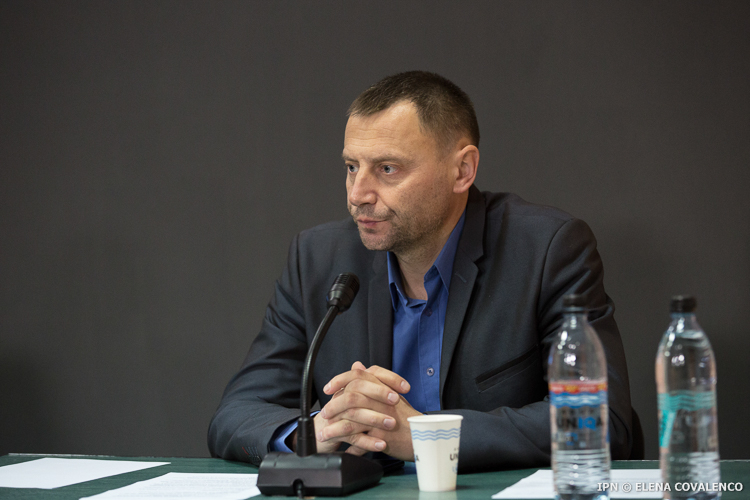
17 years after the protests of April 7, the Republic of Moldova is closer than ever to the European Union. The events of that time were a starting point, which paved the way for the first pro-European governments. This is the opinion of political analyst Ion Tabarta, who mentioned for IPN that that moment marked the beginning of the country’s European journey.

“It was a significant moment, though perhaps overlooked today. April 2009 represented an energy of change in Moldova. We can say that those events gave impetus for change and for what we call today the European project in the Republic of Moldova,” Ion Tabarta noted.

According to the analyst, the effort of those who took to the streets then was worth it. In his opinion, without those protests, Moldova could have remained on a path of stagnation, under a regime with limited development prospects. Ion Tabarta says that, although the European direction was maintained, the journey was not a linear one. There were periods of regression, and the reforms were often delayed or compromised.

The analyst points out that some of the protesters’ expectations have not been fulfilled. Over time, the energy of change has been influenced by political and economic interests, including groups that have benefited from the context created in 2009.

At the same time, the events did not have a pronounced identity character, being particularly related to the pro-European orientation. However, after 2009, relations with Romania have strengthened, and openly anti-Romanian political forces have not returned to power, the analyst pointed out.

Seventeen years later, the events of April 2009 remain controversial and incompletely elucidated. Ion Tabarta believes that this can be explained by the fact that some of the people involved had an interest in the truth not being fully clarified.

The protests of April 2009 were sparked by dissatisfaction with the results of the parliamentary elections, deemed fraudulent, and gathered thousands of young people in the center of Chisinau. Initially peaceful, the demonstrations degenerated into violence, with intrusions into the buildings of the Parliament and Presidency, and several civilians and police officers were injured. Officially, one death was recorded, that of Valeriu Boboc, and civil society also reported other victims under suspicious circumstances.


Traffic in Chisinau is to be reorganized through a set of measures aimed at reducing congestion and improving mobility in the city. The proposed solutions include the arrangement of parking lots at the entrances to the capital, the development of the periurban train, the construction of the ring road and the expansion of bicycle infrastructure.

The measures are provided for in the foundation study on the organization of traffic and transport, launched for public consultations. The city hall specifies that the recommendations of the document will be integrated into the new General Urban Plan Chisinau 2040, IPN reports.

According to the municipality, the study identifies the main traffic problems: the lack of a functional belt, the shortage of parking spaces, insufficiently developed public transport and discontinuous bicycle infrastructure.

In parallel, the study on territorial cooperation was also launched for public consultations. It proposes the creation of a consortium between Chisinau and the suburbs, the development of metropolitan infrastructure and economic and educational hubs.

The document also provides for the construction of a metropolitan water main, a regional landfill and a network of green and blue corridors. It also recommends strengthening cooperation between local authorities in investment planning and the provision of public services.

Public consultations will take place on August 5. Proposals and objections can be submitted until August 19 through the dedicated platform PUG Chisinau 2040.

0 FacebookTwitterPinterestEmail


17 years after the April 7 protests, Moldova is closer to the EU than ever before, analyst

17 years after the protests of April 7, the Republic of Moldova is closer than ever to the European Union. The events of that time were a starting point, which paved the way for the first pro-European governments. This is the opinion of political analyst Ion Tabarta, who mentioned for IPN that that moment marked the beginning of the country’s European journey.

“It was a significant moment, though perhaps overlooked today. April 2009 represented an energy of change in Moldova. We can say that those events gave impetus for change and for what we call today the European project in the Republic of Moldova,” Ion Tabarta noted.

According to the analyst, the effort of those who took to the streets then was worth it. In his opinion, without those protests, Moldova could have remained on a path of stagnation, under a regime with limited development prospects. Ion Tabarta says that, although the European direction was maintained, the journey was not a linear one. There were periods of regression, and the reforms were often delayed or compromised.

The analyst points out that some of the protesters’ expectations have not been fulfilled. Over time, the energy of change has been influenced by political and economic interests, including groups that have benefited from the context created in 2009.

At the same time, the events did not have a pronounced identity character, being particularly related to the pro-European orientation. However, after 2009, relations with Romania have strengthened, and openly anti-Romanian political forces have not returned to power, the analyst pointed out.

Seventeen years later, the events of April 2009 remain controversial and incompletely elucidated. Ion Tabarta believes that this can be explained by the fact that some of the people involved had an interest in the truth not being fully clarified.

The protests of April 2009 were sparked by dissatisfaction with the results of the parliamentary elections, deemed fraudulent, and gathered thousands of young people in the center of Chisinau. Initially peaceful, the demonstrations degenerated into violence, with intrusions into the buildings of the Parliament and Presidency, and several civilians and police officers were injured. Officially, one death was recorded, that of Valeriu Boboc, and civil society also reported other victims under suspicious circumstances.


Over 500 cartridges from the Second World War period were discovered during construction works in the village of Serpeni, Anenii Noi district. The ammunition was removed and destroyed by the National Army sappers, IPN reports.

According to the Ministry of Defense, the ammunition was found by a local resident, and the demining team of the “Codru” Engineer Battalion intervened on the spot. Following the investigation of the terrain, the military identified 502 cartridges of 7.92 mm caliber.

The ammunition was transported and destroyed at the firing range, observing all security measures.

The Ministry of Defense urges citizens that, in the event of the discovery of explosive objects, not to touch them, not to move them and not to try to dismantle or destroy them. Such cases should be immediately reported to the 112 Service or local public authorities.

0 FacebookTwitterPinterestEmail


1 IANUARIE, 2025
1 IANUARIE, 2025