




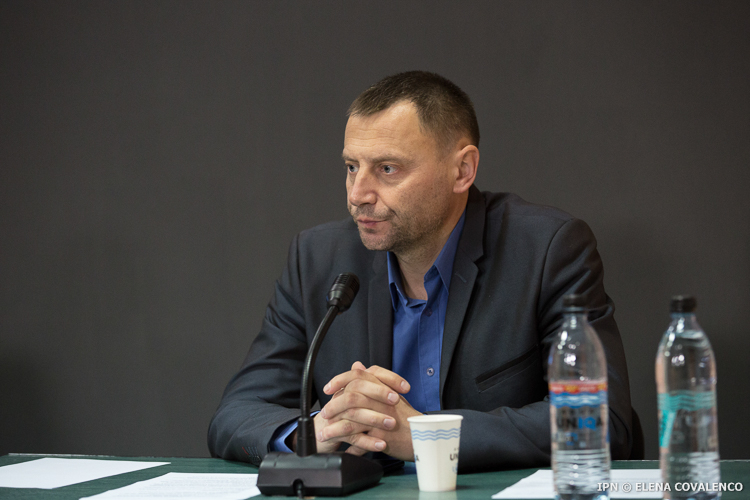
17 years after the protests of April 7, the Republic of Moldova is closer than ever to the European Union. The events of that time were a starting point, which paved the way for the first pro-European governments. This is the opinion of political analyst Ion Tabarta, who mentioned for IPN that that moment marked the beginning of the country’s European journey.
“It was a significant moment, though perhaps overlooked today. April 2009 represented an energy of change in Moldova. We can say that those events gave impetus for change and for what we call today the European project in the Republic of Moldova,” Ion Tabarta noted.
According to the analyst, the effort of those who took to the streets then was worth it. In his opinion, without those protests, Moldova could have remained on a path of stagnation, under a regime with limited development prospects. Ion Tabarta says that, although the European direction was maintained, the journey was not a linear one. There were periods of regression, and the reforms were often delayed or compromised.
The analyst points out that some of the protesters’ expectations have not been fulfilled. Over time, the energy of change has been influenced by political and economic interests, including groups that have benefited from the context created in 2009.
At the same time, the events did not have a pronounced identity character, being particularly related to the pro-European orientation. However, after 2009, relations with Romania have strengthened, and openly anti-Romanian political forces have not returned to power, the analyst pointed out.
Seventeen years later, the events of April 2009 remain controversial and incompletely elucidated. Ion Tabarta believes that this can be explained by the fact that some of the people involved had an interest in the truth not being fully clarified.
The protests of April 2009 were sparked by dissatisfaction with the results of the parliamentary elections, deemed fraudulent, and gathered thousands of young people in the center of Chisinau. Initially peaceful, the demonstrations degenerated into violence, with intrusions into the buildings of the Parliament and Presidency, and several civilians and police officers were injured. Officially, one death was recorded, that of Valeriu Boboc, and civil society also reported other victims under suspicious circumstances.
