

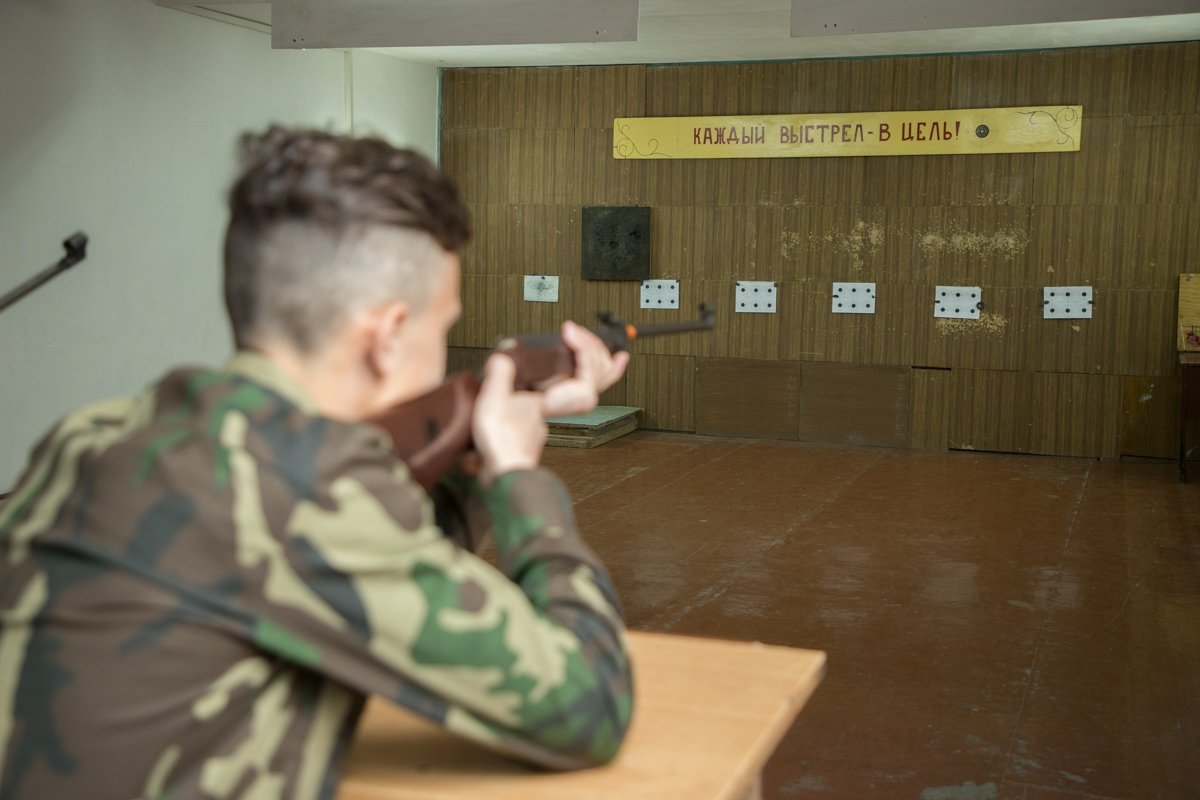
127 children, enrolled this year for studies in the military schools on the left bank of the Dniester

Photo source: novostipmr

In this academic year, 127 children were enrolled in the two militarized educational institutions for minors on the left bank of the Dniester: the “Suvorov” military school in Tiraspol and the cadet school in Bender. In this context, Promo-LEX experts warn that these children are potentially exposed to the risk of being forced by paramilitary structures to sign long-term service contracts, and refusal could lead to reprisals, reports IPN.

According to the association, 65 children have been enrolled in the “Suvorov” military school subordinate to the so-called defense ministry of the region, and 62 in the cadet school in Bender, which is subordinate to the alleged ministry of internal affairs on the left bank of the Dniester. According to Promo-LEX, some of the students are children from vulnerable families or boarding schools.

The two institutions prepare minors for subsequent integration into the power and security structures of the de facto administration in Tiraspol. The Bender Cadet School was established in 2002 and was the first military education institution for minors created in the region. The “Suvorov” Military School in Tiraspol was subsequently created, with the support of the Russian Federation.

Promo-LEX mentions that the educational process includes specific elements of military training. From the age of 11, children wear camouflage uniforms and live in barracks, under the constant supervision of military personnel. In addition to school subjects, they undergo military training, including the use of weapons and drones.


The fiscal-budgetary policy for the year 2027 was approved in the first reading by the Parliament, with the votes of the PAS deputies. However, the opposition criticized the project, arguing that the increase in some taxes and duties will put additional pressure on citizens and the business environment and could contribute to rising prices, IPN reports.

The deputy of the Home Democracy Party, Alexandru Versinin, stated that the state is expected to collect an additional approximately 5.1 billion lei, money which, in his opinion, will be largely collected from the citizens.

The Minister of Finance, Victoria Belous, dismissed the criticism and stated that any tax is, ultimately, paid by the citizens. According to her, the authorities have tried to find a balance between the need to increase budget revenues and maintaining a bearable tax burden. “When we are conservative about raising taxes, but even more critical of a deficit, the only solution is to find a compromise between these two. Through this policy, we tried to come up with equitable increases,” the minister affirmed.

And the deputy from the Alternative faction, Ion Chicu, criticized the project, arguing that increasing the tax burden does not automatically guarantee higher budget revenues. In his opinion, increasing tax rates could discourage economic activity and stimulate tax evasion. Ion Chicu gave as an example the taxation of real estate transactions, where, according to him, increasing the rate from 6% to 12% could lead owners to declare lower transaction values.

Alla Pilipetcaia, a deputy of the Socialist Party, has accused the government of trying to cover the budget deficit by increasing the tax burden on the population and producers.

“The government covers the holes at the expense of ordinary consumers. The tax increases, the price increases. The excise duty increases, the price increases. The VAT increases, the price increases,” declared the deputy. Alla Pilipetcaia also criticized the VAT changes, arguing that the increase in the rate for some products and services will primarily affect families with low incomes. She also drew attention to the difference between the increase in population income and the increase in expenses.

PAS deputies expressed their support for the project. Radu Marian argued that increasing tax revenues is necessary to reduce the budget deficit and to decrease the state’s borrowing costs. According to him, in the last five years, the state has allocated over 10 billion lei for bill compensation and about 40 billion lei for additional pension increases. The deputy also mentioned the extension of the zero tax rate on reinvested profit, a measure he says will encourage investment.

At the same time, the project envisages an increase in personal exemption to 40 thousand lei. According to Radu Marian, the measure will leave more money in the pockets of employees, while the consolidation of fiscal revenues is expected to contribute, in the medium and long term, to reducing the budget deficit.

0 FacebookTwitterPinterestEmail


127 children, enrolled this year for studies in the military schools on the left bank of the Dniester

Photo source: novostipmr

In this academic year, 127 children were enrolled in the two militarized educational institutions for minors on the left bank of the Dniester: the “Suvorov” military school in Tiraspol and the cadet school in Bender. In this context, Promo-LEX experts warn that these children are potentially exposed to the risk of being forced by paramilitary structures to sign long-term service contracts, and refusal could lead to reprisals, reports IPN.

According to the association, 65 children have been enrolled in the “Suvorov” military school subordinate to the so-called defense ministry of the region, and 62 in the cadet school in Bender, which is subordinate to the alleged ministry of internal affairs on the left bank of the Dniester. According to Promo-LEX, some of the students are children from vulnerable families or boarding schools.

The two institutions prepare minors for subsequent integration into the power and security structures of the de facto administration in Tiraspol. The Bender Cadet School was established in 2002 and was the first military education institution for minors created in the region. The “Suvorov” Military School in Tiraspol was subsequently created, with the support of the Russian Federation.

Promo-LEX mentions that the educational process includes specific elements of military training. From the age of 11, children wear camouflage uniforms and live in barracks, under the constant supervision of military personnel. In addition to school subjects, they undergo military training, including the use of weapons and drones.


A group of soldiers from the National Army are participating in the multinational exercise “Strong Griffin 2026”, taking place in Lithuania until September 14, reports IPN.

According to the Ministry of Defense, Moldovan military personnel are training alongside contingents from several participating countries and are involved in activities focused on the planning and implementation of procedures specific to international exercises.

At the “Strong Griffin 2026”, approximately 2,500 soldiers from Lithuania, the United States of America, Poland, the Netherlands, France, Ukraine, the Republic of Moldova, and Portugal are participating. The exercise also involves about 500 units of military equipment.

The authorities specify that the participation of Moldovan military personnel is carried out in accordance with the National Army’s training plan for the year 2026.

0 FacebookTwitterPinterestEmail


1 IANUARIE, 2025
1 IANUARIE, 2025