

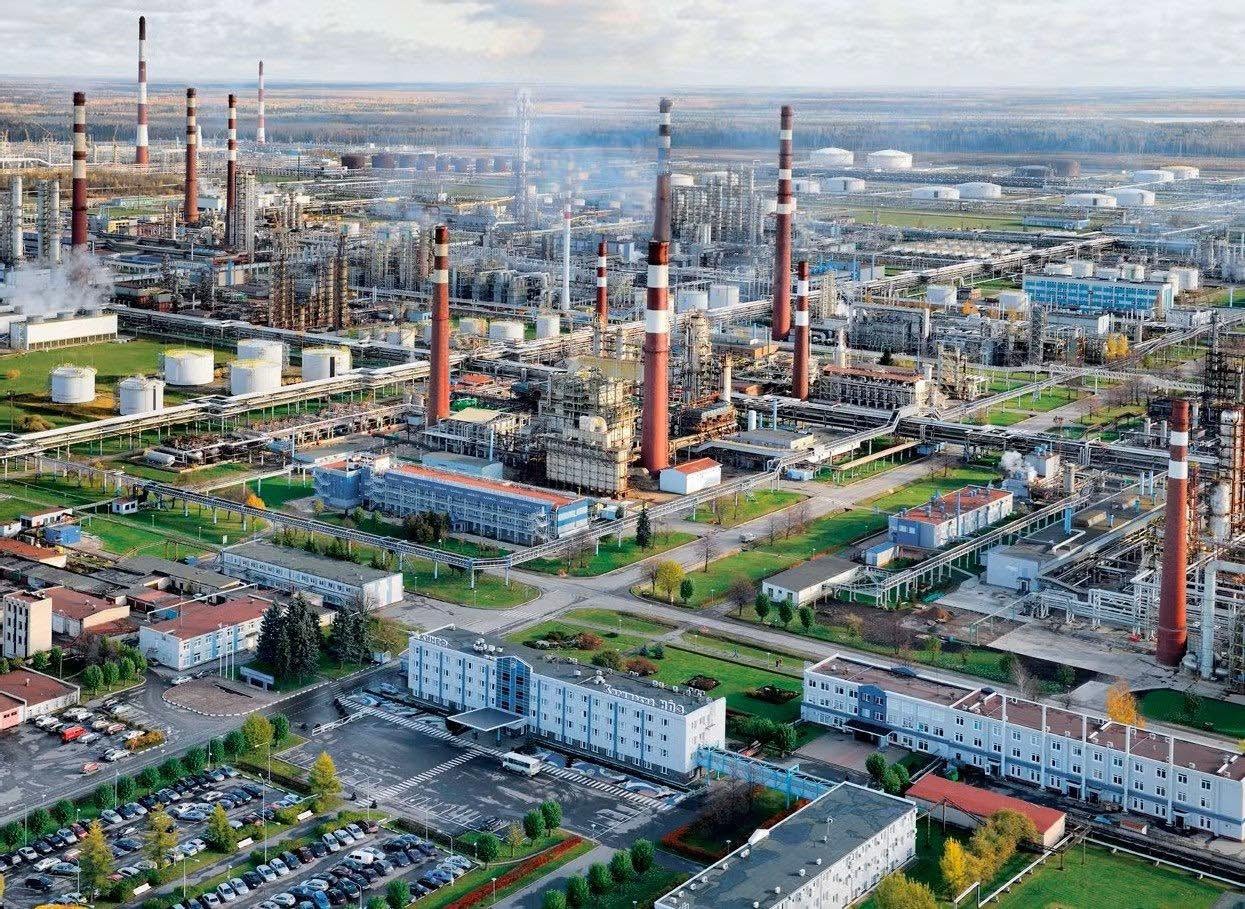
Russia’s second-largest oil refinery hit by drones again

Photo credit: KINEF

Russia’s second-largest oil refinery, located in the Leningrad region, has again come under drone attack. According to regional governor Aleksandr Drozdenko, the attack sparked a fire, and emergency crews are working to deal with the aftermath, IPN reports.

According to the Astra Telegram channel and eyewitness footage, the strike on the refinery was followed by several powerful explosions, and at least two fires broke out at the oil facility. One of the fires engulfed a primary refining unit.

The oil refinery has a processing capacity of up to 21 million tonnes a year and supplies petroleum products to northwestern Russia, including the city of St. Petersburg and Pulkovo Airport. It produces gasoline, diesel, kerosene and petrochemicals. The refinery was targeted by several drone attacks both last year and this year. Following one such attack on August 30, it suspended operations after two primary refining units were damaged.

On October 29, the Ukrainian military launched a series of strikes on oil refineries and storage depots in Russia. Ukrainian President Volodymyr Zelensky had previously said that Ukraine could halt attacks on Russian refineries at the request of US President Donald Trump in exchange for US supplies of Patriot interceptor missiles for its air defense systems.

Meanwhile, oil giant Rosneft has reintroduced limits on petrol sales at its filling stations across all regions of Russia. According to Russian media, as of Monday morning, drivers can buy no more than 30 litres of petrol at urban filling stations and 50 litres at those along highways. Filling fuel cans is also prohibited. Rosneft first introduced these restrictions in June amid fuel shortages caused by attacks on refineries. The measures were later lifted at the end of October.


The Republic of Moldova will receive a government loan of approximately one billion lei from Japan to modernize its agricultural sector. The financing agreement was signed by Deputy Prime Minister and Minister of Foreign Affairs Mihai Popsoi and Japan’s Ambassador to Chisinau, Kazuyuki Takeuchi, IPN reports.

The Ministry of Foreign Affairs states that the loan is being provided under an agreement with the Japan International Cooperation Agency (JICA) to implement the second phase of the “Modernization of Agricultural Machinery and Equipment” project. Deputy Prime Minister and Minister of Foreign Affairs Mihai Popsoi said that Japan is a trusted partner and that its support over the years has translated into tangible projects with a direct impact on the country’s development.

“Through this agreement, we are taking another step towards modernising agriculture by giving farmers access to advanced technologies and high-performance equipment. We value Japan’s ongoing contribution and look forward to further strengthening this partnership for the benefit of our citizens”, said Deputy Prime Minister Mihai Popsoi.

Earlier, Prime Minister Vasile Tofan explained that the loan would allow farmers to purchase agricultural machinery in instalments at prices 10-15% below market rates. He said the state would act as an intermediary in securing the financing, while farmers would be responsible for repaying the loan. The interest rate would be 3.2%.

The financing will be provided for a term of 20 years, with a six-year grace period. Since 2021, eight agricultural projects have been developed and implemented with Japan’s support. These projects have supported the purchase of agricultural machinery, the modernization of livestock farms, the adoption of renewable energy and digital solutions and training for farmers.

0 FacebookTwitterPinterestEmail


Russia’s second-largest oil refinery hit by drones again

Photo credit: KINEF

Russia’s second-largest oil refinery, located in the Leningrad region, has again come under drone attack. According to regional governor Aleksandr Drozdenko, the attack sparked a fire, and emergency crews are working to deal with the aftermath, IPN reports.

According to the Astra Telegram channel and eyewitness footage, the strike on the refinery was followed by several powerful explosions, and at least two fires broke out at the oil facility. One of the fires engulfed a primary refining unit.

The oil refinery has a processing capacity of up to 21 million tonnes a year and supplies petroleum products to northwestern Russia, including the city of St. Petersburg and Pulkovo Airport. It produces gasoline, diesel, kerosene and petrochemicals. The refinery was targeted by several drone attacks both last year and this year. Following one such attack on August 30, it suspended operations after two primary refining units were damaged.

On October 29, the Ukrainian military launched a series of strikes on oil refineries and storage depots in Russia. Ukrainian President Volodymyr Zelensky had previously said that Ukraine could halt attacks on Russian refineries at the request of US President Donald Trump in exchange for US supplies of Patriot interceptor missiles for its air defense systems.

Meanwhile, oil giant Rosneft has reintroduced limits on petrol sales at its filling stations across all regions of Russia. According to Russian media, as of Monday morning, drivers can buy no more than 30 litres of petrol at urban filling stations and 50 litres at those along highways. Filling fuel cans is also prohibited. Rosneft first introduced these restrictions in June amid fuel shortages caused by attacks on refineries. The measures were later lifted at the end of October.


Traffic through the Costesti-Stanca border crossing will be suspended in both directions on Tuesday from 08:00 AM to 08:00 PM. According to the Customs Service, the closure is due to major repair work at the Costesti-Stanca hydraulic complex, IPN reports.

The work will be carried out by the “Apele Moldovei” National Administration. Travellers are therefore advised to plan their journeys in advance and use the alternative border crossings at Lipcani, Sculeni, Leuseni, Cahul or Leova.

For freight carriers, the Customs Service recommends the Leuseni-Albita border crossing for loaded trucks and Cahul-Oancea for empty ones. Traffic through Costesti-Stanca will resume once the works are completed.

0 FacebookTwitterPinterestEmail


1 IANUARIE, 2025
1 IANUARIE, 2025