

Recommendations for implementing inclusive education

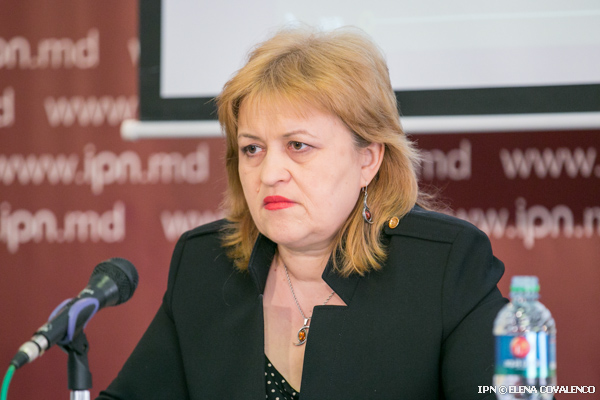
There are a number of moments that necessitate increased attention on the part of the state authorities in the field of promotion of inclusive education. A series of relevant recommendations were presented in a news conference at IPN in in connection with the Global Action Week for Education that is held in 100 countries concurrently.

The recommendations were formulated as a result of a nationwide study carried out by the Alliance of NGOs working in the field of child and family social protection during 2016-2017 to see how inclusive education is implemented in schools.

Ludmila Malcoci, executive director of the association Keystone Human Services, underlined it is necessary to extend the promotion of inclusive education in preschool institutions so as to ensure a high training level of children with special educational needs and transition from kindergarten to school.

Practice shows that when the children benefitted from support at the kindergarten, their inclusion in school was much more efficient. Emphasis should be placed on the ensuring of a positive learning environment, cultivation of trust in the own forces, inclining of students with special educational needs. The latter need more specialized logopedic, psychological, psycho-pedagogical and kineto-therapeutic assistance services. More support teachers, multidisciplinary commissions and resource centers for inclusive education are needed.

The NGOs working in the field of the social protection of children plead for reducing the number of students in classes that include children with special educational needs to at most 15, two-three of whom will be with special educational needs. The budgets of education institutions should include funds for activities to adjust to the necessities of children with special educational needs.

The adjustment of infrastructure to the needs of students with reduced locomotor abilities remains a problem mainly in rural areas. “The local public authorities should take a more active part. They forget that they have persons with physical disabilities in the community. Buildings that do not ensure universal access to them continue to be erected and made available for use,” stated Ludmila Malcoci.

A number of activities will be staged as part of the Global Action Week for Education. These will include a session to inform the students of the Teacher Training University “Ion Creanga” and a roundtable meeting on April 26 entitled “Financing in education: priorities, necessities and reality” that will involve representatives of the Ministry of Education, Culture and Research and of the Psycho-Pedagogical Assistance Service, managers of education institutions and civil society representatives.

ludmila malcoci despre recomandari.mp3


An earthquake with a magnitude of 7.1 on the Richter scale caused the collapse of several buildings and damage to roads in Japan. Dozens of people were injured, and nearly 300 thousand residents were ordered to evacuate. Authorities warn that strong aftershocks may follow, reports the agency Reuters, quoted by IPN.

The earthquake occurred on Tuesday, with the epicenter in Kumamoto prefecture, at a shallow depth, which amplified the intensity of the movements felt in several localities. Rescue teams are searching for people trapped under rubble, and operations are hampered by damaged roads.

Prime Minister Sanae Takaichi stated that the toll of victims and the extent of the damage are still being assessed. Several areas have been left without electricity, and infrastructure, including roads, bridges, and buildings, has been affected. Authorities have opened centers for evacuees and have asked residents in vulnerable areas to avoid damaged buildings.

Kyushu Electric Power Company announced that approximately 48 thousand homes were left without power, and the JR Kyushu railway operator temporarily suspended services. Kumamoto Airport was closed for safety checks, and several flights were cancelled or redirected.

0 FacebookTwitterPinterestEmail


Recommendations for implementing inclusive education

There are a number of moments that necessitate increased attention on the part of the state authorities in the field of promotion of inclusive education. A series of relevant recommendations were presented in a news conference at IPN in in connection with the Global Action Week for Education that is held in 100 countries concurrently.

The recommendations were formulated as a result of a nationwide study carried out by the Alliance of NGOs working in the field of child and family social protection during 2016-2017 to see how inclusive education is implemented in schools.

Ludmila Malcoci, executive director of the association Keystone Human Services, underlined it is necessary to extend the promotion of inclusive education in preschool institutions so as to ensure a high training level of children with special educational needs and transition from kindergarten to school.

Practice shows that when the children benefitted from support at the kindergarten, their inclusion in school was much more efficient. Emphasis should be placed on the ensuring of a positive learning environment, cultivation of trust in the own forces, inclining of students with special educational needs. The latter need more specialized logopedic, psychological, psycho-pedagogical and kineto-therapeutic assistance services. More support teachers, multidisciplinary commissions and resource centers for inclusive education are needed.

The NGOs working in the field of the social protection of children plead for reducing the number of students in classes that include children with special educational needs to at most 15, two-three of whom will be with special educational needs. The budgets of education institutions should include funds for activities to adjust to the necessities of children with special educational needs.

The adjustment of infrastructure to the needs of students with reduced locomotor abilities remains a problem mainly in rural areas. “The local public authorities should take a more active part. They forget that they have persons with physical disabilities in the community. Buildings that do not ensure universal access to them continue to be erected and made available for use,” stated Ludmila Malcoci.

A number of activities will be staged as part of the Global Action Week for Education. These will include a session to inform the students of the Teacher Training University “Ion Creanga” and a roundtable meeting on April 26 entitled “Financing in education: priorities, necessities and reality” that will involve representatives of the Ministry of Education, Culture and Research and of the Psycho-Pedagogical Assistance Service, managers of education institutions and civil society representatives.

ludmila malcoci despre recomandari.mp3

The “Eurasia” organization has been declared extremist in the Republic of Moldova. The decision was pronounced by the Central Court of Appeal at the request of the Information and Security Service. The ISS warns that participation in the organization’s activities, its financing, or the promotion of its materials may lead to criminal liability, reports IPN.

Based on the court’s decision, the organization was included in the Register of extremist organizations and materials. According to the SIS, after this inclusion, leading or organizing the activities of the organization, participating in it, financing it, as well as producing, holding for distribution, distributing or promoting materials issued by the organization can attract criminal liability.

The institution recommends to the citizens of the Republic of Moldova, including those abroad, to avoid any form of involvement in the activities of “Eurasia”, including participation in events organized by it, collaboration with the organization or distribution of its materials.

SIS specifies that it will continue to monitor compliance with the legal framework and the application of measures provided for the prevention and combating of extremist activities, with the aim of protecting national security and constitutional order.

The “Eurasia” organization is mentioned in a report by the SIS regarding external interference in the 2024 electoral processes. According to the document, the external influence on the Republic of Moldova would have manifested through platforms, influence agents and tools associated with hybrid interference, among which are indicated the “Eurasia” entity, the “Victory” Bloc and the organized criminal group “Șor”, supported by individuals under international sanctions and in search.

0 FacebookTwitterPinterestEmail


1 IANUARIE, 2025
1 IANUARIE, 2025