

Objectives of new IMF program

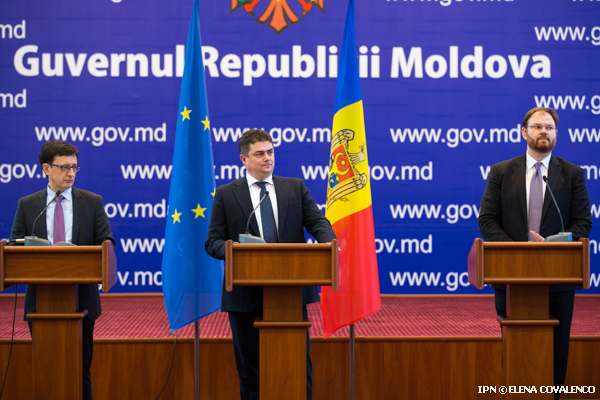
The new program of the IMF for Moldova envisions a series of long-term objectives. The country pledged not to allow the external debt to increase through state-owned companies. In order to improve the management of the given entities, a bill on state-owned and municipal companies was worked out to make audit and quarterly reporting mandatory at these companies. The capacities of the National Agency for Energy Regulation will be strengthened so as to improve the methodologies of setting utility tariffs. The poverty reduction strategy will be updated and new social policy instruments will be designed to support the vulnerable groups of people in case of tariffs rises, Deputy Prime Minister and Minister of Economy Octavian Calmac stated in a news conference, quoted by IPN.

The program provides for the enhancement of the competitiveness of the national economy, ensuring of economic and budget stability, overcoming of vulnerabilities in the sectors of the economy, obtaining of progress in implementing sector reforms and the adopted strategies, as regards the augmentation and diversification of exporta, attraction of investments and reformation of the state economic and commercial policies.

The government is committed to eliminating accumulated debts within the energy sector through transparent pricing solutions and to ensuring utility tariff-setting at cost-recovery levels, with appropriate social safety net safeguards for vulnerable population groups.

Minister of Finance Octavian Armasu said a commitment in the fiscal budgetary sector is to fulfill the guarantees provided by the government for the emergency loans given to three banks. “We will also amend the 2016 state budget law. We were to cut particular costs and already reduced the national public budget spending by about 2.1 billion lei for this year. For 2017, we will promote a budget law in accordance with our agreements with the IMF. In fact, we didn’t cut jobs this year. We reduced the vacancies in the public sphere. In the medium-term, we will lay emphasis on the consolation of the tax base, elimination of particular tax concessions and consolidation of the capacities of some of the institutions, in particular the State Tax Service,” stated the minister, adding that the restructuring of the pension system is also a medium-term commitment.

About 20 measures of the program are aimed at restructuring and improving the situation in the banking sector. National Bank governor Sergiu Cioclea classified these measures into four categories: measures intended to ensure stability in the banking system in the medium and long run; to improve the way in which the banks are managed so that the management is responsible, while shareholder structure is transparent; to improve the legal framework so that the central bank has the necessary intervention instruments and its independence is strengthened, and to create a central depository to ensure the ownership rights and exclude any raider attack.

On November 7, the IMF Board approved Fund support in the form of a 36-month extended arrangement under the Extended Credit Facility and a 36-month arrangement under the Extended Fund Facility in the cumulative amount of SDR 129.4 million or US$ 178.7 million (75 percent of Moldova’s quota).


The diplomatic missions of the Republic of Moldova will suspend civil status services throughout the month of August. The Ministry of Foreign Affairs announces that this measure is necessary for the implementation of the new Information System “Civil Status Acts”, reports IPN.

The restriction targets birth, marriage, and divorce registration services, name changes, as well as other related services. The authorities specify that all applications submitted until August 1st will be examined according to the current procedures and will not be affected by the transition period.

During the suspension period, individuals who possess an electronic signature will be able to request civil status extracts in electronic format through the evo.gov.md platform, under the conditions provided by law.

According to the MFA, the transition to the new system aims to modernize and streamline civil status services, including for the citizens of the Republic of Moldova residing abroad.

The reception of requests will resume starting September 1.

0 FacebookTwitterPinterestEmail


Objectives of new IMF program

The new program of the IMF for Moldova envisions a series of long-term objectives. The country pledged not to allow the external debt to increase through state-owned companies. In order to improve the management of the given entities, a bill on state-owned and municipal companies was worked out to make audit and quarterly reporting mandatory at these companies. The capacities of the National Agency for Energy Regulation will be strengthened so as to improve the methodologies of setting utility tariffs. The poverty reduction strategy will be updated and new social policy instruments will be designed to support the vulnerable groups of people in case of tariffs rises, Deputy Prime Minister and Minister of Economy Octavian Calmac stated in a news conference, quoted by IPN.

The program provides for the enhancement of the competitiveness of the national economy, ensuring of economic and budget stability, overcoming of vulnerabilities in the sectors of the economy, obtaining of progress in implementing sector reforms and the adopted strategies, as regards the augmentation and diversification of exporta, attraction of investments and reformation of the state economic and commercial policies.

The government is committed to eliminating accumulated debts within the energy sector through transparent pricing solutions and to ensuring utility tariff-setting at cost-recovery levels, with appropriate social safety net safeguards for vulnerable population groups.

Minister of Finance Octavian Armasu said a commitment in the fiscal budgetary sector is to fulfill the guarantees provided by the government for the emergency loans given to three banks. “We will also amend the 2016 state budget law. We were to cut particular costs and already reduced the national public budget spending by about 2.1 billion lei for this year. For 2017, we will promote a budget law in accordance with our agreements with the IMF. In fact, we didn’t cut jobs this year. We reduced the vacancies in the public sphere. In the medium-term, we will lay emphasis on the consolation of the tax base, elimination of particular tax concessions and consolidation of the capacities of some of the institutions, in particular the State Tax Service,” stated the minister, adding that the restructuring of the pension system is also a medium-term commitment.

About 20 measures of the program are aimed at restructuring and improving the situation in the banking sector. National Bank governor Sergiu Cioclea classified these measures into four categories: measures intended to ensure stability in the banking system in the medium and long run; to improve the way in which the banks are managed so that the management is responsible, while shareholder structure is transparent; to improve the legal framework so that the central bank has the necessary intervention instruments and its independence is strengthened, and to create a central depository to ensure the ownership rights and exclude any raider attack.

On November 7, the IMF Board approved Fund support in the form of a 36-month extended arrangement under the Extended Credit Facility and a 36-month arrangement under the Extended Fund Facility in the cumulative amount of SDR 129.4 million or US$ 178.7 million (75 percent of Moldova’s quota).


Prime Minister Vasile Tofan was greeted with military honors at the Victoria Palace in Bucharest by his Romanian counterpart, Ilie Bolojan. The visit marks the first official foreign trip of the Prime Minister, and the agenda includes discussions about joint strategic projects, economic cooperation and regional security, reports IPN.

During the official welcoming ceremony, the Honor Guard of Romania played the national anthems of the Republic of Moldova and Romania and the two officials greeted the delegations.

Vasile Tofan is accompanied to Bucharest by Deputy Prime Minister Vladimir Bolea, Minister of Infrastructure and Regional Development, and by the Minister of Energy, Dorin Junghietu. The officials have withdrawn for discussions, and at the end of the meeting, the two prime ministers are expected to hold joint press statements.

During the visit, Prime Minister Tofan has scheduled meetings with the President of Romania, Nicusor Dan, and with representatives of the leadership of the Parliament in Bucharest. Also, he will discuss with the representatives of the Basarabeni Businessmen’s Club about attracting investments and supporting the business environment.

0 FacebookTwitterPinterestEmail


1 IANUARIE, 2025
1 IANUARIE, 2025