



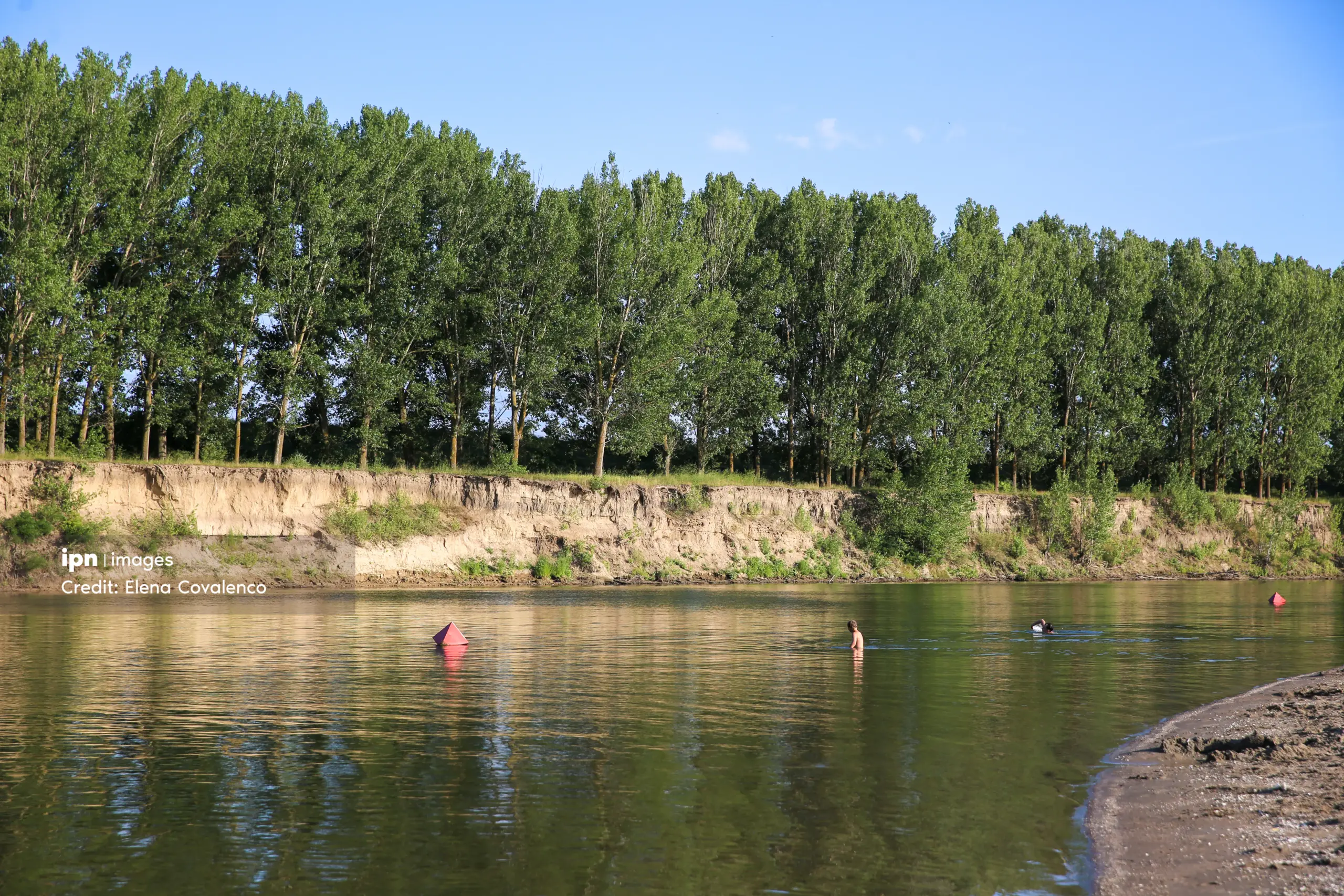
The hydrological situation on the Dniester remains critical, and if the drought continues, the volume of discharges from the Novodnestrovsk reservoir could be reduced again to preserve water reserves. This is stated by the Minister of Environment, Gheorghe Hajder, who mentions that in this context, a new meeting of the Dniester Commission has been proposed for September 11, to analyze the hydrological situation in the upper basin of the river, reports IPN.
According to Gheorghe Hajder, the water input into the reservoir has significantly decreased due to the lack of precipitation. On some days, the inflow rate was only 16 cubic meters of water per second, while the discharges are maintained at 60 cubic meters per second, in accordance with the agreement with the Ukrainian side.
The Minister says that the water level in the lake has reached approximately 111 meters, almost 10 meters below the normal level. Under these circumstances, the authorities are trying to preserve the water reserves for as long as possible, without endangering the population’s supply. Gheorghe Hajder stated that the Republic of Moldova and Ukraine are monitoring the hydrological and meteorological situation and maintaining contact to decide the level of the discharged flow.
So far, the flow discharged from the reservoir into the Nistru has been reduced three times. At the end of July, it was decreased from 100 to 85 cubic meters per second, subsequently from 85 to 75 cubic meters per second, and now it is maintained at 60 cubic meters per second.
On August 26, the government extended the state of alert in the hydrological sector for another 30 days, initially instituted on July 28, due to the significant reduction of the Nistru’s flow. During this period, authorities can intervene in the management of water consumption, including by temporarily modifying the conditions of special use permits, to prioritize the needs of the population.
