

CReDO: Draft Broadcasting Code needs to be improved

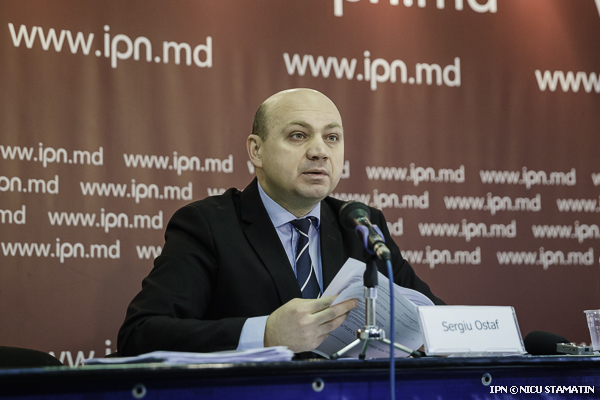
The adoption of the draft Broadcasting Code in the current variant could have unpredictable effects because some of the provisions considerably limit the freedom of expression. Thus, the bill, which was included in the agenda of the February 10 meeting of the Government, should be withdrawn for improvement, said the director of the Resource Center for Human Rights (CReDO) Sergiu Ostaf. In a news conference at IPN, he put forward a series of proposals designed to better ensure the right to expression, media pluralism and the independence of the media regulator.

Sergiu Ostaf said that if the new Code is adopted in the current form, a more difficult working environment will be created for journalists and editorialists from the broadcasting sector. To improve the bill, the phrase “obligation of diligence in verification of information” should be modified in Article 13, paragraph 3(b). This norm is excessive and requires additional efforts on the part of journalists. The phrase can be replaced with “responsibility to respect the professional journalistic ethics according to the European democratic practices.”

The CReDO director also recommends amending Article 13, paragraph 1, which says that “complete and truthful information’” should be presented. The expert considers the expression “complete and accurate” should be excluded because it is very hard to do this in practice as the journalists cannot ensure the absolute accuracy of information.

Sergiu Ostaf suggests supplementing the provisions from paragraph 4(c) of Article 13 with the expression “including, where it is possible, to present the reaction of the relevant or involved person”. The given amendment will facilitate the work of the journalists when the person featured in the article/report is not accessible or refuses to communicate with the press.

According to Sergiu Ostaf, the imposition, by Article 105 of the Broadcasting Code, of the restriction on “dominant situation in forming public opinion” is unpredictable and oscillating. This aspect discourages the ensuring of quality of entrepreneurial activity in the field. The pluralism of opinions can be gradually ensured by effectively limiting the number of licenses, not by imposing the restriction on having a dominant position on the market. In this regard, the number of licenses can be limited to two broadcast or retransmission licenses for each frequency for the same private individual and legal entity or persons related to them, up to the fourth degree.

The CReDO director considers the current Broadcasting Code is inferior to the proposed bill in many respects, but this bill does not provide solutions for attracting investments to an audiovisual business of a high quality either. Also, it will not ensure a wider pluralism of opinions.

Sergiu Ostaf noted that in other states the parties are not banned from founding TV channels. This restriction stipulated in the Broadcasting Code will reduce the pluralism of opinions or will make the parties to indirectly finance TV channels from undeclared resources.

sergiu ostaf despre proiectul codului audiovizualului.mp3


The Environmental Journalists Association is organizing the event “Old School – New Times”, as part of a grant program, part of the project “Green Justice for a Protected Environment and Sustainable Communities in the Republic of Moldova”, implemented by the EcoContact association /Suhuluceni Village, Telenesti district /at 11:00 AM/.

The seniors from the capital are invited to a new edition of musical performances, held within the framework of the socio-cultural weekend project “Dialogue between generations” (August 1-2) /Public Garden “Stefan cel Mare si Sfant” /at 04:00 PM/.

The open-air exhibition TehAgroFest 2026 continues /Tohatin Commune, outskirts, M14 Road /July 30 – August 1/.

The City Hall of Chisinau is organizing fairs and markets with local products and goods in the sectors of the capital /1-2 August/.

0 FacebookTwitterPinterestEmail


CReDO: Draft Broadcasting Code needs to be improved

The adoption of the draft Broadcasting Code in the current variant could have unpredictable effects because some of the provisions considerably limit the freedom of expression. Thus, the bill, which was included in the agenda of the February 10 meeting of the Government, should be withdrawn for improvement, said the director of the Resource Center for Human Rights (CReDO) Sergiu Ostaf. In a news conference at IPN, he put forward a series of proposals designed to better ensure the right to expression, media pluralism and the independence of the media regulator.

Sergiu Ostaf said that if the new Code is adopted in the current form, a more difficult working environment will be created for journalists and editorialists from the broadcasting sector. To improve the bill, the phrase “obligation of diligence in verification of information” should be modified in Article 13, paragraph 3(b). This norm is excessive and requires additional efforts on the part of journalists. The phrase can be replaced with “responsibility to respect the professional journalistic ethics according to the European democratic practices.”

The CReDO director also recommends amending Article 13, paragraph 1, which says that “complete and truthful information’” should be presented. The expert considers the expression “complete and accurate” should be excluded because it is very hard to do this in practice as the journalists cannot ensure the absolute accuracy of information.

Sergiu Ostaf suggests supplementing the provisions from paragraph 4(c) of Article 13 with the expression “including, where it is possible, to present the reaction of the relevant or involved person”. The given amendment will facilitate the work of the journalists when the person featured in the article/report is not accessible or refuses to communicate with the press.

According to Sergiu Ostaf, the imposition, by Article 105 of the Broadcasting Code, of the restriction on “dominant situation in forming public opinion” is unpredictable and oscillating. This aspect discourages the ensuring of quality of entrepreneurial activity in the field. The pluralism of opinions can be gradually ensured by effectively limiting the number of licenses, not by imposing the restriction on having a dominant position on the market. In this regard, the number of licenses can be limited to two broadcast or retransmission licenses for each frequency for the same private individual and legal entity or persons related to them, up to the fourth degree.

The CReDO director considers the current Broadcasting Code is inferior to the proposed bill in many respects, but this bill does not provide solutions for attracting investments to an audiovisual business of a high quality either. Also, it will not ensure a wider pluralism of opinions.

Sergiu Ostaf noted that in other states the parties are not banned from founding TV channels. This restriction stipulated in the Broadcasting Code will reduce the pluralism of opinions or will make the parties to indirectly finance TV channels from undeclared resources.

sergiu ostaf despre proiectul codului audiovizualului.mp3

The Farmers’ Force Association asserts that the cereal and oilseed sector is going through a deep crisis, exacerbated in the last five months by the rising cost of fuel and fertilizers, the stagnation of wheat prices, and the lack of subsidies. In this context, farmers are asking the Government for a set of urgent measures to prevent the situation from worsening, reports IPN.

According to the association, the price of diesel has increased by approximately 70%, and farmers are facing a fuel shortage that threatens the agricultural work of the summer-autumn season. At the same time, the costs of fertilizers have risen by 35-40%, while the price of wheat on the domestic market remained unchanged in July and fell in the last week by 30-40 cents per kilogram.

The Farmers’ Force asserts that vegetable producers have been left without subsidies this year, and arrears for 2025 have not been paid. The Association claims that the new Agricultural Strategic Program does not provide direct payments for cereal and oilseed crops, while small and medium farmers are affected by the disasters of recent years and the pressure of creditors.

Among the measures requested are maintaining the current VAT rate for agricultural production, reintroducing the licensing of grain and oilseed imports, ensuring diesel stocks for the agricultural campaign, checking the wheat purchase market, and refunding the diesel excise for small and medium farms.

In a response to IPN, the Ministry of Agriculture and Food Industry stated that the situation in the sector is influenced by internal and external factors, including developments in regional and international markets. The institution maintains that it monitors the situation and analyzes, together with the responsible authorities, any necessary measures.

Regarding the arrears on subsidies, the ministry specifies that these will be gradually paid off, and the new Strategic Program of Agricultural Policy will not allow the accumulation of new debts, payments being made within the limit of available resources.

0 FacebookTwitterPinterestEmail


1 IANUARIE, 2025
1 IANUARIE, 2025