




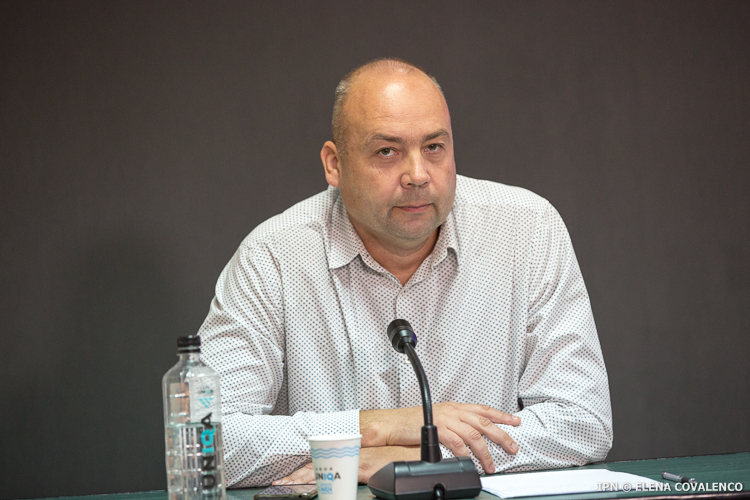
Training is no longer a priority of parties. There is a visible tendency that the recreational element triumphs over the educative one within political parties in the Republic of Moldova, political pundit Cornel Ciurea stated in a public debate hosted by IPN.
“The training line has declined. All the party activities of the recent past have been based primarily on the recreational, entertaining element that prevails over the educative element. It wasn’t so earlier. Possibly the PAS applied training at the first stage. I don’t know about the current situation. I know that they staged particular lessons, seminars with the assistance of civil society, but emphasis there was placed on an ideological issue. We should therefore not be shocked when we have mayors with sexist approaches as gender equality is an ideological element. This is ok within a particular type of political culture, but is not ok within another type of political culture. When a candidate for mayor addresses citizens with patriarchal political culture, he cannot say that the woman is the best one. He will say that the man is the best one and this is normal within the patriarchal political culture that still prevails in the Republic of Moldova,” stated Cornel Ciurea.
According to him, civil culture or participatory culture is essential for democratic systems. Some consider that the political culture in Moldovan society is participatory. Others see a patriarchal political culture, especially at the local level. It is now hard to define the political culture typical of Moldovan society as the citizens often distance themselves from the model promoted by political elites.
“The elites want a pro-European, pro-Western, participatory culture and many other issues: gender equality, favoring of minorities and so on. The elites favor this, but society has other views and approaches and opposes. And we then witness this game. The citizen is pro-European too as the projects produce particular results and the citizen expresses particular interest in Europeanism but simultaneously rejects a number of things. So, we have very interesting citizens,” noted Cornel Ciurea.
The public debate entitled “Political culture at local and European levels: contexts and examples” was staged by IPN News Agency in the framework of the series “Stimulation of discussion in the mass media about traditional particularities of local elections and the need for Europeanization” with support from Soros Foundation Moldova.
- Mayor in Aluatu not elected. Election to be rerun in two weeks
- Post-electoral conclusions. Op-Ed by Igor Boțan
- Second round of rerun election is held in Aluatu village this Sunday
- Calibrating reforms for Moldova’s next elections. Op-Ed by Dr. Dorina Baltag
- Viorel Chivriga: Localities in Moldova have enormous potential to reach European development level and some already managed to do this
- Stanislav Giletski: Europeanization should start at local level
- Ion Galeru: Each local elected official should be treated equally by government, regardless of political color
- Viorel Furdui: Local elected official are among main promoters of Europeanization
- Local elections in context of European course. IPN debate
- Angela Caraman: Premier and President are not obliged to withdraw from office during campaign
- Leonid Boaghi about advantages of cooperation between LPAs and NGOs: When you don’t have partners, you must grow them
- Mariana Galea: We cannot speak about much autonomy at local level when budgets are small
- Andrei Covali: For mayor and local council, citizen’s interests should be key
- Local elected officials after elections: Cooperation and competition for public interest. IPN debate
- Number of female mayors in Moldova will reach 30% only in 2039, CPD
- Veaceslav Ioniță: Speech in campaign prior to local elections should center on real problems of localities
- Number of female candidates for mayor in 15 years grew by only 7%, CPD
- Silviu Bivol: Quality of political class can be improved through concrete steps
- Valeriu Sainsus about particularities of local elections: Not political color, but person matters
- Quality of political class and portrait of voter at local level. IPN debate
- Public Administration Reform via Electoral Signals. Op-ed written by Dr. Dorina Baltag
- Society’s perceptions of role of women in politics have worsened, findings
- Civic Coalition for Free and Fair Elections: Local elections were partially free and fair
- Citizens are discouraged as none of politicians was jailed for corruption, MP
- Ion Ceban’s seat of mayor validated
- Causeni mayor stripped of victory in latest election
- Cash seized from Șansă Party member after searching his home
- Residents of Aluatu to vote in mayoral runoff in two weeks
- PAS and PSRM won most seats of mayor in runoffs
- Youngest mayor is 23, oldest one is 71
- ENEMO Mission presents Statement of Preliminary Findings and Conclusions for November 19 runoffs
- Promo-LEX observers reported 126 incidents during voting process
- MP wins mayoralty in a village of Nisporeni district
- Sergei Anastasov reelected mayor of Comrat
- Who won mayoralty in eight suburban settlements of Chisinau municipality
- Ex-minister elected mayor of Ungheni
- Over 314,000 voters cast ballots in November 19 elections
- Alexandr Petkov won mayoral runoffs in Balti
- Elections in municipality of Balti are valid
- Over 60 incidents reported by observers of Promo-LEX
- Turnout of voters in Balti at over 16%
- Alexandr Petkov: Fate of Balti is decided today
- Voting process is taking place without significant incidents, CEC
- Maxim Moroșan: I voted for bright and correct future of Balti
- National voter turnout at midday close to 15%
- Maia Sandu: Go to the polls and decide how you want your locality to look like
- Incidents in election process reported by Promo-LEX observers
- Dorin Recean: Everyone should go and vote today
- Over 851,000 electors expected to vote today. All polling stations opened
- Runoff vote is held in 273 localities and elections are rerun in another eight localities today
- Promo-LEX further ascertains abusive use of administrative resources
- Cause of disappointment and sufferings of Marc Tkachuk… Op-Ed by Victor Pelin
- Pavel Postica: Nearly 830,000 people are expected to vote in November 19 runoffs
- Alexandru Bujorean: Each election is a new litmus test for society
- Igor Bucătaru: Use of administrative resource is most common violation in elections
- Angela Kolatski: If fertile soil for electoral corruption hadn’t existed, this phenomenon wouldn’t have had such a scale
- Influence of acts of corruption on election process at local level. IPN debate
- PAS obtained most of seats of mayor after November 5 elections in Moldova
- Election results: a litmus test Moldova’s European Integration. Op-Ed by Dr. Dorina Baltag
- Alexandr Petkov renews call for debate ahead of Balti mayoral runoff election
- Socialist candidate Maxim Moroshan invites Renato Usatyi to debate
- 828,000 ballots to be printed for runoff vote
- Revolution put off… Op-Ed by Victor Pelin
- Lilian Carp: Candidates should be required by law to participate in debates
- Local elections and perspective of Russo-Moldovenist revenge. Op-Ed by Anatol Țăranu
- Janis Mazeiks: Those who disobey the law should be tackled by ordinary ways so that there is possibility of challenging
- Adrian Băluțel: When we face a direct danger to state security, we assume risky decisions
- Ion Tăbîrță: Geopolitical disputes are prefigured for 2025
- Igor Dodon: Socialists will not withdraw their candidate for mayor of Balti
- Partial elections to take place in three localities in spring
- Mayoral runoffs to be held Nov. 19
- Victor Koroli: People with special needs face multiple barriers in electoral processes
- Cornelia Ursu: Persons with special needs and ethnic minorities meet with barrier in election process – hate speech
- Svetlana Rusu: National programs to support vulnerable categories should be applicable at local level
- Alina Andronache: Number of women in politics and in administrative posts grew, but…
- Participation of women, ethnic minorities and persons with special needs in local elections. IPN debate
- Media outlets urged to inform voters impartially
- Relatively equal access for candidates, image transfer and gender imbalance, IJC report
- PAS and PSRM obtained most of seats in district councils
- Marina Tauber: Decision to exclude Arina Korshikova is shameful and will be challenged
- Arina Korshikova excluded from electoral competition in Balti
- Alexandru Bujorean: We must be concerned about multiplication of “Orhei” phenomenon
- Mihai Mogîldea: In large towns and northern districts, PAS suffered semi-failure
- IDOM demands additional measures to guarantee electoral rights in mental institutions
- 650 persons from psychiatric institutions voted in November 5 elections
- CEC provides details about conduct of election campaign for runoffs
- Dragoș Galbur: In Chisinau, 22 out of 28 candidates were fillers
- Valeriu Pașa: Blow was given to fortress of pro-European views
- MAN and PAS will each have 20 councilors in Chisinau City Council
- How seats were distributed in Balti Municipal Council
- Igor Grosu: Party of Action and Solidarity will have a strong team in CMC
- Mayors in 623 localities elected by first round of voting
- Igor Dodon: Government suffered defeat
- ENEMO presents Preliminary Statement on November 5 local elections
- Mayors in ten suburbs elected by first round. Runoffs to be held in eight localities
- Ion Ceban: I assure you that I will be mayor of everybody
- Our Party polled most of votes in elections to Balti Municipal Council
- Andrei Donică lost election in Condrița
- Results of elections to Chisinau Municipal Council
- Scores obtained by 27 candidates for mayor of Chisinau
- 100% of votes counted. Ion Ceban won Chisinau mayoralty by first round
- PAS candidate and independent candidate to compete in runoffs in Ungheni
- Nicolae Dandiș won elections in Cahul according to preliminary results
- Runoff vote to be held in Balti
- Two more voting reports to be processed in Chisinau. Ion Ceban gains 50.63%
- Ion Ceban: According to preliminary results, MAN won in Chisinau
- Protests, test for opposition’s force. Op-Ed by Victor Pelin
- 302 of 305 voting reports processed: Ion Ceban – 50.65%, Lilian Carp – 28.20%
- With one third of voting reports processed, Ion Ceban is shown to have 53% of the ballot
- Preliminary election results in Balti: Arina Korshikova and Alexandr Petkov hold lead
- Lilian Carp after ending of voting: Chisinau should be placed next to European capitals
- 30 of 305 voting reports processed: Ion Ceban gains over 54% of the ballot
- Elections to be rerun in eight localities
- Vasile Bolea: Regardless of results, promises made to citizens should be fulfilled
- Polls closed, national voter turnout at over 41%
- Police: No major violations or incidents were identified
- Ion Ceban: Our priority is to ensure security of vote of each citizen of Chisinau
- Promo-LEX reports attempts to corrupt voters and cases of campaigning
- Turnout of voters nationwide at 7 p.m. was 40%
- Dorin Recean: I call on everyone to vote. There will be no runoffs for local councils
- Voter turnout in 820 out of 898 localities exceeded 25%
- Election threshold in municipality of Balti passed
- Number of reported election process incidents increased, Promo-LEX
- Election threshold in Chisinau reached
- Ruslan Codreanu: I voted for Chisinau and for people
- Nicolai Grigorishin votes for stability in Balti
- Voters in Pocrovca village of Dondușeni most active ones so far
- Police signal cases of political campaigning
- About 200 ODIHR observers are overseeing elections in Moldova
- Adrian Albu: I voted for a city in which we will be respected
- CUB candidate Ion Bulgac: I’m sure that from tomorrow we will build a correct Chisinau
- Victor Chironda: We need solid sustainable development
- Maia Sandu: Democracy depends on our vote
- Almost half a million citizens voted by noon
- Vasile Costiuc: Don’t stay at home as each vote matters!
- PSRM’s candidate for mayor of Balti voted for city’s future
- Vasile Bolea: I voted for revival of Chisinau and all Moldova
- Roman Mihăeș: I voted for a European and Romanian Chisinau
- Ștefan Gligor: I voted for a city without traffic jams, schemes, bureaucracy and populism
- Candidate for mayor of Balti Mark Tkachuk cast a vote
- Over 10,000 voters cast ballots in Balti by 11 a.m.
- Ion Ștefăniță: I voted for a city in which one wants to stay
- Anatol Usatyi: I voted for a city that deserves a sustainable future
- Diana Caraman: I call on everyone to go and vote for city’s future
- Vadim Brînzaniuc: I voted for a city in which one would be proud of living
- Ion Ceban: I today voted for development of Chisinau
- PACE candidate Constantin Butucel could not vote
- Over 42,000 citizens of Chisinau voted by 10 a.m.
- Promo-LEX reported 141 incidents at polling stations by 9 a.m.
- Ruslan Popa: I voted for solving traffic congestion problem in 24 hours
- Mihail Polyanski: I voted for a team of honest people
- Lilian Carp: I voted for normality as this should be restored in Chisinau
- Over 100,000 voters cast ballots by 9 a.m.
- Elections in two localities in Gagauzia are not held
- All 1,958 polling stations opened
- Moldova’s towns and villages choose their mayors
- Șansă Party candidates removed from local elections
- Persons with visual impairments had limited access to information on websites of political parties, report
- Electoral platforms are ignorant of disability, INFONET Alliance
- Campaign end is marked by intensification of competitors’ activism, Promo-LEX
- Victor Chironda: It is very important to mobilize and vote for pro-European candidates
- Vasile Bolea: Revival Party is ready to fight for rights of citizens
- Ion Ceban: We had a correct campaign and provided solutions
- Vadim Brînzaniuc: We came with a realistic program that can change appearance of Chisinau
- Moldova is subject to unprecedented hybrid attacks, SIS director
- Electoral threshold required for this Sunday’s local elections
- Adrian Albu: November 5 vote will set development tone in Chisinau
- Today is last day of campaigning before election day
- Towards local democracy in Moldova: why local elections matter. Op-ed by Dr. Dorina Baltag
- Portraits of 28 candidates for mayor of Chisinau
- Candidates of ALDE, PAS and Chance present priorities at new round of debates “I want to be a mayor”
- Force of political parties in local elections is analyzed on alegeri.md
- PSDE candidate for mayor of Chisinau suggests fundamentally reforming City Hall
- MAN wants to attract investments to Chisinau by creating 100 new investment profiles
- Number of undecided voters decreased to under 30%, iData
- Lilian Carp: In runoff vote, we will return Chisinau Hall and CMC to people
- Victor Chironda: Together we will build a European Chisinau
- Local elections to be videotaped
- Candidates of Chance Party excluded from electoral competition in eight localities
- Vasile Bolea, Constantin Butucel and Andrei Donică present priorities in new round of debates “I want to be a mayor”
- Tatiana Platon – portrait of candidate for mayor of Chisinau
- Two people turn in vote-buying cash to police
- Andrei Donică demands to put off mayoral election in Chisinau
- State institutions show they are incapable of fighting voter corruption, Ștefan Gligor
- Contender complains about unequal conditions for independents and candidates fielded by parties
- After elections, 2/3 of population will live with mayors controlled from outside, Ștefan Gligor
- Ștefan Gligor asks to exclude representatives of criminal groups Shor and Caramalac from electoral competition
- Andrei Donică – portrait of candidate for mayor of Chisinau
- Ion Purice and Andrei Munteanu present electoral platforms in new round of debates “I want to be a mayor”
- Ștefan Gligor – portrait of candidate for mayor of Chisinau
- President of PONA party presents plans for Chisinau
- Parties that criticize democratic decline of current regime are intimidated, Ion Dron
- GPI: Corruption in elections is an offense
- CUB suggests commitment, urges citizens to vote on November 5
- All over 100 social support programs will be continued and extended, Ion Ceban
- Andrei Donică registered as a candidate for mayor of Chisinau
- Chance Party’s candidates could be removed from electoral competition
- Arina Spătaru – portrait of candidate for mayor of Chisinau
- Adrian Albu, Victor Chironda and Ruslan Codreanu present platforms at new round of debates “I want to be a mayor”
- TV channels react after suspension of licenses
- Media NGOs concerned over ‘non-transparent’ suspension of licenses for six TV channels
- Voters may ask to cast ballots at home
- Suburban settlements should develop at same pace as capital city, PSDE candidate
- Commission for Exceptional Situations suspends licenses of six TV channels
- ENEMO presents Interim Report for November 5 elections
- Ion Ceban: We will continue to invest in creation of conditions for children and young people
- No exit poll to be held Nov. 5
- Andrei Munteanu – portrait of candidate for mayor of Chisinau
- Prime Minister, Speaker attend campaign event of a PAS candidate
- Last day for requesting accreditation of election observers
- Local elections to cost at least 154 million lei
- Ștefan Urîtu – portrait of candidate for mayor of Chisinau
- Transactions of ‘millions of lei’ for Șansă Party traced to Russia, police say
- Igor Cristal: There is potential for electoral processes to improve in Moldova
- Nicolae Panfil: Electoral corruption is a factor that can affect integrity of elections
- Cristina Cucurudza: Voters should become involved more and should report acts of corruption
- Corruption technology: how and why does it work (or doesn’t) in Moldova. IPN debate
- Ion Ceban: We now aim to rehabilitate three large and important parks
- PGO urged to investigate actions taken by a bank with regard to PONA
- PONA accuses bank of refusing to open account in its name and of not informing about refusal
- Ion Purice – portrait of candidate for mayor of Chisinau
- PAS candidate promises belt road to bypass center of Chisinau
- Candidates of PDCM, CUB and PSDE present priorities at new round of debates “I want to be a mayor”
- Three detained in illegal party financing case
- Sergiu Burlacu, Ion Strachuk and Mark Tkachuk present priorities for Balti in electoral debates
- Cristina Vulpe – portrait of candidate for mayor of Chisinau
- Igor Boțan: We proposed German party financing model
- Candidates Ruslan Popa, Alla Popova and Roman Mihăeș present priorities for Chisinau
- Ion Ștefăniță proposes revitalization project for Ștefan cel Mare Public Garden
- Vladimir Rusu, Sergiu Popovici and Alexandru Gustoi in electoral debate
- PACE candidate for Chisinau mayor promises industrial spaces to young entrepreneurs for only 1 leu per year
- Nicolae Negru: Integrity in elections should be regarded from angle of local particularities
- Mariana Novac: Collection of information in local elections is a challenge in monitoring process
- Viorel Rusu: Candidates sometimes can be excessively cautious in ensuring transparency and integrity in local elections
- Printing of ballots for November 5 general local elections underway
- Media outlets are urged to correctly and impartially cover election campaign
- Some of TV channels offered relatively equal access to election contenders, while others had preferential attitudes, report
- PSDE candidate for mayor of Chisinau promises to build national football arena
- Transparency and integrity in local elections. IPN debate
- Chisinau City Hall should become a management model, Ruslan Codreanu
- Ion Ceban: A number of streets in Chisinau will be extended and reconstructed
- Ștefan Urîtu, Diana Caraman and Ștefan Gligor present priorities for Chisinau in new debates round
- Anatolie Prohnitski – portrait of candidate for mayor of Chisinau
- Vasile Bolea suggest solutions for housing sector: We will cut cleanup tax by 50%
- Iurie Țap: Political culture is based on general culture
- Olga Manole: Political culture in Moldova is participatory and young people are more active politically
- Political culture at local and European levels: contexts and examples. IPN debate
- PSRM candidate for mayor of Chisinau promises 10,000 lei annually to families with many children
- Lilian Carp aims to create favorable conditions for private sector
- Ion Ceban: From first day of term, we will continue developing Chisinau together
- Alla Popova – portrait of candidate for mayor of Chisinau
- Profile of candidate for mayor of municipality of Balti. Arina Korshykova
- Municipality of Chisinau must become an engine of development, PNL candidate
- Cristina Vulpe promises belt road, smart traffic lights, parking lots and renovated roads
- First three candidates present priorities in debates program “I want to be mayor”
- Ruslan Popa – portrait of candidate for mayor of Chisinau
- Lilia Zaharia: Amending a law ahead of elections seems to be a political decision that would favor the ruling party
- Mihaela Duca-Anghelici: Imposing restrictions in elections can create dangerous precedents in the long term
- Mihail Bagas released from arrest
- Ion Terguță: No country of post-Soviet space managed to integrate into EU without lustration law
- PSDE candidate: Chisinau should and can become an engine of national economy
- Ion Ceban: Chisinau City should expand
- Profile of candidate for mayor of municipality of Balti. Marina Kravchenko
- Dragoș Galbur – portrait of candidate for mayor of Chisinau
- Applications to vote at place of stay in November 5 elections can be submitted
- Profile of candidate for mayor of municipality of Balti. Anastasia Svetlichnyi
- Ion Ceban – portrait of candidate for mayor of Chisinau
- Roman Mihăeș –portrait of candidate for mayor of Chisinau
- First fines for non-compliant coverage of elections on TV and radio
- Vasile Bolea: We will make social protection a priority for Chisinau administration
- Vasile Costiuc designated as suspect in battery case
- Chisinau District Electoral Council challenges court decision concerning Donică
- Kindergartens and schools in Chisinau should be rehabilitated and extended, PSDE candidate
- Profile of candidate for mayor of municipality of Balti. Vladimir Rusu
- Vasile Bolea – portrait of candidate for mayor of Chisinau
- Geopolitics of 2023 elections in the Republic of Moldova: scenarios, forecasts. Op-Ed by Anatol Țăranu
- Court reverses decision denying registration to Chisinau mayoral hopeful Andrei Donică
- Electoral campaign marked by abusive use of administrative resources, Promo-LEX
- Oleg Burlacu – portrait of candidate for mayor of Chisinau
- Profile of candidate for mayor of municipality of Balti. Sergiu Popovich
- Ion Manole: Those who come to power tend to become arrogant and to ignore people’s problems
- Victor Chironda – portrait of candidate for mayor of Chisinau
- PLDM candidate: In four years, Chisinau can be more developed, cleaner and richer
- PSDE candidate promises 1 billion lei for rehabilitation of housing sector in Chisinau
- Mihail Polyanski – portrait of candidate for mayor of Chisinau
- PAS candidate: We will not allow to build new blocks inside yards and on sports grounds
- Profile of candidate for mayor of municipality of Balti. Nicolai Grigorishin
- Revival Party’s candidate for mayor of Chisinau promises support for education and health professionals
- Solutions proposed by MAN candidate to decongest Chisinau
- 60,000 candidates registered as contenders in November 5 general local elections
- Profile of candidate for mayor of municipality of Balti. Victoria Șapa
- 27 candidates to contend for mayoralty of Chisinau
- Adrian Albu – portrait of candidate for mayor of Chisinau
- Rural mayor hospitalized after being allegedly beaten by son of contestant
- Voters can check accuracy of electoral rolls from Monday
- Ion Bulgac – portrait of candidate for mayor of Chisinau
- Ștefan Gligor: Without hesitation and dubious compromises, we will defend public interest
- Vadim Brînzaniuc – portrait of candidate for mayor of Chisinau
- Ten TV channels are being monitored by IJC in campaign prior to November 5 elections
- 65.7% of residents of Chisinau are absolutely sure they will go to polls on November 5
- Vasile Bolea promises clear urban development plan for Chisinau
- Anatol Usatyi – portrait of candidate for mayor of Chisinau
- Profile of candidate for mayor of municipality of Balti. Alexandr Petkov
- Last five contenders for mayoralty of Cahul registered
- Ecologist Green Party’s candidate: We no longer accept ecological crisis in Chisinau
- Ion Ceban about building of waste dump in Stăuceni: As long as I’m a mayor, I will oppose
- Appeals Court rejects Marina Tauber’s application concerning non-admission in Balti election
- Dignity and Truth Platform makes call to pro-European parties
- Constantin Butucel promises to turn capital city into safe and comfortable place
- Profile of candidate for mayor of municipality of Balti. Alexandr Nesterovschi
- Lilian Carp – portrait of candidate for mayor of Chisinau
- Viorica Calugher: An informed voter knows how to identify hate speech
- Tudor Borș: Police officers are trained to differentiate between hate speech and freedom of speech
- Irina Korobchenko: There is a big difference between acid electoral speech and hate speech
- Alexandru Berlinschii: Punishment of hate speech in electoral period will discourage denigrating campaigns
- Hate speech prohibited and penalized, novelty at November 5 elections. IPN debate
- Lilian Carp: We will build Chisinau with more safe and comfortable yards
- Last three Balti mayoral hopefuls registered
- Andrei Donică not registered as contender in Chisinau mayoral race
- PAS deputy chairwoman: Alliance of forces from the Kremlin endeavor to thwart European course
- Profile of candidate for mayor of municipality of Balti. Ion Strachuk
- Diana Caraman – portrait of candidate for mayor of Chisinau
- Vasile Bolea promises compensation for medical staff and modernization of hospitals
- Igor Grosu: This autumn’s elections are an essential stage on path of integration into EU
- ENEMO to oversee November 5 general local elections in Moldova
- Appeals Court rejects Marina Tauber’s request to annul CES order
- Two more aspirants for mayoralty of Balti registered
- PSRM’s candidate suggests building road belt around Chisinau
- Chance Party’s candidate registered as contender for mayoralty of Chisinau
- Profile of candidate for mayor of municipality of Balti. Sergiu Burlacu
- Ion Ștefăniță – portrait of candidate for mayor of Chisinau
- All 11 aspirants for mayor of Ungheni registered
- Maxim Moroșan: On November 5, we will return city to Balti residents
- Four more aspirants for mayoralty of Balti registered
- Ruslan Popa of New Historic Option Party: Vote for taxi driver-mayor
- PLDM starts election campaign in Balti: Balti can become modern and developed city
- Vadim Brînzaniuc: We will fundamentally change way in which Chisinau is managed
- Victor Chironda: On November 5, we will vote for European Moldova all over the country
- Profile of candidate for mayor of municipality of Balti. Aureliu Filipp
- Constantin Butucel – portrait of candidate for mayor of Chisinau
- Ruslan Codreanu wants city with administration and employees for people
- Seven aspirants for post of mayor of Cahul. Two of them already registered
- At most 16 candidates to compete for mayoralty of Balti municipality
- 29 candidates could contend for mayoralty of Chisinau
- People in Chițcani, Cremenciug and Gîsca to vote Căușeni District Council
- Models of ballots for November 5 elections approved
- Profile of candidate for mayor of municipality of Balti. Maxim Moroșan
- Ruslan Codreanu – portrait of candidate for mayor of Chisinau
- PAS launches campaign for November 5 local elections
- PSRM’s candidate promises comfortable, green, inclusive and accessible capital city
- Two more persons aspire for post of mayor of Balti
- Ion Ceban registered as election contender
- Profile of candidate for mayor of municipality of Balti. Alexandru Gustoi
- Vasile Costiuc – portrait of candidate for mayor of Chisinau
- Over 70 searches conducted in cases of illegal party funding
- Promo-LEX ascertains tendencies that can affect organization and conduct of elections
- CEC compiles list of persons who cannot be registered as contenders in local elections
- Two more aspirants for post of mayor of Chisinau registered
- Campaign prior to local general elections begins Oct. 6
- Vasile Grădinaru: We enter election campaign as we cannot wait
- Alexandru Tănase: Parliament should not adopt dedicated laws
- Final vote on Electoral Code amendments
- Ion Ceban is favorite of this year’s local elections, iData poll
- Bill to amend Election Code given a first reading by Parliament
- PLDM’s representative registered as candidate for mayor of Chisinau
- Searches at Chance Party
- Parliament to consider bill that individualizes restrictions on standing for election
- Mihai Popșoi: We will come up with proportional legislative solutions closer to Venice Commission’s recommendations
