

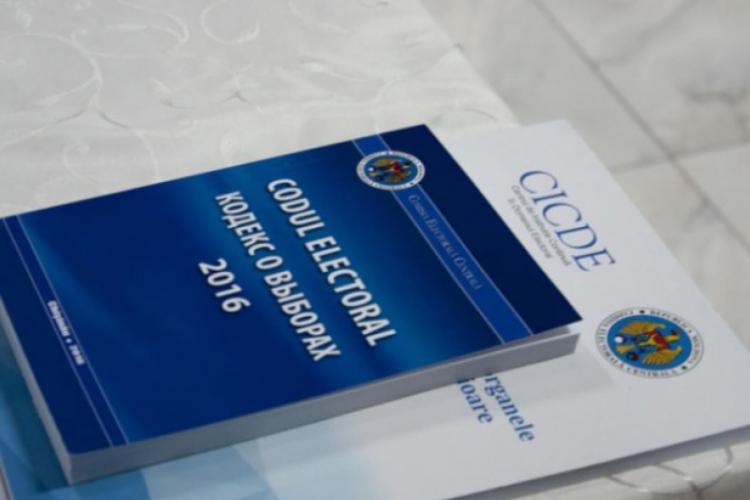
CEC prepares amendments to Electoral Code

The Central Electoral Commission has set up a working group to develop a set of amendments to the Electoral Code. The initiative aims to change the composition, mandate, structure and procedure of appointing members to the Central Electoral Commission, and also make electoral bodies permanent, at least of second level. This was announced by CEC vice president Pavel Postica during a video conference organized by the Institute for European Policies and Reforms, IPN reports.

The legislative proposal will also specify aspects related to the settlement of electoral disputes, as well as sanctions for electoral violations. Further digitization of electoral processes and alternative voting methods will also be part of the announced draft.

The bill is expected to be proposed for public debate by late January or early February, and by April it could be registered in Parliament by a competent authority. The opinion of the Venice Commission will be sought before it passes the final reading, said Postica. If it’s adopted by next fall, a year will remain until the next national election, which is enough under the national legislation.

Nicolae Panfil, program director at Promo-LEX, said the drafters will to address the use of administrative resources as an element of influencing elections. Also, says Panfil, the CEC should create a separate division to monitor finances of political parties.

Increased attention needs to be paid to appeals, an area where there are still many legal gaps. Clarifications are also needed for aspects related to setting up polling stations abroad and in the Transnistrian region. Another issue to be addressed is hate speech in the election campaign, says Nicolae Panfil.

The event was organized in partnership with the Civic Coalition for Free and Fair Elections, with the support of the Hanns Seidel Foundation.


The Ministry of Infrastructure and Regional Development initiates traffic on the national road M3, bypassing the locality of Slobozia Mare in the Cahul district /National road M3, direction from Vulcanesti to Slobozia / at 09:00 AM/.

The operational meeting of the municipal services is taking place /Chisinau City Hall /11:00 AM/.

The session of the Chisinau Municipal Council continues, started on July 21 /Chisinau City Hall / 01:00 PM/.

0 FacebookTwitterPinterestEmail


CEC prepares amendments to Electoral Code

The Central Electoral Commission has set up a working group to develop a set of amendments to the Electoral Code. The initiative aims to change the composition, mandate, structure and procedure of appointing members to the Central Electoral Commission, and also make electoral bodies permanent, at least of second level. This was announced by CEC vice president Pavel Postica during a video conference organized by the Institute for European Policies and Reforms, IPN reports.

The legislative proposal will also specify aspects related to the settlement of electoral disputes, as well as sanctions for electoral violations. Further digitization of electoral processes and alternative voting methods will also be part of the announced draft.

The bill is expected to be proposed for public debate by late January or early February, and by April it could be registered in Parliament by a competent authority. The opinion of the Venice Commission will be sought before it passes the final reading, said Postica. If it’s adopted by next fall, a year will remain until the next national election, which is enough under the national legislation.

Nicolae Panfil, program director at Promo-LEX, said the drafters will to address the use of administrative resources as an element of influencing elections. Also, says Panfil, the CEC should create a separate division to monitor finances of political parties.

Increased attention needs to be paid to appeals, an area where there are still many legal gaps. Clarifications are also needed for aspects related to setting up polling stations abroad and in the Transnistrian region. Another issue to be addressed is hate speech in the election campaign, says Nicolae Panfil.

The event was organized in partnership with the Civic Coalition for Free and Fair Elections, with the support of the Hanns Seidel Foundation.


Public services in the Republic of Moldova are digitalized to approximately 65% for citizens and 76% for the business environment. According to the Electronic Governance Agency, 26 public institutions already offer all services in an online format, and the authorities’ goal is that, by 2030, all public services can be accessed digitally, reports IPN.

26 public institutions have reached a level of digitization of 100%, offering all services in an online format. Among these are the Agency for Intervention and Payments for Agriculture, the Environmental Agency, the National Agency for Public Health, the National Bureau of Statistics, the Central Electoral Commission, the Ministry of Justice, etc. Another 14 institutions have digitized over half of the services they provide.

Digital services can be accessed through the EVO platform, which brings together information about 629 public services intended for citizens and the business environment. Out of these, 426 can be requested online, with or without an electronic signature, which represents 67.7% of the total.

According to the Electronic Governance Agency, the use of digital public services generated savings of over 853 million lei in 2025, by reducing the time required for both accessing and providing services.

0 FacebookTwitterPinterestEmail


1 IANUARIE, 2025
1 IANUARIE, 2025