

Distance learning for students with disabilities is difficult

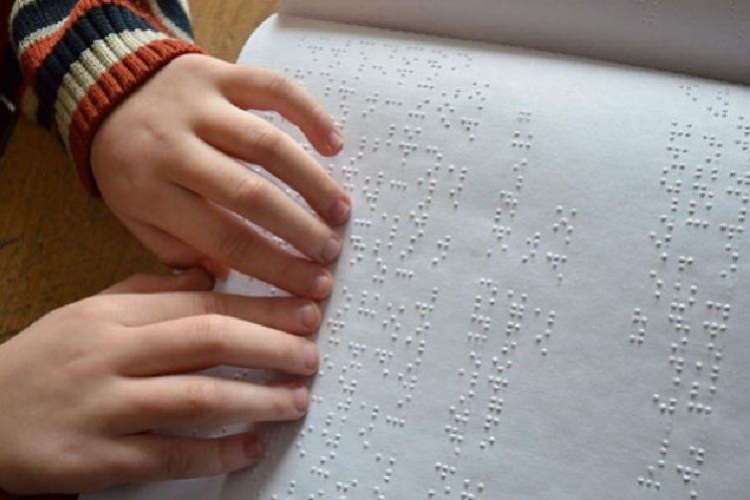
It is hard to ensure the access to education of students with special educational needs, including students with intellectual disabilities. Individualized plans are worked out for these children and these plans are to be implemented. In the case of children with hearing and visual impairments, the teaching process is also specific, related to the use of sign language and the Braille alphabet, Roman Banari, secretary general of the National Youth Council of Moldova, stated in a debate organized by the Institute for European Policies and Reforms, IPN reports.

Roman Banari stated that together with the implementation of distance learning, they conducted a poll that covered 5,000 students. 300 of the respondents said they known students who do not have access to the Internet or to a computer. The statistics for 2018 show only 62% of the households in towns and 42% of the households in villages have computers. The figures are alarming and it is highly improbable that they changed significantly.

The students noted the teachers are not ready to use digital tools. Many said they do the homework on paper, photograph it and then send it to the teacher for checking.

Roman Banari noted the launch of educational platforms that would provide videos and also possibilities of electronic testing of students would ease the teachers’ and students’ work. An online national program with all the topics is needed. The teacher would play the role of facilitator and would guide the students in the learning process.

The debate “Impact of COVID-19 on the Republic of Moldova: how inclusive and efficient online teaching process is?” was organized by the Institute for European Policies and Reforms with support from the Hanns Seidel Foundation.


Official documents issued in the Republic of Moldova and Germany may now be used in each other’s countries with only an apostille, without the need for the legalization procedure. The measure enters into force following the Federal Republic of Germany’s withdrawal of the reservation it made in 2007 when the Republic of Moldova acceded to the Hague Apostille Convention, IPN reports.

The Ministry of Foreign Affairs states that the decision was made following steps taken by Deputy Prime Minister Mihai Popsoi, Minister of Foreign Affairs, during his May 18–19 meeting with his German counterpart, Johann David Wadephul.

The ministry emphasizes that the new system will eliminate the need to visit multiple institutions or diplomatic missions to have documents legalized, which will reduce both the time required and the costs incurred by citizens. The simplified procedure will apply to official documents such as birth, marriage, divorce, and death certificates, criminal records, academic diplomas, and diploma supplements.

The Hague Convention on the Apostille entered into force for the Republic of Moldova on March 16, 2007. With its implementation in relations with Germany, the Republic of Moldova will benefit from the same simplified procedure for the recognition of official documents as it does with all 130 states and entities that are parties to the convention.

0 FacebookTwitterPinterestEmail


Distance learning for students with disabilities is difficult

It is hard to ensure the access to education of students with special educational needs, including students with intellectual disabilities. Individualized plans are worked out for these children and these plans are to be implemented. In the case of children with hearing and visual impairments, the teaching process is also specific, related to the use of sign language and the Braille alphabet, Roman Banari, secretary general of the National Youth Council of Moldova, stated in a debate organized by the Institute for European Policies and Reforms, IPN reports.

Roman Banari stated that together with the implementation of distance learning, they conducted a poll that covered 5,000 students. 300 of the respondents said they known students who do not have access to the Internet or to a computer. The statistics for 2018 show only 62% of the households in towns and 42% of the households in villages have computers. The figures are alarming and it is highly improbable that they changed significantly.

The students noted the teachers are not ready to use digital tools. Many said they do the homework on paper, photograph it and then send it to the teacher for checking.

Roman Banari noted the launch of educational platforms that would provide videos and also possibilities of electronic testing of students would ease the teachers’ and students’ work. An online national program with all the topics is needed. The teacher would play the role of facilitator and would guide the students in the learning process.

The debate “Impact of COVID-19 on the Republic of Moldova: how inclusive and efficient online teaching process is?” was organized by the Institute for European Policies and Reforms with support from the Hanns Seidel Foundation.


Maritime schools could be opened in Moldova following the full transposition of relevant European legislation. The statement was made by Deputy Prime Minister Vladimir Bolea, Minister of Infrastructure and Regional Development, who noted that there is growing interest in such programs, including from Ukrainian citizens affected by the war, according to IPN.

Vladimir Bolea stated that the new regulations will allow seaman’s books to be issued based on studies completed in the Republic of Moldova at authorized institutions.

The minister told the press that, at present, no ships are sailing under the flag of the Republic of Moldova, but the authorities are working to transpose European legislation and develop the legal framework necessary for the development of this sector.

According to him, the state and the Naval Agency could generate significant revenue both from ships sailing under the Moldovan flag and from institutions that train seafarers.

0 FacebookTwitterPinterestEmail


1 IANUARIE, 2025
1 IANUARIE, 2025