

Problem of inclusion cannot be solved without direct participation of the Roma, CVR

Representatives of the Coalition “Voice of the Roma” (CVR) said the problem of inclusion cannot be solved without the direct participation of the Roma. They expressed their discontent with the composition of the working group constituted by the Premier to implement the program for the support of the Roma population in the Republic of Moldova for 2022-2025. According to them, this group does not include members of the Roma community that is represented by the 35 NGOs that form part of the CVR. They noted the mimicking of the solving of the problem of inclusion directly contributes to injustice.

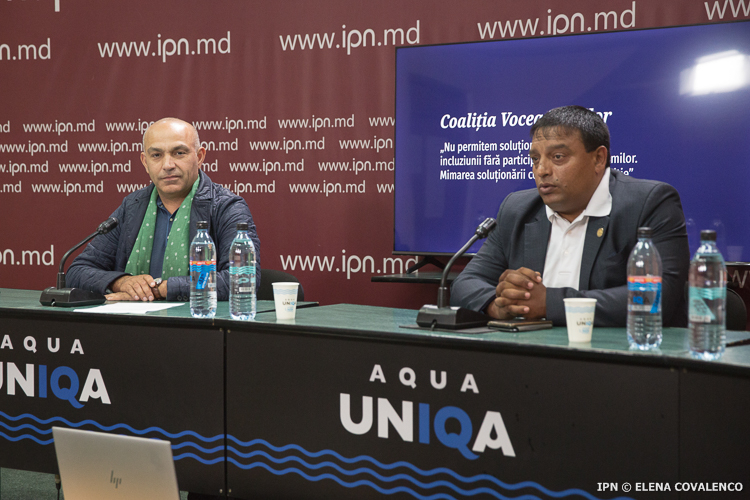
In a news conference staged by IPN, CVR executive director Marin Alla said the Republic of Moldova has a legal framework that tries to visualize the inclusion of the Roma. Not long ago, there was approved the program for the support of the Roma population in the Republic of Moldova for 2022-2025. But the document wasn’t probably coordinated correctly and wasn’t finalized so that it does not take into account the views and wishes of Roma civil society. Moreover, a working group was constituted recently to implement the program, but this does not include Roma people.

Marin Alla said the decision adopted at Government level should be reviewed as the selected experts do not represent the Roma community and do not have the necessary competence. “We do not agree with the way in which the nine experts were chosen to work on this group. We think this is injustice towards the Roma community,” stated the Coalition’s director, noting the CRV was a partner in the designing of the program.

“We want the Republic of Moldova to develop and to become part of the European Union. But when we say that we want this, everything should be transparent and directed. We, the Coalition “Voice of the Roma”, complain about this and want such decisions to no longer be taken as they need to be constructive and consulted with the Roma group in Moldova. This instrument, the program for the support of the Roma population in the Republic of Moldova, should enable to turn the negative things into positive ones,” stated Marin Alla.

According to him, the authorities, including Prime Minister Natalia Gavrilița, should realize that the decision concerning the composition of the group of experts is not right. “We must be consulted for this decision to enable the Roma to take part in the implementation of the new program for the support of the Roma population in the Republic of Moldova and in the related decision-making process,” said the Coalition’s director.

Valeriu Căldăraru, executive director of the National Association of Community Mediators that is part of the CVR, noted that saying that this decision angered Roma civil society is to say the least. He criticized the program for the support of the Roma population, saying that the main proposals formulated by the Roma during the designing process weren’t taken into account. “In this case, we see the attitude of the central public authorities that ignore us as civil society. I said and repeat that we are those who worked hand in hand, meeting after meeting, online, live. We came together to consult all the state institutions so as to together design a good document that could be implemented. The authorities’ intention not to implement this program that is only a “check mark” for the international institutions is evident. There is the umbrella – the Collation “Voice of the Roma” – that incorporates 35 Roma NGOs. Why don’t they discuss with this umbrella? Why is this umbrella directly avoided? Or the state institutions needed the CVR only in the consultation process to show that they work with the Roma or for us to offer them relevant information?” asked Valeriu Căldăraru.

The conference forms part of the series of conferences held as part of IPN News Agency’s project “Support for the Justice Reform through multimedia coverage of cases of alleged injustice”. The Agency does not bear responsibility for the public statements made in the public sphere by the organizers of news conferences. IPN News Agency gives the right of reply to persons who consider they were touched by the news items produced based on statements of the organizers of the given news conference, including by facilitating the organization of another news conference in similar conditions.


The water flow discharged from the Novodnestrovsk reservoir will be reduced from 100 to 85 cubic meters per second, due to the hydrological drought. The decision was made on Friday, at the extraordinary meeting of the Moldovan-Ukrainian Dniester Commission, and was communicated by the ecologist Ilia Trombitki, a participant in the discussions.

Contacted by IPN, Ilia Trombitki stated that the water flow situation on the Dniester River required discussions between the involved parties. According to him, the negotiations aimed at balancing the interests of hydroelectric power producers, interested in maintaining as high a level of water in the reservoir as possible, and those of the municipality of Chisinau, which needs a sufficient flow for water intake.

Following the discussions, the parties agreed that the flow rate should be maintained at 85 cubic meters per second for a period of two weeks. During this time, technical measures will be applied at the water intake station of the municipality of Chisinau to allow the capture of water from the lower layers of the Nistru.

After the expiration of the term, the Commission is to assess the situation and decide on further measures, depending on the evolution of weather conditions and the water level in the river.

The Nistrean Commission is an intergovernmental cooperation body between the Republic of Moldova and Ukraine in the field of protection, sustainable use and development of the Dniester river basin.

This week, the Government has declared a state of alert in the hydrological sector for 30 days, during which authorities can intervene to manage water consumption, including by temporarily changing the conditions of special water use permits, to ensure the population’s needs are prioritized.

0 FacebookTwitterPinterestEmail


Problem of inclusion cannot be solved without direct participation of the Roma, CVR

Representatives of the Coalition “Voice of the Roma” (CVR) said the problem of inclusion cannot be solved without the direct participation of the Roma. They expressed their discontent with the composition of the working group constituted by the Premier to implement the program for the support of the Roma population in the Republic of Moldova for 2022-2025. According to them, this group does not include members of the Roma community that is represented by the 35 NGOs that form part of the CVR. They noted the mimicking of the solving of the problem of inclusion directly contributes to injustice.

In a news conference staged by IPN, CVR executive director Marin Alla said the Republic of Moldova has a legal framework that tries to visualize the inclusion of the Roma. Not long ago, there was approved the program for the support of the Roma population in the Republic of Moldova for 2022-2025. But the document wasn’t probably coordinated correctly and wasn’t finalized so that it does not take into account the views and wishes of Roma civil society. Moreover, a working group was constituted recently to implement the program, but this does not include Roma people.

Marin Alla said the decision adopted at Government level should be reviewed as the selected experts do not represent the Roma community and do not have the necessary competence. “We do not agree with the way in which the nine experts were chosen to work on this group. We think this is injustice towards the Roma community,” stated the Coalition’s director, noting the CRV was a partner in the designing of the program.

“We want the Republic of Moldova to develop and to become part of the European Union. But when we say that we want this, everything should be transparent and directed. We, the Coalition “Voice of the Roma”, complain about this and want such decisions to no longer be taken as they need to be constructive and consulted with the Roma group in Moldova. This instrument, the program for the support of the Roma population in the Republic of Moldova, should enable to turn the negative things into positive ones,” stated Marin Alla.

According to him, the authorities, including Prime Minister Natalia Gavrilița, should realize that the decision concerning the composition of the group of experts is not right. “We must be consulted for this decision to enable the Roma to take part in the implementation of the new program for the support of the Roma population in the Republic of Moldova and in the related decision-making process,” said the Coalition’s director.

Valeriu Căldăraru, executive director of the National Association of Community Mediators that is part of the CVR, noted that saying that this decision angered Roma civil society is to say the least. He criticized the program for the support of the Roma population, saying that the main proposals formulated by the Roma during the designing process weren’t taken into account. “In this case, we see the attitude of the central public authorities that ignore us as civil society. I said and repeat that we are those who worked hand in hand, meeting after meeting, online, live. We came together to consult all the state institutions so as to together design a good document that could be implemented. The authorities’ intention not to implement this program that is only a “check mark” for the international institutions is evident. There is the umbrella – the Collation “Voice of the Roma” – that incorporates 35 Roma NGOs. Why don’t they discuss with this umbrella? Why is this umbrella directly avoided? Or the state institutions needed the CVR only in the consultation process to show that they work with the Roma or for us to offer them relevant information?” asked Valeriu Căldăraru.

The conference forms part of the series of conferences held as part of IPN News Agency’s project “Support for the Justice Reform through multimedia coverage of cases of alleged injustice”. The Agency does not bear responsibility for the public statements made in the public sphere by the organizers of news conferences. IPN News Agency gives the right of reply to persons who consider they were touched by the news items produced based on statements of the organizers of the given news conference, including by facilitating the organization of another news conference in similar conditions.


The government will investigate the top 100 salary packages in the public sector and will temporarily suspend the granting of bonuses and other additional payments for salaries that exceed three times the economic average. The measures were announced by Prime Minister Vasile Tofan following an analysis of the so-called “outrageous salaries”, which identified over 400 employees with net incomes of over 50 thousand lei per month, reports IPN.

The analysis targeted nearly 40 thousand employees from public institutions, state enterprises, public capital companies and independent authorities. 439 individuals were identified with net salaries over 50 thousand lei per month, with the majority of cases being in independent regulatory authorities.

According to the data presented by the prime minister, over 85% of the employees analyzed have net incomes below 20 thousand lei per month, and 55.6% earn less than 10 thousand lei. Vasile Tofan pointed out that a high salary does not automatically represent an abuse, indicating areas such as IT, cybersecurity or aviation, where the state competes with the private sector for specialists. However, cases where the remuneration is not justified will be checked.

The executive intends to temporarily suspend the distribution of a portion of state-owned companies’ profits to employees, after finding that this mechanism has allowed, in some cases, unjustified increases in income.

The government also proposes the creation of a public online registry with information about salaries in the public sector, as well as the periodic presentation of activity results and remuneration policies by the leaders of state institutions and enterprises.

0 FacebookTwitterPinterestEmail


1 IANUARIE, 2025
1 IANUARIE, 2025