

New Russian foreign policy Concept and its impact on Republic of Moldova. Op-Ed by Anatol Țăranu


The war that is being waged by Russia on Ukraine multiplied the challenges faced by the Republic of Moldova, but offer also opportunities that couldn’t have been imagined yesterday… Chisinau’s official statement about the annulment of the membership in the CIS for the reason that Russia claims this space as belonging to the so-called Russian world would represent the first step...


Anatol Țăranu
 

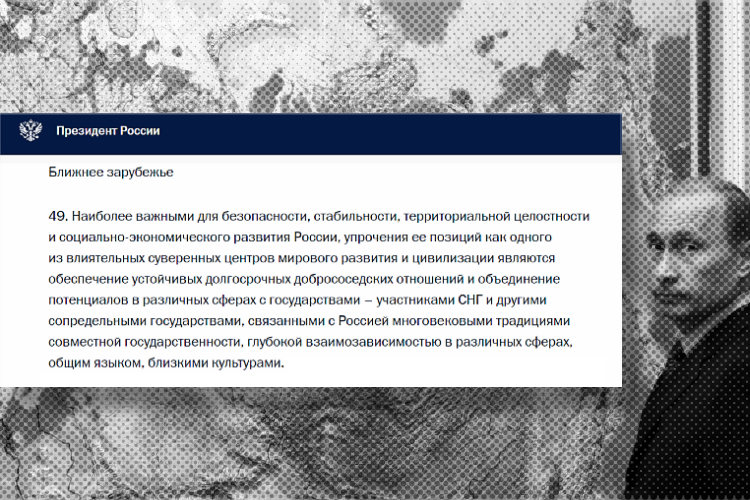
On March 31, 2023, Vladimir Putin signed the decree “On the approval of the foreign policy concept of the Russian Federation”, with the old variant of 2016 having been invalidated by the presidential decree of February 21 this year. The new foreign policy concept is a customary strategic planning document and a system of approaches concerning the national interests of the Russian Federation in the sphere of foreign policy, which reflects the current views of the political administration from the Kremlin. The document stipulates the basic principles, strategic objectives, main tasks and key areas of the Russian foreign policy adjusted to the realities. This concept concomitantly specifies particular provisions of the national security strategy of the Russian Federation.

By the new foreign policy concept, Moscow is reconsidering the principles that were recognized so far in the international relations and comes with a reviewed view on the course of its external policy after the start of the war against Ukraine, which it perceives as a de facto war of Russia against the U.S. and NATO. The new concept also derives from the fact that Russia suspended its participation in the bilateral nuclear arms treaty signed with the U.S., New START.

Claiming of role of “civilization-state”, isolated from rest of the world

In this newly created international context, the foreign policy of Russia identifies the position of the West as the main threat against it and the country reserves the right to defend its interests before the Western “unfriendly actions” by all the available means. As a result of this confrontation with the West, Moscow, in the new conceptual document, stipulates, as a key task of its foreign policy, “the formation of an equitable and sustainable world order” correlated with its understanding of the content of this new world order.

The defining of this view starts in the preamble of the new foreign policy document in which Russia identifies itself as an “original civilization state, a vast Eurasian and Euro-pacific power that reunited the Russian nation and other nations that form the cultural and civilizational community of the Russian world”. In this regard, Russia arrogates to itself the historical mission of being a sovereign world development center and of maintaining the global balance of power by building an international multipolar system.

It is noteworthy that during the previous decades, Russia, when it defined its role on the international arena, started from the precondition that it should integrate into different communities – European, global, etc. Now, in the new foreign policy concept, Russia isolates itself in a “civilization” that does not match anywhere, being self-sufficient by definition. The description of the world stipulated in the Concept confirms that for Putin’s Russia there is indeed no international space into which the country could integrate and that Russia does not want to live by the rules that it does not set out, and that Russia is the one that will decide how and through what means it will decide the own rules.

… CIS included without being asked into so-called “Russian world”

First of all, these rules are attributed to its civilization space that becomes identifiable with the space of the so-called Russian world. The document starts from the necessity of forming, on this alleged civilizational platform, “a common humanitarian space of the Russian Federation and the CIS member countries, keeping the century-old civilizational and spiritual ties of the people of Russia with the people of these states”. So, within the foreign policy Concept, the CIS space that includes the Republic of Moldova, invariably is identified with the “Russian world”, as a zone of exclusive Russian geopolitical domination, up to the eventual territorial annexation to the Russian state.

In the Concept of 2016, the foreign policy of the Russian Federation stipulated “the finding of a solution to the Transnistrian problem, based on the observance of the sovereignty, territorial integrity and the neutrality status of the Republic of Moldova in defining a special status for Transnistria”. In the new foreign policy document, there is no direct mention of the Republic of Moldova, including Transnistria. But in the document’s chapter entitled “Close neighborhood”, the Concept provides that the position of Russia as one of the major influence centers of world development and civilization will be strengthened by “joining the capacities in different areas in concert with the CIS countries and other neighboring countries tied to Russia by century-old traditions of common statehood, profound interdependence in different areas, a common language, close cultures.”

“Close neighborhood” with the role of Abkhazia and South Ossetia

This way, Russia at conceptual level continues to claim the so-called close neighborhood as a zone of its exclusive influence, intending to pay priority attention to the ensuring of “the guaranteed protection by Russia of its allies and partners under any evolution of the military-political situation in the world”. To exemplify the end result of this assistance, the Concept envisions, in particular, “comprehensive support for the Republic of Abkhazia, the Republic of South Ossetia, assistance in implementing the voluntary choice based on international law of the people of these states in favor of extended integration with Russia”. So, on this dimension, the foreign policy document of the Russian Federation does not leave any doubt about the real intentions and objectives of Moscow concerning the secessionist conflicts in the post-Soviet space, including the Transnistria one that is to be resolved by integration with Russia.

Nether as regards the civilization choice, does the foreign policy leave the right to decide by themselves the development model to the states from the close neighborhood claimed by Moscow. According to Moscow’s concept, the close neighborhood should be invariably included in the formation of “an economic and political space integrated into Eurasia”. The Republic of Moldova, pursuing the European integration course, in this regard is in full dissonance with the Russian civilization concept and can expect any hostility on the part of Moscow for the attempt to fulfill its European dream.

Compatriots, hostage to imperial policy

To achieve its objective of geopolitical control over the close neighborhood, the Russian external policy is aimed at offering “assistance in forming a common humanitarian space with the Russian Federation and the CIS member countries”. A special role in this regard is attributed by the Concept to the necessity of “developing ties with the compatriots who live abroad and of offering them comprehensive support taking into account their significant contribution to conserving and disseminating the Russian language and culture”. In this regard, the Russian foreign policy is aimed at using the potential of the Russian culture and language for imperial purposes. This causes strong repulsion to the Russian culture and language in the states covered by the hegemonic pretentions of Moscow.  

To achieve the objectives of the Russian foreign policy, it is underlined the necessity of promoting measures to unite the so-called Russian compatriots in the CIS states “who are inclined constructively towards Russia and who live in the neighborhood by offering them support…, first of all in the non-friendly states, so as to keep the Russian culture, language and identity, the Russian spiritual and moral values, the ties with the historical homeland”. For the purpose, “a common information space of the Russian Federation and the CIS member countries needs to be further built”. This way, the Russian foreign policy is designed to turn the Russian ethnics who are citizens of CIS countries into hostage to the imperial plans of Moscow, into authentic representatives of the fifth column in these societies.

In conclusion, it should be noted the radical change of the mental paradigm in the new Russian foreign policy Concept that is much more different in terms of significance, structure and objectives than the version of 2016. Under the new world order that is to be built with the contribution of the Russian foreign policy, the West, the states of liberal democracy are no longer perceived by Moscow as international dialogue partners, but are considered members of non-friendly communities. By the logic of its foreign policy, the Russian Federation reedits a new Cold War, reinventing the Western liberal democracy in the formula of the existential rival.

Without maneuvering space

In this logic of the confrontation of civilizational paradigms under the new Russian foreign policy, such small and not much internationally influential states as the Republic of Moldova, which is situated extremely dangerously at the confluence of the big geopolitical rivals, do not have maneuvering space. The Republic of Moldova is condemned only if it aims to survive as a national entity, to make a prompt choice of the side of the barricade where to position itself. The content of the new Russian conceptual document clearly shows where the Republic of Moldova is situated and how aggressive Russia aims to be with its close neighborhood that it intends to remodel, including by military methods, according to its neocolonial interests.

The war that is being waged by Russia on Ukraine multiplied the challenges faced by the Republic of Moldova, but offer also opportunities that couldn’t have been imagined yesterday. Profiting from Russia’s full involvement in Ukraine, the Republic of Moldova obtains, with all the inherent risks, a pause of opportunity for detaching itself not only symbolically, but also in reality from the Russian world. Chisinau’s official statement about the annulment of the membership in the CIS for the reason that Russia claims this space as belonging to the so-called Russian world would represent the first step. This political approach should be supported by a complementary Parliament statement about the assumption of the quality of the second Romanian state for the Republic of Moldova. The signing of the Treaty of Friendship and Brotherhood between the Republic of Moldova and Romania, which is brought up to the constitution of a Romanian state Union with the objective of accelerating the process of European integration of Moldova westward the Prut and of restoring the Romanian national unity, should be the next non-delayed step.  

Only a country project of such a scale can detach for good the Romanian space eastward the Prut from the Russian world. Concomitantly, it can contribute to overcoming the equivocal position that Romania has had for years on the Republic of Moldova as regards the restoration of the Romanian national unity and can determine Bucharest and Chisinau to take energetic and coordinated diplomatic actions for achieving this desideratum at international level, overcoming this way the last historical injustice generated by the Soviet-Nazi pact of August 23, 1939. It is a moment that the Romanians from both sides of the Prut should not miss and that can become the best solution for saving for good the whole Romanian space from the curse of the conquering danger posed by Russian imperialism.  


Anatol Țăranu

doctor of history, political commentator

IPN publishes in the Op-Ed rubric opinion pieces submitted by authors not affiliated with our editorial board. The opinions expressed in these articles do not necessarily coincide with the opinions of our editorial board.
The designated Prime Minister, Vasile Tofan, will request the Parliament’s vote of confidence for the cabinet of ministers and the government program today. The plenary session in which the deputies will examine the request is scheduled for 11:00 AM, reports IPN.

In accordance with the legislation, the Parliament gives the vote of confidence to the Government with the vote of the majority of elected deputies. Based on the vote of confidence granted by the Parliament, the President of the Republic of Moldova appoints the Government.

In the Government proposed by the designated Prime Minister Vasile Tofan, ten ministers from the current executive will be found, and four portfolios will go to new members of the cabinet. At the same time, the deputy prime ministers for reintegration and for European integration, Valeriu Chiveri and Cristina Gherasimov, will retain their positions.

Alexandru Gasnaș, presidential advisor, is designated for the position of Minister of Health. Radu Musteața, the director of the National Agency for Food Safety, is proposed for the leadership of the Ministry of Agriculture and Food Industry, while Victoria Belous, PAS deputy, who previously held the same portfolio, is put forward for the position of Minister of Finance. Dan Suruceanu, the current vice-administrator of the multimedia and sports complex Chisinau Arena, is proposed for the leadership of the Ministry of Culture.

Vasile Tofan has been appointed as the prime ministerial candidate by President Maia Sandu, at the proposal of the Action and Solidarity Party, following the resignation of Alexandru Munteanu.

0 FacebookTwitterPinterestEmail


New Russian foreign policy Concept and its impact on Republic of Moldova. Op-Ed by Anatol Țăranu


The war that is being waged by Russia on Ukraine multiplied the challenges faced by the Republic of Moldova, but offer also opportunities that couldn’t have been imagined yesterday… Chisinau’s official statement about the annulment of the membership in the CIS for the reason that Russia claims this space as belonging to the so-called Russian world would represent the first step...


Anatol Țăranu
 

On March 31, 2023, Vladimir Putin signed the decree “On the approval of the foreign policy concept of the Russian Federation”, with the old variant of 2016 having been invalidated by the presidential decree of February 21 this year. The new foreign policy concept is a customary strategic planning document and a system of approaches concerning the national interests of the Russian Federation in the sphere of foreign policy, which reflects the current views of the political administration from the Kremlin. The document stipulates the basic principles, strategic objectives, main tasks and key areas of the Russian foreign policy adjusted to the realities. This concept concomitantly specifies particular provisions of the national security strategy of the Russian Federation.

By the new foreign policy concept, Moscow is reconsidering the principles that were recognized so far in the international relations and comes with a reviewed view on the course of its external policy after the start of the war against Ukraine, which it perceives as a de facto war of Russia against the U.S. and NATO. The new concept also derives from the fact that Russia suspended its participation in the bilateral nuclear arms treaty signed with the U.S., New START.

Claiming of role of “civilization-state”, isolated from rest of the world

In this newly created international context, the foreign policy of Russia identifies the position of the West as the main threat against it and the country reserves the right to defend its interests before the Western “unfriendly actions” by all the available means. As a result of this confrontation with the West, Moscow, in the new conceptual document, stipulates, as a key task of its foreign policy, “the formation of an equitable and sustainable world order” correlated with its understanding of the content of this new world order.

The defining of this view starts in the preamble of the new foreign policy document in which Russia identifies itself as an “original civilization state, a vast Eurasian and Euro-pacific power that reunited the Russian nation and other nations that form the cultural and civilizational community of the Russian world”. In this regard, Russia arrogates to itself the historical mission of being a sovereign world development center and of maintaining the global balance of power by building an international multipolar system.

It is noteworthy that during the previous decades, Russia, when it defined its role on the international arena, started from the precondition that it should integrate into different communities – European, global, etc. Now, in the new foreign policy concept, Russia isolates itself in a “civilization” that does not match anywhere, being self-sufficient by definition. The description of the world stipulated in the Concept confirms that for Putin’s Russia there is indeed no international space into which the country could integrate and that Russia does not want to live by the rules that it does not set out, and that Russia is the one that will decide how and through what means it will decide the own rules.

… CIS included without being asked into so-called “Russian world”

First of all, these rules are attributed to its civilization space that becomes identifiable with the space of the so-called Russian world. The document starts from the necessity of forming, on this alleged civilizational platform, “a common humanitarian space of the Russian Federation and the CIS member countries, keeping the century-old civilizational and spiritual ties of the people of Russia with the people of these states”. So, within the foreign policy Concept, the CIS space that includes the Republic of Moldova, invariably is identified with the “Russian world”, as a zone of exclusive Russian geopolitical domination, up to the eventual territorial annexation to the Russian state.

In the Concept of 2016, the foreign policy of the Russian Federation stipulated “the finding of a solution to the Transnistrian problem, based on the observance of the sovereignty, territorial integrity and the neutrality status of the Republic of Moldova in defining a special status for Transnistria”. In the new foreign policy document, there is no direct mention of the Republic of Moldova, including Transnistria. But in the document’s chapter entitled “Close neighborhood”, the Concept provides that the position of Russia as one of the major influence centers of world development and civilization will be strengthened by “joining the capacities in different areas in concert with the CIS countries and other neighboring countries tied to Russia by century-old traditions of common statehood, profound interdependence in different areas, a common language, close cultures.”

“Close neighborhood” with the role of Abkhazia and South Ossetia

This way, Russia at conceptual level continues to claim the so-called close neighborhood as a zone of its exclusive influence, intending to pay priority attention to the ensuring of “the guaranteed protection by Russia of its allies and partners under any evolution of the military-political situation in the world”. To exemplify the end result of this assistance, the Concept envisions, in particular, “comprehensive support for the Republic of Abkhazia, the Republic of South Ossetia, assistance in implementing the voluntary choice based on international law of the people of these states in favor of extended integration with Russia”. So, on this dimension, the foreign policy document of the Russian Federation does not leave any doubt about the real intentions and objectives of Moscow concerning the secessionist conflicts in the post-Soviet space, including the Transnistria one that is to be resolved by integration with Russia.

Nether as regards the civilization choice, does the foreign policy leave the right to decide by themselves the development model to the states from the close neighborhood claimed by Moscow. According to Moscow’s concept, the close neighborhood should be invariably included in the formation of “an economic and political space integrated into Eurasia”. The Republic of Moldova, pursuing the European integration course, in this regard is in full dissonance with the Russian civilization concept and can expect any hostility on the part of Moscow for the attempt to fulfill its European dream.

Compatriots, hostage to imperial policy

To achieve its objective of geopolitical control over the close neighborhood, the Russian external policy is aimed at offering “assistance in forming a common humanitarian space with the Russian Federation and the CIS member countries”. A special role in this regard is attributed by the Concept to the necessity of “developing ties with the compatriots who live abroad and of offering them comprehensive support taking into account their significant contribution to conserving and disseminating the Russian language and culture”. In this regard, the Russian foreign policy is aimed at using the potential of the Russian culture and language for imperial purposes. This causes strong repulsion to the Russian culture and language in the states covered by the hegemonic pretentions of Moscow.  

To achieve the objectives of the Russian foreign policy, it is underlined the necessity of promoting measures to unite the so-called Russian compatriots in the CIS states “who are inclined constructively towards Russia and who live in the neighborhood by offering them support…, first of all in the non-friendly states, so as to keep the Russian culture, language and identity, the Russian spiritual and moral values, the ties with the historical homeland”. For the purpose, “a common information space of the Russian Federation and the CIS member countries needs to be further built”. This way, the Russian foreign policy is designed to turn the Russian ethnics who are citizens of CIS countries into hostage to the imperial plans of Moscow, into authentic representatives of the fifth column in these societies.

In conclusion, it should be noted the radical change of the mental paradigm in the new Russian foreign policy Concept that is much more different in terms of significance, structure and objectives than the version of 2016. Under the new world order that is to be built with the contribution of the Russian foreign policy, the West, the states of liberal democracy are no longer perceived by Moscow as international dialogue partners, but are considered members of non-friendly communities. By the logic of its foreign policy, the Russian Federation reedits a new Cold War, reinventing the Western liberal democracy in the formula of the existential rival.

Without maneuvering space

In this logic of the confrontation of civilizational paradigms under the new Russian foreign policy, such small and not much internationally influential states as the Republic of Moldova, which is situated extremely dangerously at the confluence of the big geopolitical rivals, do not have maneuvering space. The Republic of Moldova is condemned only if it aims to survive as a national entity, to make a prompt choice of the side of the barricade where to position itself. The content of the new Russian conceptual document clearly shows where the Republic of Moldova is situated and how aggressive Russia aims to be with its close neighborhood that it intends to remodel, including by military methods, according to its neocolonial interests.

The war that is being waged by Russia on Ukraine multiplied the challenges faced by the Republic of Moldova, but offer also opportunities that couldn’t have been imagined yesterday. Profiting from Russia’s full involvement in Ukraine, the Republic of Moldova obtains, with all the inherent risks, a pause of opportunity for detaching itself not only symbolically, but also in reality from the Russian world. Chisinau’s official statement about the annulment of the membership in the CIS for the reason that Russia claims this space as belonging to the so-called Russian world would represent the first step. This political approach should be supported by a complementary Parliament statement about the assumption of the quality of the second Romanian state for the Republic of Moldova. The signing of the Treaty of Friendship and Brotherhood between the Republic of Moldova and Romania, which is brought up to the constitution of a Romanian state Union with the objective of accelerating the process of European integration of Moldova westward the Prut and of restoring the Romanian national unity, should be the next non-delayed step.  

Only a country project of such a scale can detach for good the Romanian space eastward the Prut from the Russian world. Concomitantly, it can contribute to overcoming the equivocal position that Romania has had for years on the Republic of Moldova as regards the restoration of the Romanian national unity and can determine Bucharest and Chisinau to take energetic and coordinated diplomatic actions for achieving this desideratum at international level, overcoming this way the last historical injustice generated by the Soviet-Nazi pact of August 23, 1939. It is a moment that the Romanians from both sides of the Prut should not miss and that can become the best solution for saving for good the whole Romanian space from the curse of the conquering danger posed by Russian imperialism.  


Anatol Țăranu

doctor of history, political commentator

IPN publishes in the Op-Ed rubric opinion pieces submitted by authors not affiliated with our editorial board. The opinions expressed in these articles do not necessarily coincide with the opinions of our editorial board.


Press Release

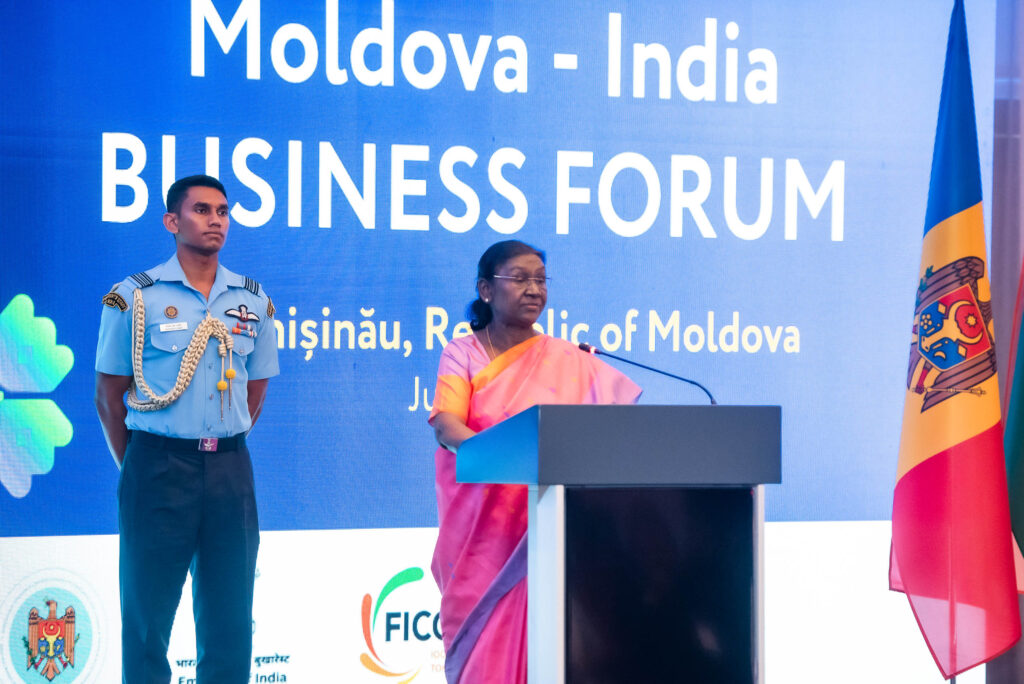
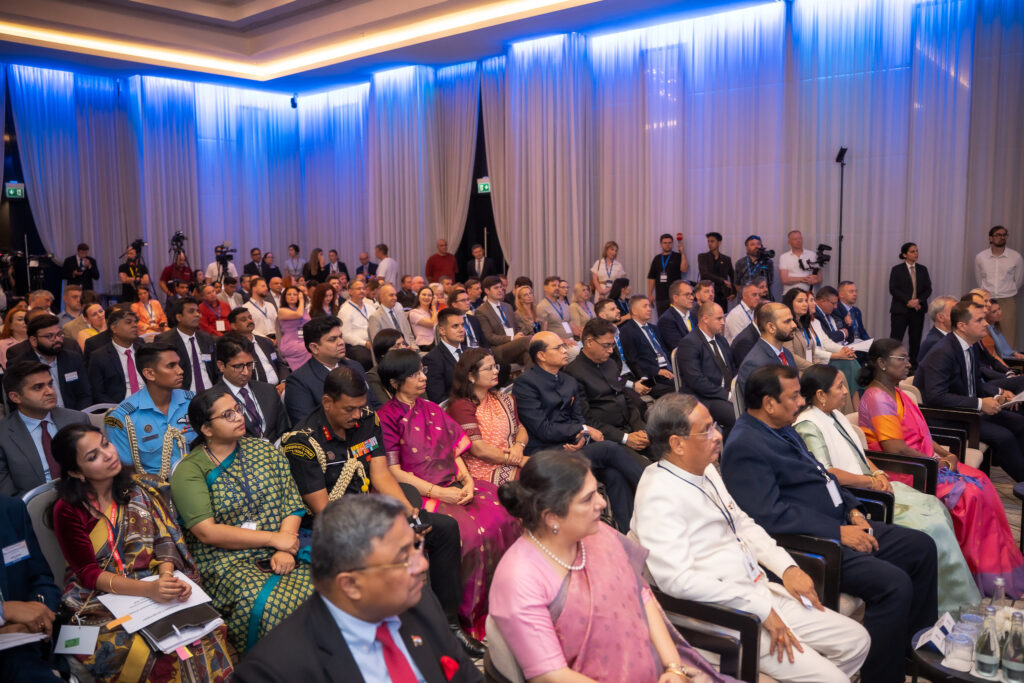
Investment Agency, Chisinau, July 20, 2026 – More than 100 participants, including businesspeople, representatives of public authorities, and relevant organizations from the Republic of Moldova and the Republic of India, gathered today in Chișinău for the Moldova–India Business Forum. The event was organized by the Investment Agency in connection with the official visit to the Republic of Moldova by the President of the Republic of India, Droupadi Murmu.

The forum was opening by the President of the Republic of Moldova, Maia Sandu, and the President of the Republic of India, Droupadi Murmu, who emphasized that the event marks a new stage in the development of bilateral economic relations and provides a platform for direct dialogue between the business communities of the two countries.

“Today we are jointly opening the Moldova–India Business Forum, which aims to forge direct links between businesspeople and companies from both countries. For Indian companies looking toward Europe, Moldova can serve as a gateway, and for us, that would mean investments and jobs”, said Maia Sandu, President of the Republic of Moldova.

The forum is taking place against the backdrop of strengthening relations between the Republic of Moldova and the Republic of India. In 2024, after a 21-year hiatus, the two countries resumed bilateral political consultations in New Delhi. In December of that same year, the Republic of Moldova opened its embassy in India’s capital, creating a more solid framework for promoting economic interests and developing contacts between companies in the two countries.

In February 2025, India opened its market to Moldovan apples, offering new opportunities for exporters in the agri-food sector. Cooperation has also expanded into the energy sector. The Indian company KEC International participated in the construction of the 400-kV Vulcanesti–Chisinau overhead power line, a strategic project aimed at strengthening the Republic of Moldova’s energy security. At the same time, our country’s accession to the International Solar Alliance—an initiative launched by India and France—paves the way for the development of new projects in the field of renewable energy.

During the Forum, the economic and investment outlooks for the two countries were presented, along with opportunities for collaboration in infrastructure and construction, manufacturing, information technology, renewable energy, the pharmaceutical industry, agriculture, agri-food processing, and tourism.

“The Republic of Moldova is strengthening its position as an attractive destination for investment through economic modernization, digitalization, the development of industrial infrastructure, and closer ties with the European market. In this context, cooperation with India, one of the world’s most dynamic economies, offers significant opportunities for expanding trade and developing joint projects”, said Eugeniu Osmochescu, Acting Prime Minister and Minister of Economic Development and Digitalization.

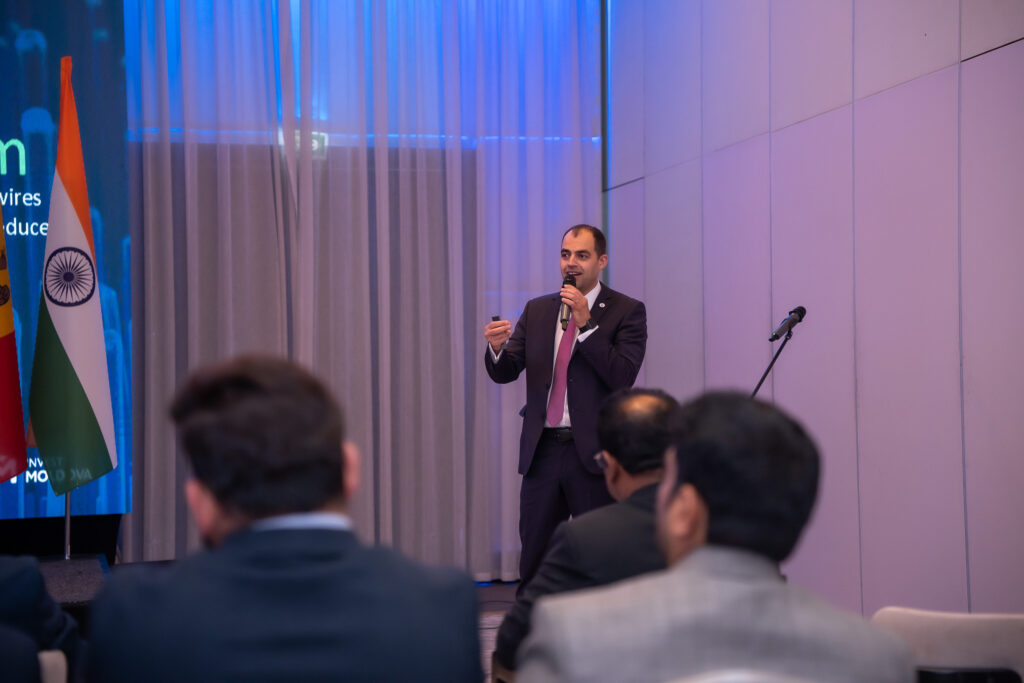
During the session titled “Economic and Investment Outlook: Moldova and India,” Mihai Burunciuc, deputy director of the Investment Agency, presented the Republic of Moldova’s competitive advantages, its investment climate, and sectors with potential for Indian companies.

“The Republic of Moldova offers investors a competitive and secure business environment, with preferential access to markets of over 870 million consumers and a strategic location between East and West. We hope that more and more companies from India will discover our country’s potential and develop value-added projects here, in partnership with the local business community”, said Mihai Burunciuc, deputy director of the Investment Agency.

Trade data indicate significant potential that has yet to be fully realized. In 2025, Moldova’s direct exports to India totaled approximately 229,000 EUR, while imports from India reached about 71 million EUR. Expanding the range of exported products and facilitating Moldovan companies’ access to the Indian market are thus key areas of bilateral cooperation.

Representatives of the Indian business community presented the opportunities offered by the Indian market and areas of interest for Moldovan companies. The discussions were attended by representatives of the Federation of Indian Chambers of Commerce and Industry (FICCI), the Indian Embassy, the Chamber of Commerce and Industry of the Republic of Moldova, the Moldova Fruct Association, and the National Tourism Office.

The program included a session dedicated to developing agri-food exports, promoting the Republic of Moldova as a tourist destination, attracting Indian investment, and establishing partnerships between companies in the two countries.

The event concluded with B2B meetings and a networking session, during which participants discussed potential investment projects, business partnerships, and opportunities to enter new markets.

India is one of the world’s largest and most dynamic economies. Strengthening ties with this market can help diversify Moldova’s exports, attract investment, and integrate local companies into new international value chains.

About the Investment Agency

The Investment Agency is the public institution responsible for attracting investment, promoting exports, and strengthening the economic image of the Republic of Moldova. The Agency supports investors and local companies in identifying business opportunities and developing international partnerships.

DISCLAIMER: The authors of the press releases—not the IPN news agency—bear sole responsibility for the accuracy and substance of the content of the press release submitted for publication and/or distribution.

0 FacebookTwitterPinterestEmail


1 IANUARIE, 2025
1 IANUARIE, 2025