

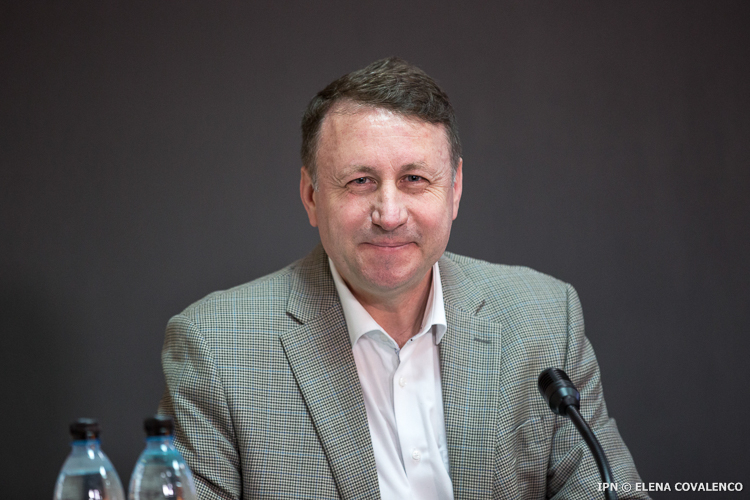
Igor Munteanu: Transnistria is Moscow’s instrument of pressure against Moldova’s wish to become part of EU

Transnistria is Moscow’s instrument of pressure against Moldova’s wish to become part of the European Union and this pressure should stop, the leader of the Coalition for Unity and Wellbeing Igor Munteanu stated in a public debate staged by IPN News Agency.

He said that even if the EU High Representative for Foreign Affairs and Security Policy Josep Borrell in the European Political Community Summit hosted by Moldova said that this conflict will not hinder Moldova from joining the EU, the authorities should act determinedly so as to get rid of this source of insecurity.

“Two important messages were transmitted in the summit. Josep Borrell noted that if this conflict is not solved, the Republic of Moldova will not experience an impediment on its path to accession. This is an interesting message as many politicians in Brussels said that no one wants the situation of Cyprus to repeat. The second message was sent by President Zelensky who put the question in a different way, asking what the Russian army does on the Republic of Moldova’s territory and why this source of insecurity is not dealt with?” stated Igor Munteanu.

He said the Moldovan authorities in the summit should have come with a clear message about this subject as he considers that this conflict can place hindrances in the process of joining the EU. “During 31 years, this conflict has existed due to the complicity of important political groups from Chisinau. As long as this complicity does not end, the Transnistrians’ narrative will prevail. The Russian Federation’s game in the Republic of Moldova, using the Transnistrian region, is the amalgamation of the Transnistrian population so that Tiraspol has the right of veto over any political or economic division with regard to the EU and the integration of the Republic of Moldova into the EU is this way blocked, not matter at what stage this process is,” said the politician.

Igor Munteanu also said that two important issues need to be dealt with. “Firstly, we must secure international consensus on the Transnistrian issue, as Ukraine did with regard to Crimea, as this region is a component part of the Republic of Moldova and there will be no policy to recognize other sovereign rights over this territory. Secondly, we must pursue a very firm policy to demilitarize the region,” he noted.

The leader of the Coalition for Unity and Wellbeing also said that besides the EU’s encouragement, Moldova should have serious and solid interaction with the neighboring states on the Transnistrian issue. “We must eliminate the source of war and permanent insecurity in Transnistria. Ukraine and Romania are our partners that showed solidarity and wish to contribute to solving this conflict that was borrowed from the USSR and was maintained as Moscow’s instrument of pressure against Moldova’s wish to become part of Europe,” added Igor Munteanu.

The public debate entitled “EPC Summit – opportunities opened for acceleration of negotiations with the EU” was held within the framework of IPN’s project “Support for European Integration by stimulating discussion in the mass media about the European Political Community (EPC) Summit” that is supported by Soros Foundation Moldova.


Official documents issued in the Republic of Moldova and Germany may now be used in each other’s countries with only an apostille, without the need for the legalization procedure. The measure enters into force following the Federal Republic of Germany’s withdrawal of the reservation it made in 2007 when the Republic of Moldova acceded to the Hague Apostille Convention, IPN reports.

The Ministry of Foreign Affairs states that the decision was made following steps taken by Deputy Prime Minister Mihai Popsoi, Minister of Foreign Affairs, during his May 18–19 meeting with his German counterpart, Johann David Wadephul.

The ministry emphasizes that the new system will eliminate the need to visit multiple institutions or diplomatic missions to have documents legalized, which will reduce both the time required and the costs incurred by citizens. The simplified procedure will apply to official documents such as birth, marriage, divorce, and death certificates, criminal records, academic diplomas, and diploma supplements.

The Hague Convention on the Apostille entered into force for the Republic of Moldova on March 16, 2007. With its implementation in relations with Germany, the Republic of Moldova will benefit from the same simplified procedure for the recognition of official documents as it does with all 130 states and entities that are parties to the convention.

0 FacebookTwitterPinterestEmail


Igor Munteanu: Transnistria is Moscow’s instrument of pressure against Moldova’s wish to become part of EU

Transnistria is Moscow’s instrument of pressure against Moldova’s wish to become part of the European Union and this pressure should stop, the leader of the Coalition for Unity and Wellbeing Igor Munteanu stated in a public debate staged by IPN News Agency.

He said that even if the EU High Representative for Foreign Affairs and Security Policy Josep Borrell in the European Political Community Summit hosted by Moldova said that this conflict will not hinder Moldova from joining the EU, the authorities should act determinedly so as to get rid of this source of insecurity.

“Two important messages were transmitted in the summit. Josep Borrell noted that if this conflict is not solved, the Republic of Moldova will not experience an impediment on its path to accession. This is an interesting message as many politicians in Brussels said that no one wants the situation of Cyprus to repeat. The second message was sent by President Zelensky who put the question in a different way, asking what the Russian army does on the Republic of Moldova’s territory and why this source of insecurity is not dealt with?” stated Igor Munteanu.

He said the Moldovan authorities in the summit should have come with a clear message about this subject as he considers that this conflict can place hindrances in the process of joining the EU. “During 31 years, this conflict has existed due to the complicity of important political groups from Chisinau. As long as this complicity does not end, the Transnistrians’ narrative will prevail. The Russian Federation’s game in the Republic of Moldova, using the Transnistrian region, is the amalgamation of the Transnistrian population so that Tiraspol has the right of veto over any political or economic division with regard to the EU and the integration of the Republic of Moldova into the EU is this way blocked, not matter at what stage this process is,” said the politician.

Igor Munteanu also said that two important issues need to be dealt with. “Firstly, we must secure international consensus on the Transnistrian issue, as Ukraine did with regard to Crimea, as this region is a component part of the Republic of Moldova and there will be no policy to recognize other sovereign rights over this territory. Secondly, we must pursue a very firm policy to demilitarize the region,” he noted.

The leader of the Coalition for Unity and Wellbeing also said that besides the EU’s encouragement, Moldova should have serious and solid interaction with the neighboring states on the Transnistrian issue. “We must eliminate the source of war and permanent insecurity in Transnistria. Ukraine and Romania are our partners that showed solidarity and wish to contribute to solving this conflict that was borrowed from the USSR and was maintained as Moscow’s instrument of pressure against Moldova’s wish to become part of Europe,” added Igor Munteanu.

The public debate entitled “EPC Summit – opportunities opened for acceleration of negotiations with the EU” was held within the framework of IPN’s project “Support for European Integration by stimulating discussion in the mass media about the European Political Community (EPC) Summit” that is supported by Soros Foundation Moldova.


Maritime schools could be opened in Moldova following the full transposition of relevant European legislation. The statement was made by Deputy Prime Minister Vladimir Bolea, Minister of Infrastructure and Regional Development, who noted that there is growing interest in such programs, including from Ukrainian citizens affected by the war, according to IPN.

Vladimir Bolea stated that the new regulations will allow seaman’s books to be issued based on studies completed in the Republic of Moldova at authorized institutions.

The minister told the press that, at present, no ships are sailing under the flag of the Republic of Moldova, but the authorities are working to transpose European legislation and develop the legal framework necessary for the development of this sector.

According to him, the state and the Naval Agency could generate significant revenue both from ships sailing under the Moldovan flag and from institutions that train seafarers.

0 FacebookTwitterPinterestEmail


1 IANUARIE, 2025
1 IANUARIE, 2025