

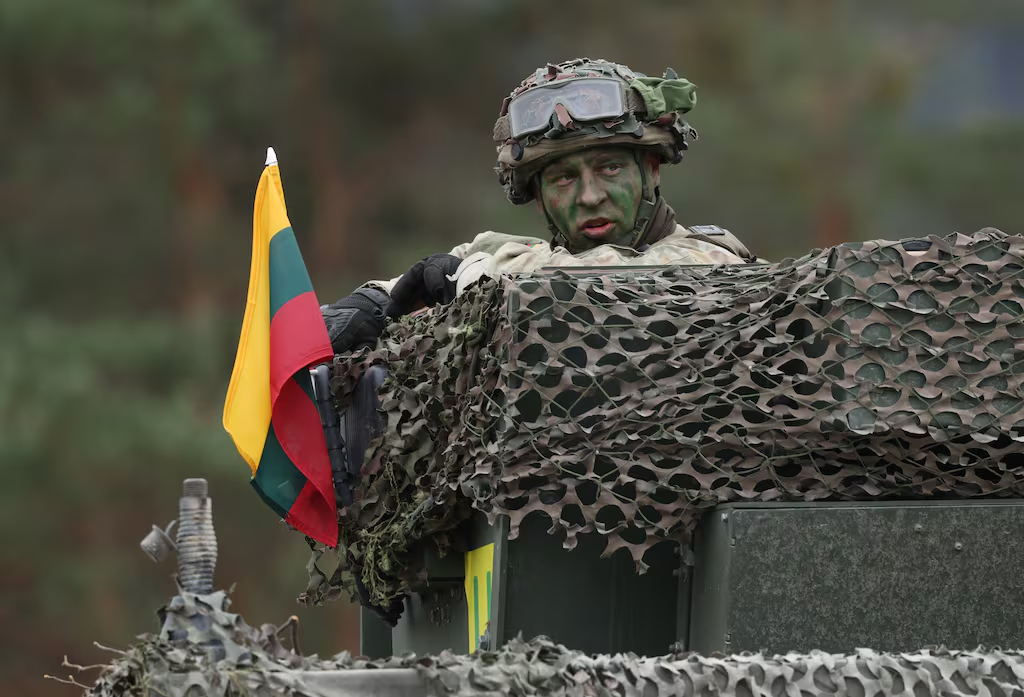
Lithuania becomes the first NATO state that will allocate over 5% of GDP for defense in 2026

Source of photo: Getty Images

Lithuania becomes the first state in the North Atlantic Alliance to exceed the threshold of 5% of GDP for defense investments, according to the agreement reached by NATO leaders last year. The Foreign Ministry in Vilnius stated that the country plans to allocate 5.38% of the gross domestic product to the military budget for the current year, an amount equivalent to almost 4.8 billion euros, reports IPN.

According to the Lithuanian Minister of Defense, Robertas Kaunas, the national security strategy is based on two fundamental pillars: the development of national capabilities and collective defense within NATO. He emphasized the importance of own investments as a condition for the support of allies.

Through this budget allocation for the current year, the Baltic state aims, in addition to modernizing the army, to discourage any potential aggression in the region.


The Farmers’ Force Association asserts that the cereal and oilseed sector is going through a deep crisis, exacerbated in the last five months by the rising cost of fuel and fertilizers, the stagnation of wheat prices, and the lack of subsidies. In this context, farmers are asking the Government for a set of urgent measures to prevent the situation from worsening, reports IPN.

According to the association, the price of diesel has increased by approximately 70%, and farmers are facing a fuel shortage that threatens the agricultural work of the summer-autumn season. At the same time, the costs of fertilizers have risen by 35-40%, while the price of wheat on the domestic market remained unchanged in July and fell in the last week by 30-40 cents per kilogram.

The Farmers’ Force asserts that vegetable producers have been left without subsidies this year, and arrears for 2025 have not been paid. The Association claims that the new Agricultural Strategic Program does not provide direct payments for cereal and oilseed crops, while small and medium farmers are affected by the disasters of recent years and the pressure of creditors.

Among the measures requested are maintaining the current VAT rate for agricultural production, reintroducing the licensing of grain and oilseed imports, ensuring diesel stocks for the agricultural campaign, checking the wheat purchase market, and refunding the diesel excise for small and medium farms.

In a response to IPN, the Ministry of Agriculture and Food Industry stated that the situation in the sector is influenced by internal and external factors, including developments in regional and international markets. The institution maintains that it monitors the situation and analyzes, together with the responsible authorities, any necessary measures.

Regarding the arrears on subsidies, the ministry specifies that these will be gradually paid off, and the new Strategic Program of Agricultural Policy will not allow the accumulation of new debts, payments being made within the limit of available resources.

0 FacebookTwitterPinterestEmail


Lithuania becomes the first NATO state that will allocate over 5% of GDP for defense in 2026

Source of photo: Getty Images

Lithuania becomes the first state in the North Atlantic Alliance to exceed the threshold of 5% of GDP for defense investments, according to the agreement reached by NATO leaders last year. The Foreign Ministry in Vilnius stated that the country plans to allocate 5.38% of the gross domestic product to the military budget for the current year, an amount equivalent to almost 4.8 billion euros, reports IPN.

According to the Lithuanian Minister of Defense, Robertas Kaunas, the national security strategy is based on two fundamental pillars: the development of national capabilities and collective defense within NATO. He emphasized the importance of own investments as a condition for the support of allies.

Through this budget allocation for the current year, the Baltic state aims, in addition to modernizing the army, to discourage any potential aggression in the region.


The water flow discharged from the Novodnestrovsk reservoir will be reduced from 100 to 85 cubic meters per second, due to the hydrological drought. The decision was made on Friday, at the extraordinary meeting of the Moldovan-Ukrainian Dniester Commission, and was communicated by the ecologist Ilia Trombitki, a participant in the discussions.

Contacted by IPN, Ilia Trombitki stated that the water flow situation on the Dniester River required discussions between the involved parties. According to him, the negotiations aimed at balancing the interests of hydroelectric power producers, interested in maintaining as high a level of water in the reservoir as possible, and those of the municipality of Chisinau, which needs a sufficient flow for water intake.

Following the discussions, the parties agreed that the flow rate should be maintained at 85 cubic meters per second for a period of two weeks. During this time, technical measures will be applied at the water intake station of the municipality of Chisinau to allow the capture of water from the lower layers of the Nistru.

After the expiration of the term, the Commission is to assess the situation and decide on further measures, depending on the evolution of weather conditions and the water level in the river.

The Nistrean Commission is an intergovernmental cooperation body between the Republic of Moldova and Ukraine in the field of protection, sustainable use and development of the Dniester river basin.

This week, the Government has declared a state of alert in the hydrological sector for 30 days, during which authorities can intervene to manage water consumption, including by temporarily changing the conditions of special water use permits, to ensure the population’s needs are prioritized.

0 FacebookTwitterPinterestEmail


1 IANUARIE, 2025
1 IANUARIE, 2025