

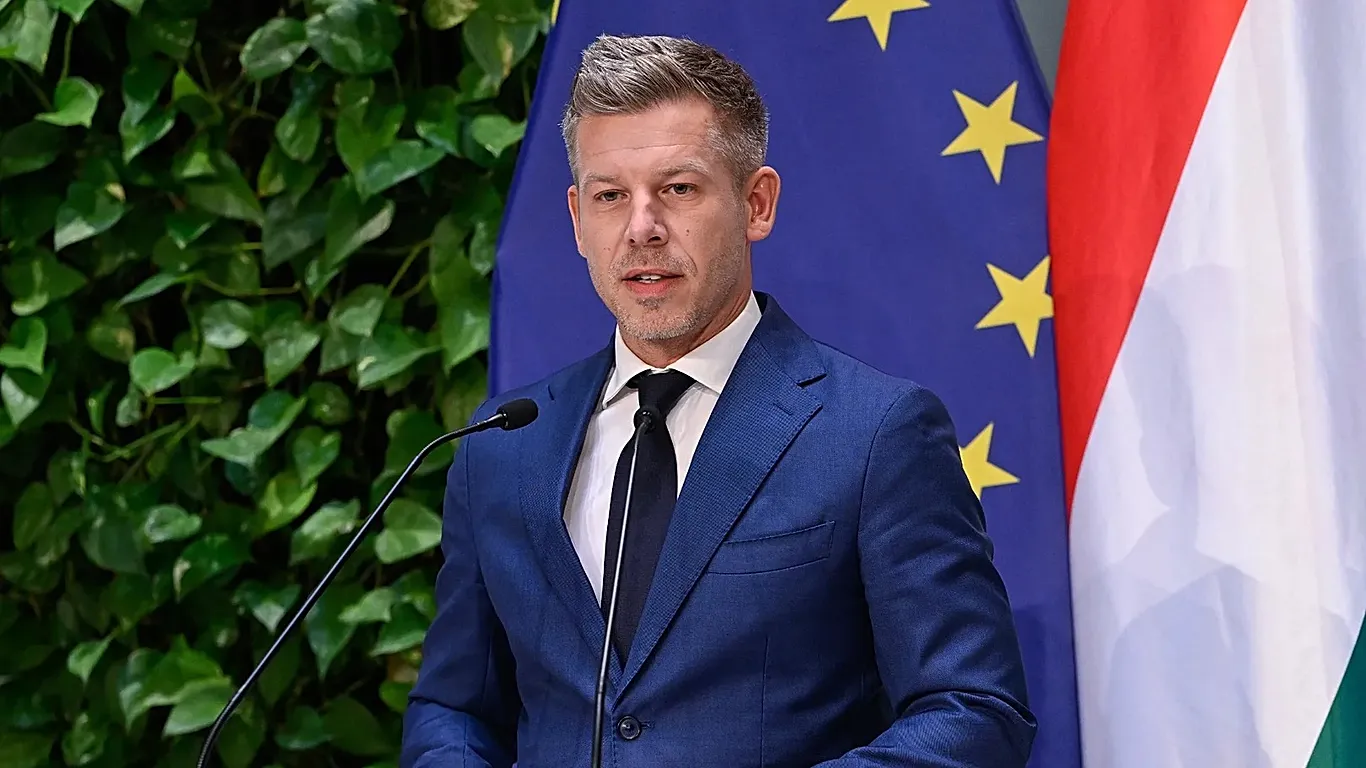
Hungary refuses to supply weapons to Ukraine and sets conditions for its accession to the EU

Photo source: AP

Hungary maintains its refusal to supply weapons or military equipment to Ukraine. The statement was made by Hungarian Prime Minister Péter Magyar, who also made support for Kyiv’s accession to the European Union conditional on firm guarantees regarding the rights of the Hungarian minority in Transcarpathia, IPN reports.

Péter Magyar reaffirmed this position following a meeting in Brussels with NATO Secretary General Mark Rutte. The discussions between the two focused on preparations for the upcoming NATO summit in Ankara in July. In a social media post, Magyar gave assurances that Budapest would once again become a reliable partner within the military bloc, but said it would not provide military support to Kyiv.

As regards Ukraine’s European path, the Hungarian prime minister said he would support the opening of negotiation clusters for accession, provided that an agreement is reached on the rights of the Hungarian minority in Transcarpathia.

Budapest has long accused Kyiv of restricting the language and education rights of the more than 100,000 ethnic Hungarians living in western Ukraine. Hungary’s previous government, led by Viktor Orbán, cited this issue to maintain its veto in the EU Council on the opening of negotiation clusters for Ukraine’s accession.

Although Magyar acknowledged that Ukraine is the victim of Russian aggression and has the right to defend its territorial integrity, his government maintains a number of restrictions. In addition to refusing to supply weapons, Hungary has recently reintroduced bans on imports of Ukrainian agricultural products, including grain, meat, eggs and honey.


Official documents issued in the Republic of Moldova and Germany may now be used in each other’s countries with only an apostille, without the need for the legalization procedure. The measure enters into force following the Federal Republic of Germany’s withdrawal of the reservation it made in 2007 when the Republic of Moldova acceded to the Hague Apostille Convention, IPN reports.

The Ministry of Foreign Affairs states that the decision was made following steps taken by Deputy Prime Minister Mihai Popsoi, Minister of Foreign Affairs, during his May 18–19 meeting with his German counterpart, Johann David Wadephul.

The ministry emphasizes that the new system will eliminate the need to visit multiple institutions or diplomatic missions to have documents legalized, which will reduce both the time required and the costs incurred by citizens. The simplified procedure will apply to official documents such as birth, marriage, divorce, and death certificates, criminal records, academic diplomas, and diploma supplements.

The Hague Convention on the Apostille entered into force for the Republic of Moldova on March 16, 2007. With its implementation in relations with Germany, the Republic of Moldova will benefit from the same simplified procedure for the recognition of official documents as it does with all 130 states and entities that are parties to the convention.

0 FacebookTwitterPinterestEmail


Hungary refuses to supply weapons to Ukraine and sets conditions for its accession to the EU

Photo source: AP

Hungary maintains its refusal to supply weapons or military equipment to Ukraine. The statement was made by Hungarian Prime Minister Péter Magyar, who also made support for Kyiv’s accession to the European Union conditional on firm guarantees regarding the rights of the Hungarian minority in Transcarpathia, IPN reports.

Péter Magyar reaffirmed this position following a meeting in Brussels with NATO Secretary General Mark Rutte. The discussions between the two focused on preparations for the upcoming NATO summit in Ankara in July. In a social media post, Magyar gave assurances that Budapest would once again become a reliable partner within the military bloc, but said it would not provide military support to Kyiv.

As regards Ukraine’s European path, the Hungarian prime minister said he would support the opening of negotiation clusters for accession, provided that an agreement is reached on the rights of the Hungarian minority in Transcarpathia.

Budapest has long accused Kyiv of restricting the language and education rights of the more than 100,000 ethnic Hungarians living in western Ukraine. Hungary’s previous government, led by Viktor Orbán, cited this issue to maintain its veto in the EU Council on the opening of negotiation clusters for Ukraine’s accession.

Although Magyar acknowledged that Ukraine is the victim of Russian aggression and has the right to defend its territorial integrity, his government maintains a number of restrictions. In addition to refusing to supply weapons, Hungary has recently reintroduced bans on imports of Ukrainian agricultural products, including grain, meat, eggs and honey.


Maritime schools could be opened in Moldova following the full transposition of relevant European legislation. The statement was made by Deputy Prime Minister Vladimir Bolea, Minister of Infrastructure and Regional Development, who noted that there is growing interest in such programs, including from Ukrainian citizens affected by the war, according to IPN.

Vladimir Bolea stated that the new regulations will allow seaman’s books to be issued based on studies completed in the Republic of Moldova at authorized institutions.

The minister told the press that, at present, no ships are sailing under the flag of the Republic of Moldova, but the authorities are working to transpose European legislation and develop the legal framework necessary for the development of this sector.

According to him, the state and the Naval Agency could generate significant revenue both from ships sailing under the Moldovan flag and from institutions that train seafarers.

0 FacebookTwitterPinterestEmail


1 IANUARIE, 2025
1 IANUARIE, 2025