

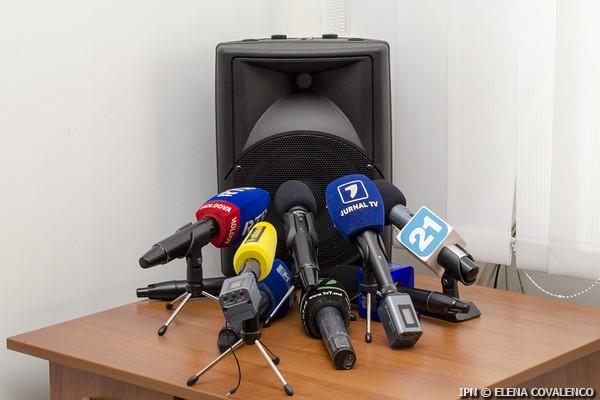
Parliament adopts Broadcasting Code in first reading

The MPs passed the new Broadcasting Code in the first reading. Under this, the Broadcasting Coordination Council and the national public broadcaster will be renamed and reformed. In the July 1 sitting of Parliament, Liberal MP Lilian Carp said the new code was drafted by a group of mass media experts, while the Liberal MPs subscribed to it and submitted it for adoption, IPN reports.

The new code provides that the television and radio program services within Moldova’s jurisdiction will earmark at least 50% of their airtime for national programs, while the own programs will represent not less than 25% of the airtime. The media service providers are obliged to ensure access to information about the name of the legal representative and the shareholders and about the name of the persons who manage broadcasters and those who assume editorial responsible.

The Broadcasting Coordination Council is renamed the Audiovisual Council. This will consist of five members named by Parliament for a seven-year term. While holding office, the Council members cannot be members of political parties or sociopolitical organization. The parties cannot found and/or own shares in broadcasters.

Within 12 months of the coming into force of the code, the Broadcasting Coordination Council wil be liquidated. When the 12 months expire, Parliament will constitute and approve the composition of the Audiovisual Council.

The national public broadcaster “Teleradio-Moldova” will be reorganized into Radio Moldova and TV Moldova 1. The private individuals with the domicile in Moldova are obliged to pay a tax for the public radio and TV service, except for those who declare on their own responsibility that they do not possess radio and/or TV receivers and of those who benefit from exemption from these taxes in accordance with the law.

The Supervision Board will supervise the public broadcaster. This will consist of nine members who will be public personalities with professional qualifications in different areas.


Promo-LEX maintains that the adjustment of the electoral legislation for the organization of the regional elections in Gagauzia, scheduled for November 15, is necessary and must be carried out urgently. At the same time, the association requests that the Parliament organize public consultations before the second reading and maintains that the other proposed changes to the Electoral Code should be examined separately, after consulting political parties, civil society, and other interested actors, reports IPN.

The project to amend the Electoral Code was registered by a group of PAS deputies on July 27 and scheduled for examination in the first reading at the meeting on July 30.

Promo-LEX specifies that the necessary adjustments for the organization of regional elections in Gagauzia are justified, including in the context of the Constitutional Court’s decision of July 9, which obliges the Parliament to adapt the electoral framework to include these elections in the national system.

However, the organization argues that the other provisions of the project, such as the extension of postal voting, the creation of polling stations for voters from the Transnistrian region, and changes regarding the financing of electoral campaigns, should not be adopted in an accelerated manner. These must be subjected to public consultations with political parties, civil society, and competent institutions.

The Association further draws attention to the fact that the project does not include several recommendations from the Venice Commission and election observation missions, and does not fully meet the commitments undertaken by the Republic of Moldova in the process of joining the European Union. Among the recommendations made are ensuring the accessibility of the electoral process for people with disabilities, increasing the transparency of party financing, and regulating the involvement of third parties in electoral campaigns.

0 FacebookTwitterPinterestEmail


Parliament adopts Broadcasting Code in first reading

The MPs passed the new Broadcasting Code in the first reading. Under this, the Broadcasting Coordination Council and the national public broadcaster will be renamed and reformed. In the July 1 sitting of Parliament, Liberal MP Lilian Carp said the new code was drafted by a group of mass media experts, while the Liberal MPs subscribed to it and submitted it for adoption, IPN reports.

The new code provides that the television and radio program services within Moldova’s jurisdiction will earmark at least 50% of their airtime for national programs, while the own programs will represent not less than 25% of the airtime. The media service providers are obliged to ensure access to information about the name of the legal representative and the shareholders and about the name of the persons who manage broadcasters and those who assume editorial responsible.

The Broadcasting Coordination Council is renamed the Audiovisual Council. This will consist of five members named by Parliament for a seven-year term. While holding office, the Council members cannot be members of political parties or sociopolitical organization. The parties cannot found and/or own shares in broadcasters.

Within 12 months of the coming into force of the code, the Broadcasting Coordination Council wil be liquidated. When the 12 months expire, Parliament will constitute and approve the composition of the Audiovisual Council.

The national public broadcaster “Teleradio-Moldova” will be reorganized into Radio Moldova and TV Moldova 1. The private individuals with the domicile in Moldova are obliged to pay a tax for the public radio and TV service, except for those who declare on their own responsibility that they do not possess radio and/or TV receivers and of those who benefit from exemption from these taxes in accordance with the law.

The Supervision Board will supervise the public broadcaster. This will consist of nine members who will be public personalities with professional qualifications in different areas.


Homeowner associations in condominiums will be able to access loans for energy renovation of buildings more easily. The government has approved a regulation whereby the National Center for Sustainable Energy will be able to issue financial guarantees and offset a portion of the interest on the loans, reports IPN.

According to the document prepared by the Ministry of Energy, CNED will be able to guarantee up to 90% of the value of the loans contracted by associations and will be able to partially support the interest costs. The mechanism targets blocks managed by associations established under the Condominium Law.

The authorities maintain that the measure comes to address one of the main issues of the associations – the lack of necessary guarantees for accessing loans intended to cover their own contribution to energy efficiency projects. Currently, the grants offered by the Energy Efficiency Fund in the Residential sector cover up to 70% of the investment value, and the beneficiaries must ensure at least 30% of the costs.

According to the regulations, banks and non-banking lending organizations that will conclude agreements with CNED can participate in the program. Homeowners’ associations must be legally registered, have no debts to the budget, and approve the renovation project and the financing method through the general assembly.

The compensations will be granted for loans in Moldovan lei, with a repayment period of up to seven years and a maximum value of 10 million lei for each beneficiary. The effective interest rate paid by the association will not exceed 5% annually.

The Ministry of Energy estimates that, during the period 2027-2029, the mechanism will allow the financing of approximately 90 homeowners’ associations and will mobilize loans of about 172 million lei. The guarantees granted are valued at 113-155 million lei, and the interest compensations at 17-24 million lei.

0 FacebookTwitterPinterestEmail


1 IANUARIE, 2025
1 IANUARIE, 2025