

Language will lead to disintegration?

IPN analysis: The well-known decision of the Constitutional Court of December 5 is appropriate from the angle of political interests, but doubtful for the integrity of the state.  

Juridical disintegration

The ‘legalization’ of the Romanian language as official language enables the citizens to name it so without being remembered Article 13 of the Constitution. On the other hand, this step caused a new wave of confrontations in society and became an aggravating factor that can lead to the juridical disintegration of the country.

From formal viewpoint, the decision of the Constitutional Court is valid all over Moldova. However, things do not look so simple. First of all, there is Transnistria, whose administration for 20 years has regarded the actions of Chisinau as behavior of a former spouse who does not want to accept the imminence of a divorce. In this respect, the recent decision concerning the Romanian language was perceived by Tiraspol as a long-awaited sign that those from the other side of the Nistru River accepted the irrevocable loss of unity. There are even rumors that the region’s administration intends to confer the supreme award of Transnistria on Moldovan judges.

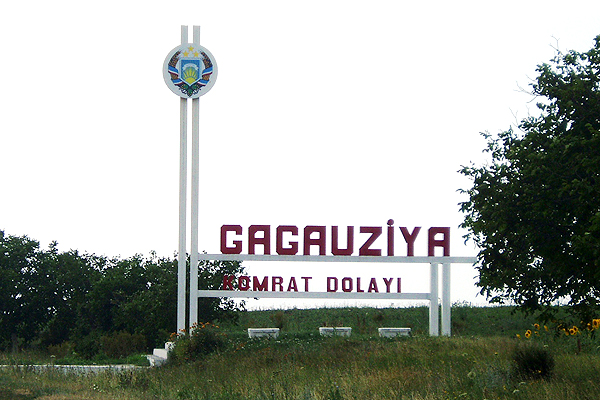
Secondly, there is Gagauzia whose main laws say that the official languages in the region are Moldovan, Gagauz and Russian. Though the region’s administration carefully comments on the court’s decision, it makes it clear that Moldovan continues to be the official language.

People’s opinion is important”

The region’s Governor Mihail Formuzal has told IPN that in the language issue he prefers to separate the political-ideological aspects from the juridical aspects of the problem. “We can speak endlessly about the name of the language. It is better to hold a referendum and to finally solve the problem. When we find out what the majority of the population thinks, we will respect this decision. Meanwhile, we respect the Constitution,” he stated.

The forces that are the Governor’s opponents adopted tougher positions. The public organization “New Gagauzia”, which has the largest part of seats in the People’s Assembly, on December 6 issued a statement, saying it will not allow using the phrase ‘Romanian language’ in Gagauzia.

“We believe that the decision of the Constitutional Court will contribute to the escalation of tensions in society and will destroy the fragile civil peace in Moldova,” it is said in the statement.

In Chisinau they also consider that the only legal solution to solve the language issue, which everyone will have to respect, is to hold a referendum.

According to Head of Parliament Igor Corman, who is the deputy chairman of the Democratic Party, despite the decision of the Constitutional Court, the content of the main law of Moldova remains unchanged and cannot be changed by the current Parliament. “This problem should be discussed with the people in a referendum. I’m not sure that the politicians’ opinion is important today. It is the people’s opinion that counts,” said the Speaker.

A similar viewpoint was expressed by the leader of the Liberal-Democrats in Parliament Valeriu Strelet. According to him, it’s practically impossible to amend the Constitution in Parliament so that the best solution to decide the name of the official language is to hold a referendum.

Classical story for Moldova

While the possibility of a referendum on the language is discussed hypothetically, in Comrat they prepare to hold a plebiscite on February 2. It is a local referendum on the so-called ‘suspended status’ of Gagauzia. The region’s residents will be asked to say whether they want Gagauzia to become independent if Moldova loses the status of independent country.

Losing the statehood means only one thing: Moldova’s union with Romania. The Constitutional Court’s decision in this respect is the most convincing argument for most of the Gagauz people as regards the existence of the union threat.

Ordinary parliamentary elections will take place in Moldova next year. The Liberals and Liberal reformers, whose representatives submitted challenges concerning the name of the official language to the Constitutional Court, will be able to use this political accomplishment as a factor for mobilizing their voters. For their part, the opponents will be able to gain political dividends in the ‘fight against Romanization’. In this respect, the Gagauz autonomous unit will continue to distance itself from Chisinau and will review its decision to peacefully enter Moldova’s legal area through the experience of Transnistria.

The political interests prevail again over the state ones. It is a classical story for Moldova…

Veaceslav Craciun, IPN


The former president of the Banca de Economii, Grigore Gacikevici, was detained on Wednesday in a case where he is being investigated for large-scale money laundering. Today, the court is expected to pronounce the sentence in another case, in which he is accused of granting non-performing loans that allegedly caused the Banca de Economii a damage of approximately three billion lei, reports IPN.

According to the National Anticorruption Center, during his tenure at the bank, Gacikevici allegedly received illicit remuneration for facilitating the granting of loans, and subsequently transferred money abroad, originating from criminal activity. He was placed in the CNA isolation ward for 72 hours.

In the case of non-performing loans, the former head of BEM is on trial alongside four former members of the bank’s lending committee. Prosecutors allege that between 2005 and 2012, they approved loans in violation of internal rules and banking prudence rules.

According to the accusation, the loans would have been granted without the proper assessment of the repayment capacity, based on incomplete files and without sufficient verification of the beneficiaries. Also, in some cases, the guarantees would have been insufficiently evaluated or monitored.

The prosecutors have requested 15 years of imprisonment for Grigore Gacikevici and 13 years each for the other four defendants, as well as the recovery of the estimated damage of approximately three billion lei.

0 FacebookTwitterPinterestEmail


Language will lead to disintegration?

IPN analysis: The well-known decision of the Constitutional Court of December 5 is appropriate from the angle of political interests, but doubtful for the integrity of the state.  

Juridical disintegration

The ‘legalization’ of the Romanian language as official language enables the citizens to name it so without being remembered Article 13 of the Constitution. On the other hand, this step caused a new wave of confrontations in society and became an aggravating factor that can lead to the juridical disintegration of the country.

From formal viewpoint, the decision of the Constitutional Court is valid all over Moldova. However, things do not look so simple. First of all, there is Transnistria, whose administration for 20 years has regarded the actions of Chisinau as behavior of a former spouse who does not want to accept the imminence of a divorce. In this respect, the recent decision concerning the Romanian language was perceived by Tiraspol as a long-awaited sign that those from the other side of the Nistru River accepted the irrevocable loss of unity. There are even rumors that the region’s administration intends to confer the supreme award of Transnistria on Moldovan judges.

Secondly, there is Gagauzia whose main laws say that the official languages in the region are Moldovan, Gagauz and Russian. Though the region’s administration carefully comments on the court’s decision, it makes it clear that Moldovan continues to be the official language.

People’s opinion is important”

The region’s Governor Mihail Formuzal has told IPN that in the language issue he prefers to separate the political-ideological aspects from the juridical aspects of the problem. “We can speak endlessly about the name of the language. It is better to hold a referendum and to finally solve the problem. When we find out what the majority of the population thinks, we will respect this decision. Meanwhile, we respect the Constitution,” he stated.

The forces that are the Governor’s opponents adopted tougher positions. The public organization “New Gagauzia”, which has the largest part of seats in the People’s Assembly, on December 6 issued a statement, saying it will not allow using the phrase ‘Romanian language’ in Gagauzia.

“We believe that the decision of the Constitutional Court will contribute to the escalation of tensions in society and will destroy the fragile civil peace in Moldova,” it is said in the statement.

In Chisinau they also consider that the only legal solution to solve the language issue, which everyone will have to respect, is to hold a referendum.

According to Head of Parliament Igor Corman, who is the deputy chairman of the Democratic Party, despite the decision of the Constitutional Court, the content of the main law of Moldova remains unchanged and cannot be changed by the current Parliament. “This problem should be discussed with the people in a referendum. I’m not sure that the politicians’ opinion is important today. It is the people’s opinion that counts,” said the Speaker.

A similar viewpoint was expressed by the leader of the Liberal-Democrats in Parliament Valeriu Strelet. According to him, it’s practically impossible to amend the Constitution in Parliament so that the best solution to decide the name of the official language is to hold a referendum.

Classical story for Moldova

While the possibility of a referendum on the language is discussed hypothetically, in Comrat they prepare to hold a plebiscite on February 2. It is a local referendum on the so-called ‘suspended status’ of Gagauzia. The region’s residents will be asked to say whether they want Gagauzia to become independent if Moldova loses the status of independent country.

Losing the statehood means only one thing: Moldova’s union with Romania. The Constitutional Court’s decision in this respect is the most convincing argument for most of the Gagauz people as regards the existence of the union threat.

Ordinary parliamentary elections will take place in Moldova next year. The Liberals and Liberal reformers, whose representatives submitted challenges concerning the name of the official language to the Constitutional Court, will be able to use this political accomplishment as a factor for mobilizing their voters. For their part, the opponents will be able to gain political dividends in the ‘fight against Romanization’. In this respect, the Gagauz autonomous unit will continue to distance itself from Chisinau and will review its decision to peacefully enter Moldova’s legal area through the experience of Transnistria.

The political interests prevail again over the state ones. It is a classical story for Moldova…

Veaceslav Craciun, IPN


The transition to the euro as the reference currency for determining the official exchange rate of the Moldovan leu has generated estimated savings of 21.8 million euros for individuals and economic agents in the period January 2025 – June 2026. According to the National Bank of Moldova, the difference between the buying and selling rates of the euro has decreased by approximately 24% compared to 2024, reports IPN.

NBM specifies that the difference between the buying and selling rate of the euro has decreased by approximately 24% compared to 2024, from 21 to 16 bani. Thus, the currency exchange in euro has become less costly for bank customers.

The change also targeted the management of BNM’s international reserves. The National Bank converted 623.4 million dollars into 596.2 million euros, and the subsequent appreciation of the European currency generated a favorable difference estimated at 50.6 million euros. According to the institution, the amount does not represent an actual gain, but the result of a reevaluation based on the exchange rate.

The Euro replaced the US dollar as the reference currency on January 1, 2025, in the context of the widespread use of the European currency in Moldova’s economy. At that time, over 60% of commercial transactions and about 70% of remittances were made in euros.

NBM states that the leu is not fixed against the euro, and the exchange rate continues to be determined by the demand and supply of currency on the market.

0 FacebookTwitterPinterestEmail


1 IANUARIE, 2025
1 IANUARIE, 2025