

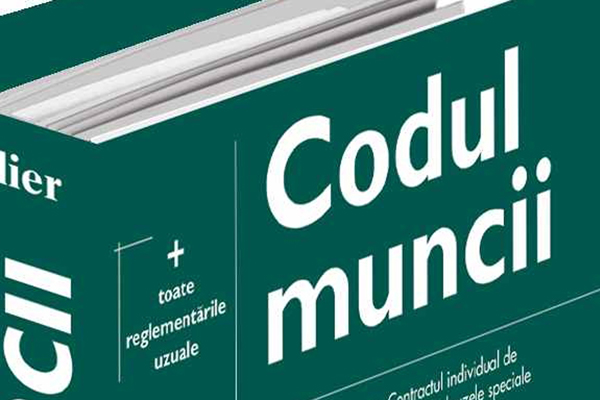
Labor Code to be supplemented

The employer will be obliged to furnish the future employee with information about the length of the working day and week and the notice periods that should be respected in case of termination of the work contract, IPN reports

Under a bill to amend and supplement the Labor Code, the applicant for the job must be familiarized not only with the collective work contract, but also with the collective conventions that will apply to him/her.

The principle of non-discrimination of employees, who are employed for a definite period of time based on a contract, is confirmed. The employer must ensure their access to the permanent workplaces in equal conditions with the other employees and to create appropriate professional formation conditions.

The change of the workplace or the modification of the employee’s obligations will not be allowed if this is not provided in the individual work contract.

According to the new Minister of Labor, Social Protection and Family Silvia Grigoras, the amendments and supplements are aimed at bringing the national legislation on labor closer to the European standards.


Labor Code to be supplemented

The employer will be obliged to furnish the future employee with information about the length of the working day and week and the notice periods that should be respected in case of termination of the work contract, IPN reports

Under a bill to amend and supplement the Labor Code, the applicant for the job must be familiarized not only with the collective work contract, but also with the collective conventions that will apply to him/her.

The principle of non-discrimination of employees, who are employed for a definite period of time based on a contract, is confirmed. The employer must ensure their access to the permanent workplaces in equal conditions with the other employees and to create appropriate professional formation conditions.

The change of the workplace or the modification of the employee’s obligations will not be allowed if this is not provided in the individual work contract.

According to the new Minister of Labor, Social Protection and Family Silvia Grigoras, the amendments and supplements are aimed at bringing the national legislation on labor closer to the European standards.


In Romania, a crisis situation has been instituted on the fuel market. The bill adopted on Wednesday by the Chamber of Deputies provides for temporary measures to stabilize the market, including the reduction of excise duty on diesel and restrictions on its export, reports IPN.

The law stipulates a temporary reduction of the excise duty on diesel and the application of a reduced VAT rate of 19% for gasoline and diesel in refining and trading activities. The excise reduction can be applied for successive periods of two weeks, without exceeding the duration of the crisis situation.

At the same time, a solidarity contribution will be established on the income obtained from the sale of oil and energy products resulting from the processing of crude oil extracted in Romania.

During the crisis period, the export of diesel will be permitted only with the consent of the Ministry of Economy, Ministry of Energy, and Ministry of Finance. Operators will be able to temporarily reduce the biofuel content in gasoline from 8% to a minimum of 2%.

Companies in the field will be required to report monthly to the authorities the prices practiced and the way of implementing measures. The competent institutions will be able to request information about price formation and commercial mark-ups, and operators will have to respond within 10 days.

The crisis situation in the fuel market is valid until October 31, 2026, and can be extended by government decision, for periods of up to 3 months, if the causes that led to its establishment persist.

0 FacebookTwitterPinterestEmail


1 IANUARIE, 2025
1 IANUARIE, 2025