

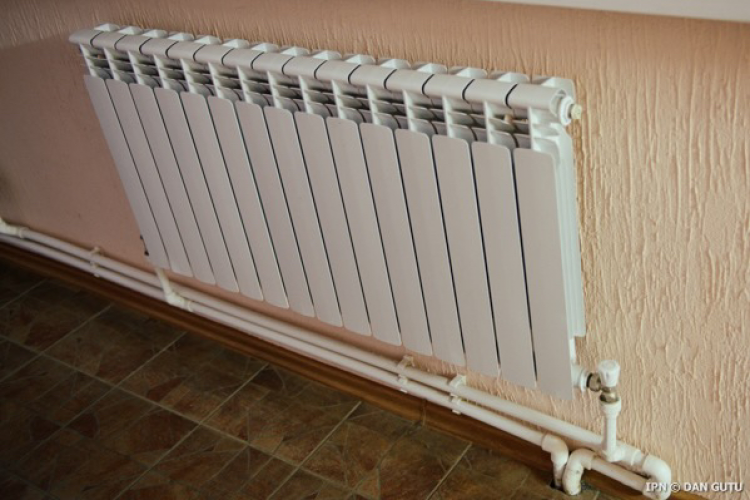
Higher subsidies for heating

By the heating bills for January, the Government will subsidize 80% of the rise in heating prices, Prrime Minister Natalia Gavrilița announced in a news conference, being quoted by IPN.

In November and December, there was subsidized 67% of the rise in prices, while in January there will be subsidized 80% of the rise. The volume covered by subsidies was also increased. In November and December, there was subsided 1 gigacalorie of heat. 1.5 gigacalories will be subsidized in January. As a result, the maximum subsidy provided by the Government for heating will rise from 450 lei to 815 lei a month.

According to Natalia Gavrilița, 210,000 households in Chisinau and Bălți will benefit from subsidies. Only 5% of these households can control the volume of consumed heat. The others cannot make savings.

At the same time, the Government decided to simplify access to cold-month assistance for families in need. The Premier said the system foe assessing the beneficiary’s property is one of the factors that hamper access to this assistance. Owing to this condition, over 20,000 families with small incomes are not entitled to such assistance based on this system. It was decided to remove this criterion for the period of the crisis.

The subsidies for natural gas remained those decided in November. The Government pays half of the gas rate for up to 50 cubic meters of consumed gas and one third for another 100 cubic meters of consumed gas. The users pay the full rate only for the amount consumed above 150 cubic meters of gas. Natalia Gavrilița said there are now no reasons for raising the rate, but it depends on the market price. “Regardless of the developments, the Government will provide targeted solutions,” stated the official.

Minister of Labor and Social Protection Marcel Spatari said that in January the Ministry transferred over 237 million lei for 599,000 families that consume natural gas and 197,000 lei for families that consume heat energy. In December, the transfers came to over 196 million lei for over 590,000 families consuming gas and for 197,000 families consuming heat energy.


The Geneza Art Theater presents the show “Moon Sonata” /Geneza Art /at 06:00 PM/.

Over 50 young musicians from the Republic of Moldova and Romania are holding a classical music concert, under the baton of conductor Andrew Koehler from the USA /Epicrama Winery, Stauceni /at 07:00 PM/.

Yolka Band organizes a night of live music in gypsy jazz style at /Iusty Art Gallery /at 07:30 PM/.

The exhibition “Bessarabian Authors in the World” continues, inaugurated during the Diaspora Days 2026 /National Library of the Republic of Moldova /August 3-September 3/.

The exhibition “The Unknown Work of the Moldavian Masters” continues /Constantin Brancusi Exhibition Center/ /July 30-August 16/.

The personal exhibition Untitled by the artist Konstantin Benkovich continues, organized by the National Art Museum of Moldova, in partnership with the ALT Foundation /MNAM /July 30-August 30/.

The immersive exhibition continues, inspired by the mythology and mystical folklore of the Republic of Moldova, “The Forest”, created by Milen Chelea /Plai Gallery / July 23-August 6/.

The exhibition “Scent of Warm Bread. Bread in the Iron Age” continues /National Museum of History of Moldova /July 22 – September 4/.

The exhibition “Urban Archeology and the Hidden Memory of Chisinau” continues /National Museum of History of Moldova /July 17-November 30/.

The exhibition “The Thread of Identity! The traditional Romanian costume in book illustrations made by plastic artists from the Republic of Moldova” continues /BNRM /June 25-August 15/.

0 FacebookTwitterPinterestEmail


Higher subsidies for heating

By the heating bills for January, the Government will subsidize 80% of the rise in heating prices, Prrime Minister Natalia Gavrilița announced in a news conference, being quoted by IPN.

In November and December, there was subsidized 67% of the rise in prices, while in January there will be subsidized 80% of the rise. The volume covered by subsidies was also increased. In November and December, there was subsided 1 gigacalorie of heat. 1.5 gigacalories will be subsidized in January. As a result, the maximum subsidy provided by the Government for heating will rise from 450 lei to 815 lei a month.

According to Natalia Gavrilița, 210,000 households in Chisinau and Bălți will benefit from subsidies. Only 5% of these households can control the volume of consumed heat. The others cannot make savings.

At the same time, the Government decided to simplify access to cold-month assistance for families in need. The Premier said the system foe assessing the beneficiary’s property is one of the factors that hamper access to this assistance. Owing to this condition, over 20,000 families with small incomes are not entitled to such assistance based on this system. It was decided to remove this criterion for the period of the crisis.

The subsidies for natural gas remained those decided in November. The Government pays half of the gas rate for up to 50 cubic meters of consumed gas and one third for another 100 cubic meters of consumed gas. The users pay the full rate only for the amount consumed above 150 cubic meters of gas. Natalia Gavrilița said there are now no reasons for raising the rate, but it depends on the market price. “Regardless of the developments, the Government will provide targeted solutions,” stated the official.

Minister of Labor and Social Protection Marcel Spatari said that in January the Ministry transferred over 237 million lei for 599,000 families that consume natural gas and 197,000 lei for families that consume heat energy. In December, the transfers came to over 196 million lei for over 590,000 families consuming gas and for 197,000 families consuming heat energy.


The salary reform in the public sector needs to be reviewed before adoption in terms of its impact on the justice system, warn experts from the Institute for European Policies and Reforms. According to them, some provisions of the project developed by the Ministry of Finance could affect the financial independence of judges and prosecutors and may contradict the jurisprudence of the Constitutional Court, reports IPN.

The IPRE analysis aims at the effects of the project on judges, prosecutors, the Superior Council of Magistracy, the Superior Council of Prosecutors, as well as on the staff of the courts and the Prosecutor’s Office.

Experts believe that the general objectives of the reform – simplifying the wage system, strengthening the basic salary, reducing bonuses, and increasing transparency – are justified. However, the mechanisms proposed for the justice sector require adjustments before the law is adopted.

One of the main issues identified relates to the annual adjustment of the reference value used in calculating the salaries of judges and prosecutors. According to IPRE, the project ties this adjustment to the economic situation and the possibilities of the public budget, while the Constitutional Court has ruled that this should be mandatory and should take into account at least the average annual inflation rate.

Experts criticize the introduction of different salary reference values for judges and prosecutors who have passed the external evaluation. According to the note, the difference between the values of 4,700 and 6,200 lei could generate a wage gap of almost 32% between people with the same roles and responsibilities. IPRE argues that rewarding those who have passed the external evaluation could be applied only temporarily, through a separate allowance, not through permanent differences in the basic salary.

In this context, experts recommend the establishment of a mandatory mechanism for the annual adjustment of judges’ and prosecutors’ salaries, the review of wage differences related to external evaluation, and the involvement of the SCM and CSP in the process of determining roles and salary scales within the justice system.

0 FacebookTwitterPinterestEmail


1 IANUARIE, 2025
1 IANUARIE, 2025