

CC judgment is formally the only correct solution, experts

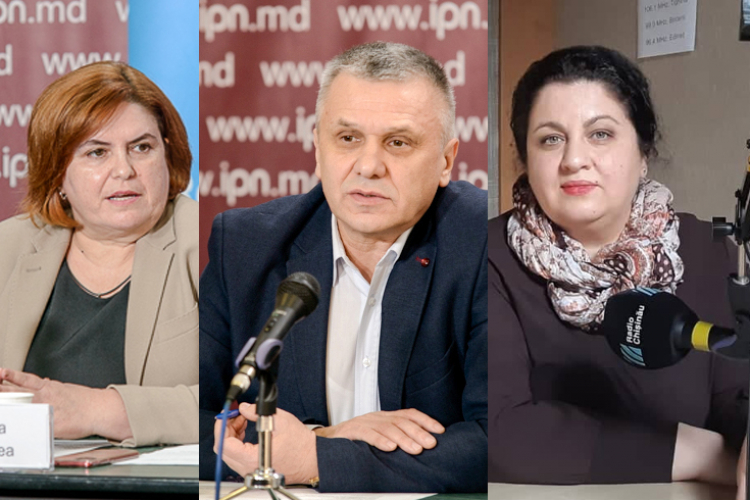
The Constitutional Court’s judgment of February 23 is formally the only correct one. It is a final decision and those involved have to comply with it. The political leaders should now act and solve the unpredictable situation created in the political sphere of Moldova. The issue was developed by the experts invited to IPNs’ public debate “PSRM and PAS, two parliamentary groups on which overcoming of political crisis depends. Why is communication between them blocked?”.

Igor Boțan, the standing expert of IPN’s project, said the CC judgment of February 23 is the only correct and welcomed solution.  Formally, this judgment is impeccable. At the same time, President Maia Sandu, addressing the people, said that in normal conditions, this formalism of the CC would be beyond discussions and comments. But the situation in Moldova is not normal and this fact was confirmed by her representative to the Constitutional Court, who said that Parliament adopted the Declaration on State Capture in 2019, while in 2020 Parliament adopted a Statement by which it condemned party switching and political corruption.

The expert noted that the President starts from the realities and suggests that the Moldovan citizens should have the last say in the created situation: either referendum on the dismissal of the President or snap parliamentary elections. “So, the President prefers to address the people so as to solve this problem. Now the biggest problem derives from the constitutional procedures that take us to the solution proposed by the President,” stated Igor Boțan.

Zinaida Gribincea, expert in psychology, journalism and communication, said that in the states with consolidated democracy, the CC judgments are not disputed or are disputed less. In the case of Moldova, interpretations, suspicions always appear. In this case, the CC indeed took a correct decision, formally. The political leaders are to act now so as to solve this unpredictable siltation in Moldova’s political sphere.

Civic activist with experience in communication Ana Racu, UN expert and a member of the United Nations Committee against Torture, said that when entering the Constitutional Court in the U.S., there is a slogan saying that this could be not the most correct decision, but it is the last one. In the case of Moldova, the CC decision is irrevocable and those concerned have to only comply as they cannot appeal against it. There were Presidents who fully opposed the CC decisions, but ultimately complied.

Ana Racu noted it is good that the people discuss not the personality of the judge, but the decisions taken either by ordinary courts or appeals courts, either by a forum or a constitutions court. This gives the feeling of a juridical culture in society as the people learn what democracy is, learn how the Constitution can be interpreted. “Life does not stop at a Constitutional Court decision, but it is a point from which life continues,” stated the civic activist.

On February 23, the Constitutional Court declared unconstitutional President Maia Sandu’s decree by which Natalia Gavrilița was nominated for premiership the second time, after partially accepting a challenge filed by Socialist MPs. Under the law, the President must initiate new consultations with the parliamentary groups so as to identify a candidate for Prime Minister. But President Sandu said that she pleads for snap elections or for a referendum, if her suspension from office is initiated.


The local councils of Puhaceni and Serpeni, together with the Anenii Noi district council, are asking the Ministry of Environment to review the decision regarding the location of the planned regional waste management center near the two villages. The local authorities argue that the decision was made without a real consultation of the communities and before the necessary evaluations were completed. However, the Ministry states that the environmental impact assessment procedure is ongoing, and studies and consultations will take place before a decision is made, reports IPN.

The mayor of Puhaceni village, Veaceslav Plamadeala, maintains that the regional center is expected to serve over 1.1 million residents from Chisinau municipality and the districts of Anenii Noi, Criuleni, Dubasari, Hancesti, Ialoveni, Straseni, and Orhei.

The local councils of Puhaceni and Serpeni, as well as the Anenii Noi district council, request the cessation of the procedure and the reassessment of the location. Their representatives claim that the residents of the area were not consulted before the land was selected, and the expropriation procedures would have been initiated before the completion of the environmental impact assessment.

Representatives of the Ministry of Environment clarified for IPN that the land designated for the construction of the center is state property, under the administration of the Public Property Agency, and does not belong to any municipality.

At the same time, local authorities maintain that the chosen site is located near water sources and settlements, and that so far, no hydrogeological study has been conducted to assess potential effects on groundwater.

In response, the Secretary of State for the Ministry of Environment, Grigore Stratulat, stated that the project does not involve the establishment of a landfill, but the construction of a modern regional waste management center, which will comply with the European Union standards for environmental protection. “Currently, the environmental impact assessment procedure is underway, and all the studies and public consultations required by law will be carried out before any decision is made,” the official clarified.

According to Grigore Stratulat, preliminary investigations indicate the existence of adequate protective distances from inhabited areas and main bodies of water. At the same time, access to the future center is designed so that traffic does not cross nearby localities.

The representatives of the Ministry of Environment encourage local authorities and residents to participate in public consultations and to analyze the project based on the conclusions of specialty studies, which will be made public after the completion of the environmental impact assessment.

0 FacebookTwitterPinterestEmail


CC judgment is formally the only correct solution, experts

The Constitutional Court’s judgment of February 23 is formally the only correct one. It is a final decision and those involved have to comply with it. The political leaders should now act and solve the unpredictable situation created in the political sphere of Moldova. The issue was developed by the experts invited to IPNs’ public debate “PSRM and PAS, two parliamentary groups on which overcoming of political crisis depends. Why is communication between them blocked?”.

Igor Boțan, the standing expert of IPN’s project, said the CC judgment of February 23 is the only correct and welcomed solution.  Formally, this judgment is impeccable. At the same time, President Maia Sandu, addressing the people, said that in normal conditions, this formalism of the CC would be beyond discussions and comments. But the situation in Moldova is not normal and this fact was confirmed by her representative to the Constitutional Court, who said that Parliament adopted the Declaration on State Capture in 2019, while in 2020 Parliament adopted a Statement by which it condemned party switching and political corruption.

The expert noted that the President starts from the realities and suggests that the Moldovan citizens should have the last say in the created situation: either referendum on the dismissal of the President or snap parliamentary elections. “So, the President prefers to address the people so as to solve this problem. Now the biggest problem derives from the constitutional procedures that take us to the solution proposed by the President,” stated Igor Boțan.

Zinaida Gribincea, expert in psychology, journalism and communication, said that in the states with consolidated democracy, the CC judgments are not disputed or are disputed less. In the case of Moldova, interpretations, suspicions always appear. In this case, the CC indeed took a correct decision, formally. The political leaders are to act now so as to solve this unpredictable siltation in Moldova’s political sphere.

Civic activist with experience in communication Ana Racu, UN expert and a member of the United Nations Committee against Torture, said that when entering the Constitutional Court in the U.S., there is a slogan saying that this could be not the most correct decision, but it is the last one. In the case of Moldova, the CC decision is irrevocable and those concerned have to only comply as they cannot appeal against it. There were Presidents who fully opposed the CC decisions, but ultimately complied.

Ana Racu noted it is good that the people discuss not the personality of the judge, but the decisions taken either by ordinary courts or appeals courts, either by a forum or a constitutions court. This gives the feeling of a juridical culture in society as the people learn what democracy is, learn how the Constitution can be interpreted. “Life does not stop at a Constitutional Court decision, but it is a point from which life continues,” stated the civic activist.

On February 23, the Constitutional Court declared unconstitutional President Maia Sandu’s decree by which Natalia Gavrilița was nominated for premiership the second time, after partially accepting a challenge filed by Socialist MPs. Under the law, the President must initiate new consultations with the parliamentary groups so as to identify a candidate for Prime Minister. But President Sandu said that she pleads for snap elections or for a referendum, if her suspension from office is initiated.


Since the beginning of the year, 73 road accidents involving electric scooter drivers have occurred on the roads of the Republic of Moldova. As a result, two people lost their lives and 54 others were injured, IPN reports.

According to the General Police Inspectorate, during this period 1,667 violations committed by users of electric scooters were registered at the national level. Of these, 301 cases concerned people driving the scooter while intoxicated.

The most violations were detected in Chisinau – 1,248 violations, including 195 drivers caught under the influence of alcohol. The capital also saw the most accidents, 38 out of the total recorded nationally.

The police recommend that electric scooter users follow traffic rules, adapt their speed to road conditions, wear protective equipment and avoid riding their scooters after consuming alcohol.

0 FacebookTwitterPinterestEmail


1 IANUARIE, 2025
1 IANUARIE, 2025