




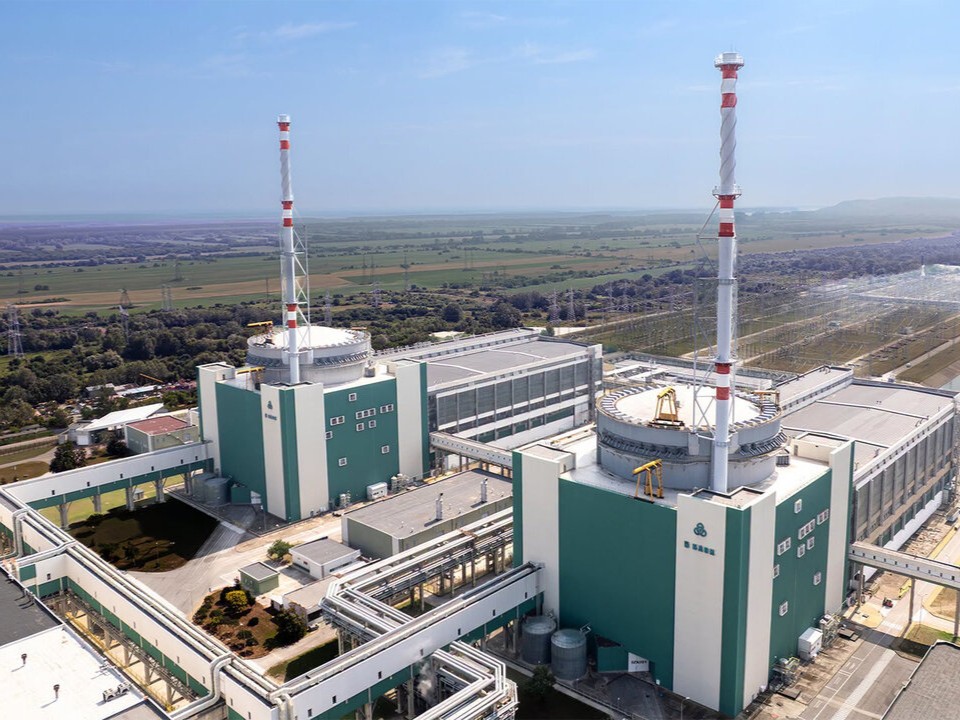
Bulgaria has announced that it will reduce the capacity of its only nuclear power plant, Kozlodui, by 12% starting from Friday, due to the low level of the Danube. The measure was announced by the Ministry of Energy in Sofia, and thus Bulgaria joins other European countries that are reducing their nuclear energy production due to the drought affecting the continent, reports IPN.
According to the Ministry, the capacity of one of the two operating reactors will be reduced by approximately 120MW. The power plant, which provides over a third of the country’s electricity, relies on the waters of the Danube for cooling the reactors.
This is the first time in the 52 years of the unit’s operation, when production is reduced due to extreme weather and hydrological conditions.
The situation in Bulgaria comes after Romania was forced to shut down both reactors of the Cernavodă power plant, the first on July 28 and the second on August 13, and Hungary significantly reduced the production of the Paks power plant since the end of July. In the meantime, the Hungarian Prime Minister, Péter Magyar, announced that the turbines will gradually be put back into operation starting Sunday, August 23, with a return to maximum capacity estimated for the following week.
The hydrological drought is not limited to the Danube basin only. In Switzerland, the Beznau nuclear power plant was shut down in June due to the high water temperatures of the Aare River, while France shut down several reactors due to the heatwave.
