
About regrets. IPN Experts

It has been long ago noticed that even if the persons who are satisfied with the own activity have regrets. It is also the case of Speaker of Parliament Andrian Candu. In the program “Reply” broadcast by Prime TV channel on December 2, 2018, the Speaker shared his regrets and tough attitude to himself and his colleagues in Parliament: “I always wanted the laws to be of the highest quality and better implemented. We managed to do more in some of the areas, like the financial-banking sector, and less in other areas. I’m glad that emphasis this year was placed more on the social part. A lot was done in such areas as salaries, pensions, roads, reforms, infrastructure, and social assistance”.

It is evident that the Speaker lays emphasis on good deeds done before the elections that should have an impact on the elections’ outcome. But it is as evident that the Speaker is less tough on the methods used by the Parliament he heads, especially in the electoral sphere where the changes made by Parliament led to a deterioration in Moldova’s relations with the European Union. And it is not only about the electoral system. God be with this mixed system! The point is that the electoral legislation continues to be amended not long before the parliamentary elections and again in a manner that attracts the most profound regrets.

Thus, on November 30, 2018, when the mandate of the Parliament of the 21st legislature expired, the Speaker’s colleagues from the opposition were again taken by surprise, not by the introduction of the decision concerning the holding of a consultative referendum on February 24, 2019, simultaneously with the parliamentary elections, but by the almost secret way in which changes were made to the Election Code so that this allows holding parliamentary elections and the plebiscite the same day.

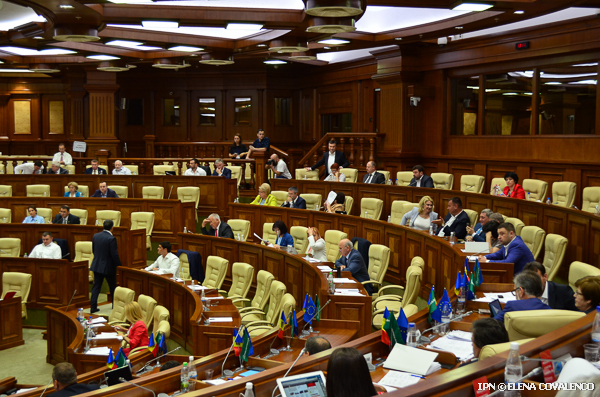
The Liberal and Liberal-Democratic MPs expressed their disagreement with the practices of hiding the interests of those who decided to amend the electoral legislation for a narrow interest of the ruling party. In this regard, MP Tudor Deliu expressed his own regret from the Parliament’s rostrum concerning the parliamentary majority’s hidden practices of amending the Election Code: is it right to insert the amendments to the Election Code concerning the holding of a referendum simultaneously with the parliamentary elections in a bill, at the commission on social protection, health and family? If you think this modification is pertinent and is accepted by the MPs, why do you add it to a place where no one would intend to look for it to inform oneself. Does this commission has the necessary powers and responsibilities for such changes? The happenings are very sad!

We see the opposition’s regrets are cardinally different from those of the Speaker and the parliamentary majority. However, the regrets count less. What matters is the way in which the legislation, including the amended one, is implemented before the parliamentary elections and the eventual referendum. Curiosities can be found here too. The law to amend the Election Code so that this allows holding a referendum concurrently with the parliamentary elections, about which the opposition said it was adopted in an absolutely improper way, was published on November 30, 2018, the day the decision to hold the referendum was adopted. The goal was probably to keep secret what could cause agitation and dissatisfaction. The charm of the situation resides yet in the fact that the law will take effect only on December 30, 2018. This means that when the decision concerning the holding of the referendum together with the parliamentary elections was adopted, this wasn’t allowed by law according to the Constitutional Court’s interpretations of September 2014. This is not all. The time when the amended legislation takes effect does not match the period of at least 60 days before the referendum that is stipulated by the legislation. This way, haste makes waste, but this is something trivial for the party of good deeds.

Such legislative maneuvers are witnessed in Moldova’s Parliament where most of the MPs regret the fact that the European integration as the strategic goal wasn’t enshrined in the Constitution. In such circumstances, there is only one obstacle to the announced referendum – another law to amend the Election Code, which envisions the possibility of adjusting the district electoral constituencies for the referendum to the single-member constituencies shaped by the Government for the parliamentary elections. Now everything depends on the President’s regrets. What will make him  regret more – the promulgation of this law or its non-promulgation? The question is not trivial. The President should take into account all the Speaker’s warnings. It was seen that he takes these into account in parts and gives up making threats of the kind “Don’t play with the fire!” One more intriguing question appeared recently – how will the President react to the Speaker’s last warning about his possible impeachment. So, everything now depends on the President’s eventual regrets.  

IPN Experts



The Court of Accounts is examining in an online session the Audit Report on the compliance of the financial management allocated for the conduct of the presidential elections and the constitutional republican referendum in 2024, the Audit Report on the compliance of the financial management allocated for the conduct of the parliamentary elections in 2025 and the Audit Report on the consolidated financial reports of the Central Electoral Commission concluded on December 31, 2025 /ccrm.md /at 09:00 AM/.

The Superior Council of Magistracy convenes for a meeting /CSM /at 09:30 AM/.

The National Agency for Energy Regulation convenes a meeting /ANRE /at 10:00 AM/.

The Secretary General of the Government, Alexei Buzu, and Deputy Prime Minister Vladimir Bolea, Minister of Infrastructure and Regional Development, are holding a press conference on the incentives provided within the framework of local public administration reform and investment priorities for the development of merged local infrastructure /Government House, entrance from Banulescu-Bodoni street /at 10:00 AM/.

The Minister of Health, Alexandru Gasnaș, is making a working visit to the Balti Clinical Hospital, during which the process of managerial recovery is launched and the new interim director of the institution /SC Balti /at 11:00 AM/.

The NATIONAL “COPYRIGHT” ASSOCIATION and the NATIONAL ASSOCIATION OF PHONOGRAPH PRODUCERS AND INTERPRETERS (ANPFI) are organizing a press conference entitled: “Circumstances regarding the settlement transaction concluded between AO “MORA”, AGEPI and the Ministry of Justice” /Conference room of the IPN Agency, Teatrului street, 2/2, 3rd floor, online on FB.com/ipn.md, YouTube, Rlive.md /at 12:00 PM/.

The event “Youth talk: young people change the world” takes place within the Diaspora Days 2026 /Government House, entrance from Bănulescu-Bodoni street /at 01:00 PM/.

The Central Electoral Commission meets in session /CEC / at 03:00 PM/.

The interactive event “Quiz Diaspora” is organized within the framework of the Diaspora Days 2026 /Draft, Eugen Doga pedestrian street /at 06:00 PM/.

The Minister of Foreign Affairs of the Republic of Latvia, Baiba Braže, is making a working visit to the Republic of Moldova /August 3-4/.

0 FacebookTwitterPinterestEmail


About regrets. IPN Experts

It has been long ago noticed that even if the persons who are satisfied with the own activity have regrets. It is also the case of Speaker of Parliament Andrian Candu. In the program “Reply” broadcast by Prime TV channel on December 2, 2018, the Speaker shared his regrets and tough attitude to himself and his colleagues in Parliament: “I always wanted the laws to be of the highest quality and better implemented. We managed to do more in some of the areas, like the financial-banking sector, and less in other areas. I’m glad that emphasis this year was placed more on the social part. A lot was done in such areas as salaries, pensions, roads, reforms, infrastructure, and social assistance”.

It is evident that the Speaker lays emphasis on good deeds done before the elections that should have an impact on the elections’ outcome. But it is as evident that the Speaker is less tough on the methods used by the Parliament he heads, especially in the electoral sphere where the changes made by Parliament led to a deterioration in Moldova’s relations with the European Union. And it is not only about the electoral system. God be with this mixed system! The point is that the electoral legislation continues to be amended not long before the parliamentary elections and again in a manner that attracts the most profound regrets.

Thus, on November 30, 2018, when the mandate of the Parliament of the 21st legislature expired, the Speaker’s colleagues from the opposition were again taken by surprise, not by the introduction of the decision concerning the holding of a consultative referendum on February 24, 2019, simultaneously with the parliamentary elections, but by the almost secret way in which changes were made to the Election Code so that this allows holding parliamentary elections and the plebiscite the same day.

The Liberal and Liberal-Democratic MPs expressed their disagreement with the practices of hiding the interests of those who decided to amend the electoral legislation for a narrow interest of the ruling party. In this regard, MP Tudor Deliu expressed his own regret from the Parliament’s rostrum concerning the parliamentary majority’s hidden practices of amending the Election Code: is it right to insert the amendments to the Election Code concerning the holding of a referendum simultaneously with the parliamentary elections in a bill, at the commission on social protection, health and family? If you think this modification is pertinent and is accepted by the MPs, why do you add it to a place where no one would intend to look for it to inform oneself. Does this commission has the necessary powers and responsibilities for such changes? The happenings are very sad!

We see the opposition’s regrets are cardinally different from those of the Speaker and the parliamentary majority. However, the regrets count less. What matters is the way in which the legislation, including the amended one, is implemented before the parliamentary elections and the eventual referendum. Curiosities can be found here too. The law to amend the Election Code so that this allows holding a referendum concurrently with the parliamentary elections, about which the opposition said it was adopted in an absolutely improper way, was published on November 30, 2018, the day the decision to hold the referendum was adopted. The goal was probably to keep secret what could cause agitation and dissatisfaction. The charm of the situation resides yet in the fact that the law will take effect only on December 30, 2018. This means that when the decision concerning the holding of the referendum together with the parliamentary elections was adopted, this wasn’t allowed by law according to the Constitutional Court’s interpretations of September 2014. This is not all. The time when the amended legislation takes effect does not match the period of at least 60 days before the referendum that is stipulated by the legislation. This way, haste makes waste, but this is something trivial for the party of good deeds.

Such legislative maneuvers are witnessed in Moldova’s Parliament where most of the MPs regret the fact that the European integration as the strategic goal wasn’t enshrined in the Constitution. In such circumstances, there is only one obstacle to the announced referendum – another law to amend the Election Code, which envisions the possibility of adjusting the district electoral constituencies for the referendum to the single-member constituencies shaped by the Government for the parliamentary elections. Now everything depends on the President’s regrets. What will make him  regret more – the promulgation of this law or its non-promulgation? The question is not trivial. The President should take into account all the Speaker’s warnings. It was seen that he takes these into account in parts and gives up making threats of the kind “Don’t play with the fire!” One more intriguing question appeared recently – how will the President react to the Speaker’s last warning about his possible impeachment. So, everything now depends on the President’s eventual regrets.  

IPN Experts


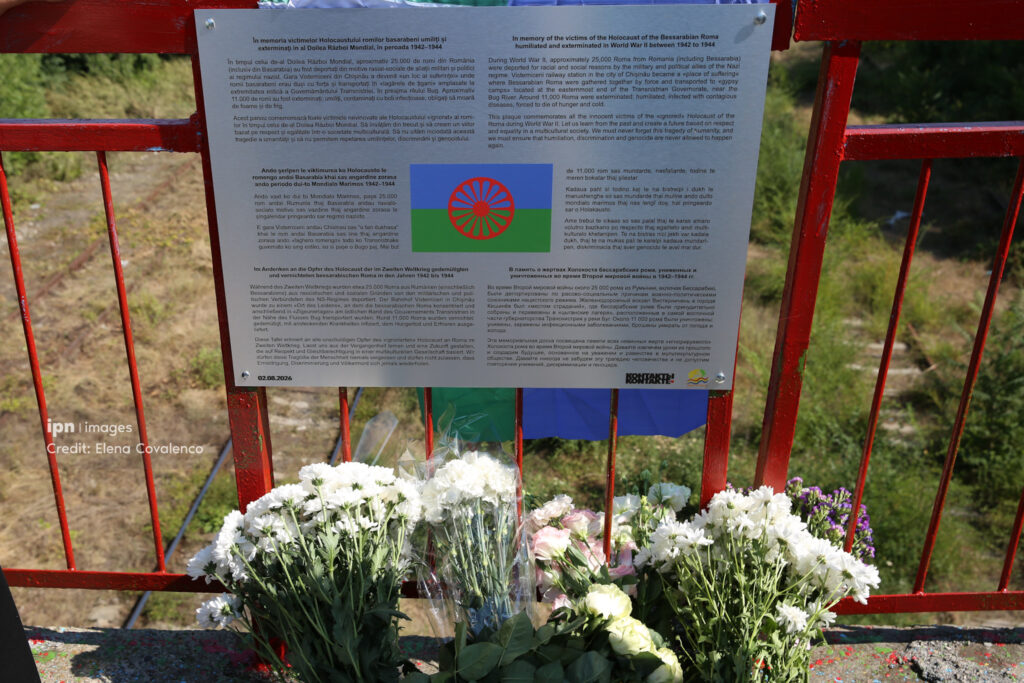
A commemorative plaque dedicated to the victims of the Holocaust against the Roma during the Second World War was unveiled on the territory of the Visterniceni Station in the city of Chisinau. The unveiling ceremony also included the laying of flowers in memory of the victims, in the context of the European Day of Remembrance for the victims of the Roma Holocaust, reports IPN.

The initiators of the project specified that the commemorative plaque is made in five languages – Romanian, Romani, Russian, English, and German – and represents a first step towards the arrangement of a memorial complex dedicated to the victims of the Roma Holocaust. They mentioned that, before the inauguration, symbolic elements placed near the plaque were vandalized and expressed their hope that the commemorative plaque will be respected and preserved.

According to the data presented at the event, between September 12 and 16, 1942, from Visterniceni Station, thousands of Roma, mostly women and children, were loaded into freight wagons and deported to camps in the Transnistrian region. During the period 1942-1944, approximately 25 thousand Roma were deported, and about 11 thousand died due to hunger, cold, diseases, and lack of medical assistance.

On the same day, the round table “The Memory of the Roma Holocaust – lessons for the present and future” took place, during which actions to promote the memory of the Roma Holocaust and combat discrimination were presented. Participants highlighted the role of education in preventing hate speech and intolerance.

The State Secretary of the Ministry of Education and Research, Valentina Olaru, stated that the new action plan for the years 2027-2030 will include measures to combat racism, anti-Semitism, anti-Roma discrimination, xenophobia, and other forms of intolerance. According to her, the explicit inclusion of the term “anti-Roma discrimination” reaffirms the state’s commitment to prevent discrimination and promote education based on respect for human rights.

0 FacebookTwitterPinterestEmail


1 IANUARIE, 2025
1 IANUARIE, 2025