

CReDO: Draft Broadcasting Code needs to be improved

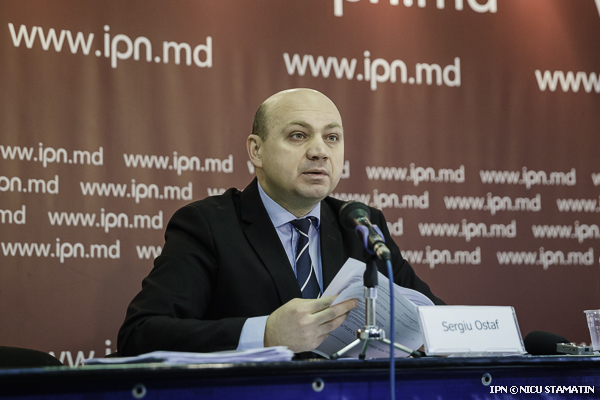
The adoption of the draft Broadcasting Code in the current variant could have unpredictable effects because some of the provisions considerably limit the freedom of expression. Thus, the bill, which was included in the agenda of the February 10 meeting of the Government, should be withdrawn for improvement, said the director of the Resource Center for Human Rights (CReDO) Sergiu Ostaf. In a news conference at IPN, he put forward a series of proposals designed to better ensure the right to expression, media pluralism and the independence of the media regulator.

Sergiu Ostaf said that if the new Code is adopted in the current form, a more difficult working environment will be created for journalists and editorialists from the broadcasting sector. To improve the bill, the phrase “obligation of diligence in verification of information” should be modified in Article 13, paragraph 3(b). This norm is excessive and requires additional efforts on the part of journalists. The phrase can be replaced with “responsibility to respect the professional journalistic ethics according to the European democratic practices.”

The CReDO director also recommends amending Article 13, paragraph 1, which says that “complete and truthful information’” should be presented. The expert considers the expression “complete and accurate” should be excluded because it is very hard to do this in practice as the journalists cannot ensure the absolute accuracy of information.

Sergiu Ostaf suggests supplementing the provisions from paragraph 4(c) of Article 13 with the expression “including, where it is possible, to present the reaction of the relevant or involved person”. The given amendment will facilitate the work of the journalists when the person featured in the article/report is not accessible or refuses to communicate with the press.

According to Sergiu Ostaf, the imposition, by Article 105 of the Broadcasting Code, of the restriction on “dominant situation in forming public opinion” is unpredictable and oscillating. This aspect discourages the ensuring of quality of entrepreneurial activity in the field. The pluralism of opinions can be gradually ensured by effectively limiting the number of licenses, not by imposing the restriction on having a dominant position on the market. In this regard, the number of licenses can be limited to two broadcast or retransmission licenses for each frequency for the same private individual and legal entity or persons related to them, up to the fourth degree.

The CReDO director considers the current Broadcasting Code is inferior to the proposed bill in many respects, but this bill does not provide solutions for attracting investments to an audiovisual business of a high quality either. Also, it will not ensure a wider pluralism of opinions.

Sergiu Ostaf noted that in other states the parties are not banned from founding TV channels. This restriction stipulated in the Broadcasting Code will reduce the pluralism of opinions or will make the parties to indirectly finance TV channels from undeclared resources.

sergiu ostaf despre proiectul codului audiovizualului.mp3


The Eiffel Tower could be illuminated in the colors of the flag of the Republic of Moldova on the evening of August 27, when 35 years since the proclamation of Independence are celebrated. To carry out the project, an additional 25 thousand euros are needed, and the ambassador of the Republic of Moldova in France, Lorina Balteanu, is appealing to business people, entrepreneurs, and supporters of the country to contribute financially, reports IPN.

The initiative is part of the event “Moldova-35 in Paris”, organized by the Embassy of the Republic of Moldova in the French Republic on the Champ de Mars lawn, near the Eiffel Tower. French officials, representatives of the diplomatic corps, European and international institutions, members of the Moldovan community in France, as well as citizens from the Republic of Moldova are expected to attend.

The space for the event will be arranged over an area of approximately 4 thousand square meters and will be decorated with 35 traditional Moldovan rugs, symbolizing the 35 years of independence and the cultural heritage of the Republic of Moldova.

According to Ambassador Lorina Balteanu, the Ministry of Foreign Affairs has allocated the necessary funds for the organization of the event, including for infrastructure, security and logistics. The cost of illuminating the Eiffel Tower is estimated at around 50 thousand euros. The Paris City Hall has expressed its willingness to cover half of this amount, so that an additional 25 thousand euros need to be collected to carry out the project.

“Therefore, I appeal to businessmen, entrepreneurs and all friends of the Republic of Moldova who share the belief that the image of a country is built through courageous projects and the involvement of those who believe in its future”, declared Lorina Balteanu, as quoted by vipmagazin.md.

The Ambassador clarified that the collected funds will be used exclusively for the financing of the Eiffel Tower’s illumination and assured that the process will be carried out respecting the principle of transparency. Moreover, the diplomat announced that she will personally contribute with 3 thousand euros and encouraged those who support the initiative to join her.

If the project is realized, the Eiffel Tower will be illuminated for the first time in the colors of the flag of the Republic of Moldova. The moment will be synchronized through a video transmission with the events organized in the Great National Assembly Square in Chisinau, dedicated to the 35th anniversary of the proclamation of the Independence of the Republic of Moldova.

0 FacebookTwitterPinterestEmail


CReDO: Draft Broadcasting Code needs to be improved

The adoption of the draft Broadcasting Code in the current variant could have unpredictable effects because some of the provisions considerably limit the freedom of expression. Thus, the bill, which was included in the agenda of the February 10 meeting of the Government, should be withdrawn for improvement, said the director of the Resource Center for Human Rights (CReDO) Sergiu Ostaf. In a news conference at IPN, he put forward a series of proposals designed to better ensure the right to expression, media pluralism and the independence of the media regulator.

Sergiu Ostaf said that if the new Code is adopted in the current form, a more difficult working environment will be created for journalists and editorialists from the broadcasting sector. To improve the bill, the phrase “obligation of diligence in verification of information” should be modified in Article 13, paragraph 3(b). This norm is excessive and requires additional efforts on the part of journalists. The phrase can be replaced with “responsibility to respect the professional journalistic ethics according to the European democratic practices.”

The CReDO director also recommends amending Article 13, paragraph 1, which says that “complete and truthful information’” should be presented. The expert considers the expression “complete and accurate” should be excluded because it is very hard to do this in practice as the journalists cannot ensure the absolute accuracy of information.

Sergiu Ostaf suggests supplementing the provisions from paragraph 4(c) of Article 13 with the expression “including, where it is possible, to present the reaction of the relevant or involved person”. The given amendment will facilitate the work of the journalists when the person featured in the article/report is not accessible or refuses to communicate with the press.

According to Sergiu Ostaf, the imposition, by Article 105 of the Broadcasting Code, of the restriction on “dominant situation in forming public opinion” is unpredictable and oscillating. This aspect discourages the ensuring of quality of entrepreneurial activity in the field. The pluralism of opinions can be gradually ensured by effectively limiting the number of licenses, not by imposing the restriction on having a dominant position on the market. In this regard, the number of licenses can be limited to two broadcast or retransmission licenses for each frequency for the same private individual and legal entity or persons related to them, up to the fourth degree.

The CReDO director considers the current Broadcasting Code is inferior to the proposed bill in many respects, but this bill does not provide solutions for attracting investments to an audiovisual business of a high quality either. Also, it will not ensure a wider pluralism of opinions.

Sergiu Ostaf noted that in other states the parties are not banned from founding TV channels. This restriction stipulated in the Broadcasting Code will reduce the pluralism of opinions or will make the parties to indirectly finance TV channels from undeclared resources.

sergiu ostaf despre proiectul codului audiovizualului.mp3

Administrators of public buildings and commercial spaces must reduce interior lighting by at least 30%, where possible, and turn off lights in unoccupied rooms. Also, between the hours of 06:00 PM and 06:00 AM, the lighting of pools, display windows, as well as decorative, architectural, and advertising lighting will be disconnected. These measures were approved by the National Crisis Management Commission to reduce electricity consumption, in the context of rising prices on regional markets and the need for energy imports, reports IPN.

According to the decision, businesses with high-energy-consuming production processes, including those using electric furnaces and melting installations, will adjust their activity so that high consumption is transferred outside peak hours: 06:00 AM-09:00 AM and 06:00 PM-11:00 PM.

The operators of water and sewage services will optimize the operation of the pumps, while public authorities will implement measures to rationalize consumption, including through the efficiency of public lighting, without affecting essential services.

The administrators of residential buildings will inform the tenants about the recommendation to avoid using the elevators during peak intervals, in order to reduce the risk of people getting trapped in case of potential power outages.

Also, commercial exports of electric energy will be limited between the hours of 06:00 PM and 10:00 PM, to protect domestic consumption during periods of maximum demand. The measure will be implemented by Moldelectrica, except for the quantities necessary to fulfill public service obligations regarding supply security.

The authorities have also decided to speed up the connection of new energy production and storage capacities to the network. System operators will prioritize connection requests for storage facilities and photovoltaic and wind power plants with batteries, and authorization procedures will be simplified.

At the same time, Energocom will identify and contract alternative energy sources from Romania, Ukraine, and other accessible markets. The company will present acquisition scenarios for the next 7-14 days and daily reports on price trends and the need for financial resources.

0 FacebookTwitterPinterestEmail


1 IANUARIE, 2025
1 IANUARIE, 2025