

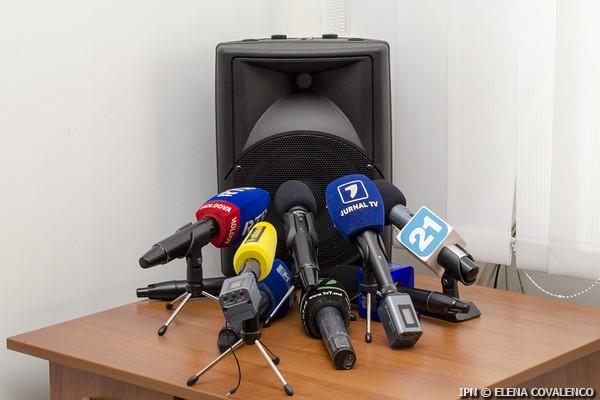
Parliament adopts Broadcasting Code in first reading

The MPs passed the new Broadcasting Code in the first reading. Under this, the Broadcasting Coordination Council and the national public broadcaster will be renamed and reformed. In the July 1 sitting of Parliament, Liberal MP Lilian Carp said the new code was drafted by a group of mass media experts, while the Liberal MPs subscribed to it and submitted it for adoption, IPN reports.

The new code provides that the television and radio program services within Moldova’s jurisdiction will earmark at least 50% of their airtime for national programs, while the own programs will represent not less than 25% of the airtime. The media service providers are obliged to ensure access to information about the name of the legal representative and the shareholders and about the name of the persons who manage broadcasters and those who assume editorial responsible.

The Broadcasting Coordination Council is renamed the Audiovisual Council. This will consist of five members named by Parliament for a seven-year term. While holding office, the Council members cannot be members of political parties or sociopolitical organization. The parties cannot found and/or own shares in broadcasters.

Within 12 months of the coming into force of the code, the Broadcasting Coordination Council wil be liquidated. When the 12 months expire, Parliament will constitute and approve the composition of the Audiovisual Council.

The national public broadcaster “Teleradio-Moldova” will be reorganized into Radio Moldova and TV Moldova 1. The private individuals with the domicile in Moldova are obliged to pay a tax for the public radio and TV service, except for those who declare on their own responsibility that they do not possess radio and/or TV receivers and of those who benefit from exemption from these taxes in accordance with the law.

The Supervision Board will supervise the public broadcaster. This will consist of nine members who will be public personalities with professional qualifications in different areas.


A 69-year-old man has been sentenced to 12 years in prison for sexual acts committed against a six-year-old child. In addition, the girl’s mother was sentenced to 15 years in prison for child trafficking for sexual exploitation, after she allegedly allowed the man to engage in sexual acts with her daughter for the sum of one hundred lei, reports IPN.

The General Prosecutor’s Office mentions that the two had known each other for several years, and the man frequently visited the woman’s home, who was 46 years old. One day, while the adults were consuming alcohol, the woman allegedly allowed him to enter the girl’s room, leading her to participate in a sexual act.

The girl ran away from home and took refuge in a nearby abandoned house, but her mother found her and, threatening her with physical violence, forced her to return home, where the minor was again compelled to participate in such acts.

According to law enforcement, the two did not admit their guilt. The man claimed that the accusations were based on a personal conflict with the girl’s father, while the woman denied exploiting her daughter or receiving money for this purpose. The prosecution points out that this is not the man’s first legal transgression, as he was previously convicted.

0 FacebookTwitterPinterestEmail


Parliament adopts Broadcasting Code in first reading

The MPs passed the new Broadcasting Code in the first reading. Under this, the Broadcasting Coordination Council and the national public broadcaster will be renamed and reformed. In the July 1 sitting of Parliament, Liberal MP Lilian Carp said the new code was drafted by a group of mass media experts, while the Liberal MPs subscribed to it and submitted it for adoption, IPN reports.

The new code provides that the television and radio program services within Moldova’s jurisdiction will earmark at least 50% of their airtime for national programs, while the own programs will represent not less than 25% of the airtime. The media service providers are obliged to ensure access to information about the name of the legal representative and the shareholders and about the name of the persons who manage broadcasters and those who assume editorial responsible.

The Broadcasting Coordination Council is renamed the Audiovisual Council. This will consist of five members named by Parliament for a seven-year term. While holding office, the Council members cannot be members of political parties or sociopolitical organization. The parties cannot found and/or own shares in broadcasters.

Within 12 months of the coming into force of the code, the Broadcasting Coordination Council wil be liquidated. When the 12 months expire, Parliament will constitute and approve the composition of the Audiovisual Council.

The national public broadcaster “Teleradio-Moldova” will be reorganized into Radio Moldova and TV Moldova 1. The private individuals with the domicile in Moldova are obliged to pay a tax for the public radio and TV service, except for those who declare on their own responsibility that they do not possess radio and/or TV receivers and of those who benefit from exemption from these taxes in accordance with the law.

The Supervision Board will supervise the public broadcaster. This will consist of nine members who will be public personalities with professional qualifications in different areas.


UEFA has expressed reservations about FIFA’s plan to create a commercial company that would manage the commercial rights of major competitions, including the World Cup. The organization believes that the initiative requires more clarity in terms of governance and transparency, reports IPN.

In a press release, UEFA stated that it is analyzing the proposal and that it must be examined by the national federations as well. The European body mentioned that the project raises questions about the management of the new structure and the distribution of financial benefits.

The reaction comes after FIFA announced its intention to establish FIFA Forward Enterprise (FFE), a subsidiary that would manage commercial activities and the organization of major competitions, including the World Cup and the Club World Cup.

FIFA intends to attract approximately 4.2 billion dollars by selling a minority stake of up to 20% to private investors. According to the organization, the funds will be used for the development of football, and FIFA will retain control over governance, competitions, and sporting decisions.

According to the British press, UEFA is expected to discuss the project with its 55 member federations at the end of this week, to establish a common position. Reservations about the initiative have also been expressed by the English Football Federation, CONCACAF, and the Asian Football Confederation, which have called for consultations and a transparent decision-making process.

0 FacebookTwitterPinterestEmail


1 IANUARIE, 2025
1 IANUARIE, 2025