

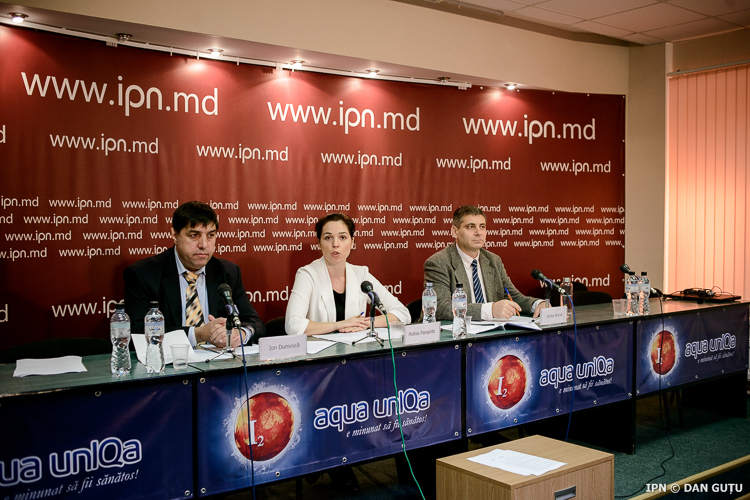
Local elections not inclusive, report

The October local elections are not inclusive, according to an analysis report published by the Civic Coalition for Free and Fair Elections umbrella organization, which shows that people with disabilities and Roma are particularly underrepresented in the electoral process.

Ion Duminică, expert with the “Voice of the Roma” Coalition, told a news conference at IPN that of the total 250,000 candidates running in the local elections there are only 50 Roma ethnics, and only 16 of them are women. Ion Duminică also says that the problems faced by Roma people are not reflected in electoral competitors’ manifestos. According to Duminică, the 2015 local elections in were historic because for the first time two Roma women became local councilors.

Victor Korol, executive director of the NGO Infonet, said that there is a reduced participation among persons with disabilities as electoral competitors in the current elections. Only 11 joined the electoral battle of the total 170,000 people with disabilities living Moldova. According to Korol, people with disabilities are having difficulty accessing electoral information. The services of the only publishing house using the Braille system has not been requested by any electoral competitor. Also, only 1% of the number of polling stations ensure the infrastructural access of people with disabilities.

Polina Panainte, secretary of the Civic Coalition for Free and Fair Elections, said that the issues of these two groups of citizens, Roma people and people with disabilities, are rarely if at all addressed during meetings with voters.

The report was published as part of the project called “Civil Society’s Plea for Free and Fair Elections in Moldova, in line with EU and OSCE/ODIHR recommendations and human rights commitments.” The project is implemented by the East-European Foundation, in partnership with the Partnership Center for Development, Piligrim Demo and Tarna Rom, funded by the EU and co-financed by Sweden.

Polina Panainte despre concluziile raportului


The People’s Assembly of Gagauzia approved on Monday proposals to the draft amendment of the Electoral Code elaborated by the Parliament. One of the main proposals of the APG is the exclusion from the Electoral Code of the notion of “camouflaged independent candidate”, reports the IPN correspondent from Gagauzia.

Deputies from Comrat believe that such a formulation as “disguised independent candidate” can create “legal uncertainty, because the law should not contain notions that allow a broad interpretation and a subjective assessment of election participants”. In their opinion, any violations should be established by concrete norms, such as rules regarding financing, electoral agitation, and candidate reporting.

Also, the deputies propose clarifying the restrictions for the representatives of the authorities in the electoral process. The list of officials with special requirements is expected to include the Governor of Gagauzia, members of the Executive Committee, and the leaders of its subdivisions.

A separate chapter of amendments refers to the responsibilities of the Central Electoral Commission. APG proposes to establish the CEC’s right to provide assistance and to exercise supervision over the organization and conduct of regional elections, as well as to make decisions regarding the activities of electoral bodies.

The proposals also target the procedure for nominating independent candidates. In the case of elections for the position of Governor of Gagauzia and for the deputies of the People’s Assembly, it is proposed that the verification of signatures supporting the candidates should be assigned to the Central Electoral Council of Gagauzia. In the case of regional elections, the collection of signatures would be allowed in any locality within the region.

The deputies from Comrat propose that it be stipulated that the Central Electoral Council of Gagauzia is an independent collegial body, which operates on the principles of impartiality and political neutrality.

The proposals of the People’s Assembly were elaborated in the context of changing the legal framework regarding the organization of elections in Gagauzia, following the decision of the Constitutional Court on July 9. The Court declared unconstitutional several provisions of the law, which targeted the formation of the regional electoral body and the participation of the People’s Assembly in approving its composition.

0 FacebookTwitterPinterestEmail


Local elections not inclusive, report

The October local elections are not inclusive, according to an analysis report published by the Civic Coalition for Free and Fair Elections umbrella organization, which shows that people with disabilities and Roma are particularly underrepresented in the electoral process.

Ion Duminică, expert with the “Voice of the Roma” Coalition, told a news conference at IPN that of the total 250,000 candidates running in the local elections there are only 50 Roma ethnics, and only 16 of them are women. Ion Duminică also says that the problems faced by Roma people are not reflected in electoral competitors’ manifestos. According to Duminică, the 2015 local elections in were historic because for the first time two Roma women became local councilors.

Victor Korol, executive director of the NGO Infonet, said that there is a reduced participation among persons with disabilities as electoral competitors in the current elections. Only 11 joined the electoral battle of the total 170,000 people with disabilities living Moldova. According to Korol, people with disabilities are having difficulty accessing electoral information. The services of the only publishing house using the Braille system has not been requested by any electoral competitor. Also, only 1% of the number of polling stations ensure the infrastructural access of people with disabilities.

Polina Panainte, secretary of the Civic Coalition for Free and Fair Elections, said that the issues of these two groups of citizens, Roma people and people with disabilities, are rarely if at all addressed during meetings with voters.

The report was published as part of the project called “Civil Society’s Plea for Free and Fair Elections in Moldova, in line with EU and OSCE/ODIHR recommendations and human rights commitments.” The project is implemented by the East-European Foundation, in partnership with the Partnership Center for Development, Piligrim Demo and Tarna Rom, funded by the EU and co-financed by Sweden.

Polina Panainte despre concluziile raportului

Meteorologists have issued a yellow heatwave warning for Tuesday. According to the forecast, the scorching weather will persist throughout the entire country, with maximum temperatures reaching +33 degrees Celsius and above, reports IPN.

The Authority for Meteorology and Environmental Monitoring announces that, over wide areas, the maximum temperatures will fluctuate between +33 and +35 degrees Celsius, and will occasionally reach +36 degrees. The institution specifies that the warning and the corresponding map can be updated depending on the evolution and intensity of the weather phenomena.

The heatwave at the beginning of August is caused by the intrusion of a warm air mass from northern Africa, which has led to a rise in temperatures across the entire country.

Under these conditions, the authorities recommend avoiding prolonged exposure to the sun and outdoor activities between 11:00 AM-06:00 PM, sufficient fluid intake, and limiting intense physical effort throughout the day.

0 FacebookTwitterPinterestEmail


1 IANUARIE, 2025
1 IANUARIE, 2025