

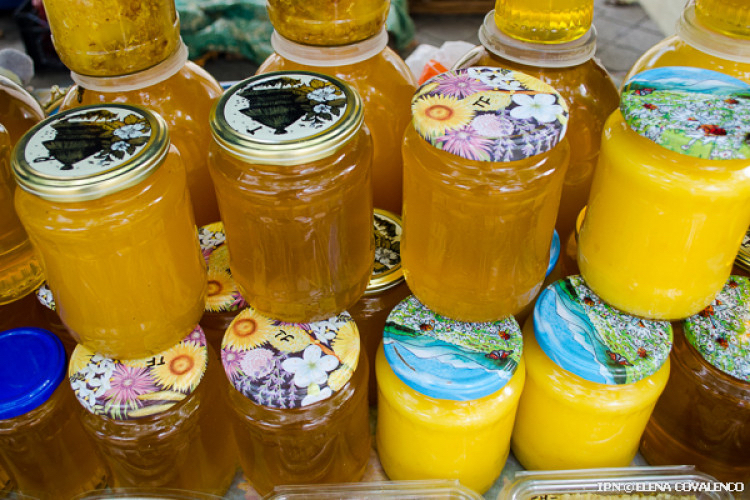
Europeans decrease price offer for Moldovan honey

So far the Republic of Moldova hasn’t exported any honey produced this year, but the previous years exports of newly harvested honey started in June, Vasile Dolghieru, president of the Association of Honey Exporters of the Republic of Moldova, has told IPN. Export stagnates because no agreement on prices could be reached.

“The buyers of Moldovan honey from Europe cannot decide the price. They try to increase the price for shop chains, but these chains oppose, arguing the honey is not an essential product, while the purchasing capacity of consumers declined. In general, the demand for money, including Moldovan honey, decreased owing to the situation in Ukraine. Honey is not an essential product. The people buy oil, for example, which is two-three times more expensive. The bread, gas, gasoline, diesel fuel have increased in price and these price rises affected the purchasing power of consumers,” stated Vasile Dolghieru.

If in Europe they suggest a lower price than last year, the Moldovan honey exporters will not have incomes. “They incur larger costs than last year as the gas and containers for transporting honey and also the shipment services are more expensive. We cannot buy honey from beekeepers at the same prices as last year. The price is now by 20% lower. The beekeepers expected the prices to rise by at least 30% on last year,” stated the president of the Association of Honey Exporters of the Republic of Moldova.

Last year, acacia honey was bought from Moldovan beekeepers for 5-5.50 eurocents per kilogram and was exported at the price of 5.80-6 eurocents per kilogram. This year the buyers from Europe propose a price of 5-5.50 eurocents per kilogram of honey. “The costs of exporters amount to almost 1 eurocent per kilogram and the exporters cannot offer the beekeepers a price higher than 4.50 eurocents per kilogram. But not even such contracts were signed with honey importers from Europe,” said Vasile Dolghieru.

Acacia honey production is larger than last year. Linden honey harvest is smaller owing to drought. The polyfloral honey is being harvested now, but the crop will be by 30-50% lower than last year also due to drought. Exports will therefore be lower too.

Moldova exports honey especially to EU member states. The largest quantities of honey were exported to Romania, Italy, Poland, France, Germany, Slovakia. The exports in 2017 were the largest – 5,100 tonnes. In 2021, Moldova exported 3,600 tonnes of honey, while in 2020 – 3,300 tonnes.


The city of Chisinau hosts the XIth edition of the international sports festival “Golden Bull” (July 23-26) /Athletics Manege /at 10:30 AM/.

The seniors from the capital are invited to a new edition of musical performances, held within the socio-cultural weekend project “Dialogue between generations” (July 25-26) /Public Garden “Stefan cel Mare si Sfant” /at 04:00 PM/.

In the sectors of the capital, the municipal chess and checkers championship for seniors is being organized /25-26 July/.

The City Hall of Chisinau organizes fairs and markets with local products and goods in the sectors of the capital /25-26 July/.

0 FacebookTwitterPinterestEmail


Europeans decrease price offer for Moldovan honey

So far the Republic of Moldova hasn’t exported any honey produced this year, but the previous years exports of newly harvested honey started in June, Vasile Dolghieru, president of the Association of Honey Exporters of the Republic of Moldova, has told IPN. Export stagnates because no agreement on prices could be reached.

“The buyers of Moldovan honey from Europe cannot decide the price. They try to increase the price for shop chains, but these chains oppose, arguing the honey is not an essential product, while the purchasing capacity of consumers declined. In general, the demand for money, including Moldovan honey, decreased owing to the situation in Ukraine. Honey is not an essential product. The people buy oil, for example, which is two-three times more expensive. The bread, gas, gasoline, diesel fuel have increased in price and these price rises affected the purchasing power of consumers,” stated Vasile Dolghieru.

If in Europe they suggest a lower price than last year, the Moldovan honey exporters will not have incomes. “They incur larger costs than last year as the gas and containers for transporting honey and also the shipment services are more expensive. We cannot buy honey from beekeepers at the same prices as last year. The price is now by 20% lower. The beekeepers expected the prices to rise by at least 30% on last year,” stated the president of the Association of Honey Exporters of the Republic of Moldova.

Last year, acacia honey was bought from Moldovan beekeepers for 5-5.50 eurocents per kilogram and was exported at the price of 5.80-6 eurocents per kilogram. This year the buyers from Europe propose a price of 5-5.50 eurocents per kilogram of honey. “The costs of exporters amount to almost 1 eurocent per kilogram and the exporters cannot offer the beekeepers a price higher than 4.50 eurocents per kilogram. But not even such contracts were signed with honey importers from Europe,” said Vasile Dolghieru.

Acacia honey production is larger than last year. Linden honey harvest is smaller owing to drought. The polyfloral honey is being harvested now, but the crop will be by 30-50% lower than last year also due to drought. Exports will therefore be lower too.

Moldova exports honey especially to EU member states. The largest quantities of honey were exported to Romania, Italy, Poland, France, Germany, Slovakia. The exports in 2017 were the largest – 5,100 tonnes. In 2021, Moldova exported 3,600 tonnes of honey, while in 2020 – 3,300 tonnes.


A new section of Muncesti Road has entered the rehabilitation process. The City Hall of Chisinau announces that the milling works on the roadway have begun on the sector between Arca Moldovei Street and Bacioii Noi Street, a stage that precedes the complete modernization of the asphalt surface, reports IPN.

On this section, with an area of approximately 23 thousand square meters, two layers of asphalt concrete are to be applied, the stormwater drainage channels are to be rehabilitated, and the shoulders are to be arranged with crushed stone.

In parallel, on the sector between Arca Moldovei Street and Iuri Gagarin Boulevard, the rehabilitation works using Slurry Seal technology are nearing completion. During this period, the second layer, the wear layer, is being applied, which serves to protect the road surface and extend its service life.

According to the municipality, after the completion of the works, Muncesti Road will have a modernized roadway, with better traffic conditions and an increased level of safety for traffic participants.

0 FacebookTwitterPinterestEmail


1 IANUARIE, 2025
1 IANUARIE, 2025