

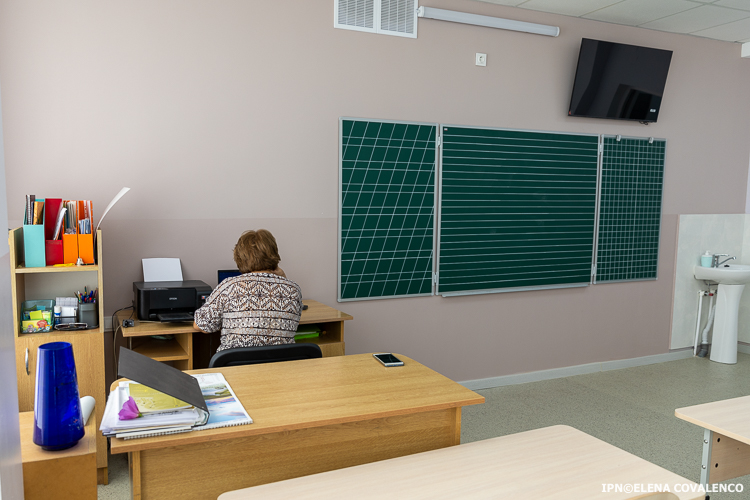
Several schools risk not having money for salaries. The MEC proposes the redistribution of savings from other institutions

The Ministry of Education and Research is introducing a mechanism through which schools with a deficit of funds for salary payments could receive additional resources, in the context where some institutions risk not being able to cover their personnel expenses from the allocations approved for the year 2026. The solution involves redistributing the savings made in other educational institutions towards schools in difficulty, reports IPN.

The measure is included in a draft resolution developed by the Ministry of Education, subject to public consultations. The document stipulates that second-level local public authorities will be able to transfer savings from personnel expenses to institutions with wage deficits. Schools will also be able to use their own savings to cover these expenses.

The authorities explain the need for intervention due to the effects of funding calculated based on the standard cost per student. The reduction in the number of children and students has led to a decrease in allocations for some institutions, especially those with small staff numbers.

The interim Minister, Dan Perciun, says that the allocation of additional funds for such schools is an annual practice. According to him, interventions are usually made in the months of June-July for institutions that fail to cover their wage obligations from the funding calculated per student.

A similar mechanism is proposed for early education institutions as well. Local authorities will be able to redistribute available resources between categories of expenses or between institutions, to avoid delays in salary payments.


Prime Minister Vasile Tofan will make his first official visit abroad since taking office on Thursday. The Premier will go to Romania, where he will be received at the Victoria Palace by his acting counterpart, Ilie Bolojan, reports IPN.

According to a government statement, the two officials will discuss strategic projects of common interest, with a direct impact on the citizens on both sides of the Prut, economic cooperation and security developments in the region. The meeting will be followed by press statements.

During the visit, Vasile Tofan will also meet with the President of Romania, Nicusor Dan, as well as with the representatives of the leadership of the Parliament in Bucharest. Additionally, the Prime Minister will have a discussion with the representatives of the Basarabeni Businessmen’s Club, focused on attracting investments and supporting the business environment.

0 FacebookTwitterPinterestEmail


Several schools risk not having money for salaries. The MEC proposes the redistribution of savings from other institutions

The Ministry of Education and Research is introducing a mechanism through which schools with a deficit of funds for salary payments could receive additional resources, in the context where some institutions risk not being able to cover their personnel expenses from the allocations approved for the year 2026. The solution involves redistributing the savings made in other educational institutions towards schools in difficulty, reports IPN.

The measure is included in a draft resolution developed by the Ministry of Education, subject to public consultations. The document stipulates that second-level local public authorities will be able to transfer savings from personnel expenses to institutions with wage deficits. Schools will also be able to use their own savings to cover these expenses.

The authorities explain the need for intervention due to the effects of funding calculated based on the standard cost per student. The reduction in the number of children and students has led to a decrease in allocations for some institutions, especially those with small staff numbers.

The interim Minister, Dan Perciun, says that the allocation of additional funds for such schools is an annual practice. According to him, interventions are usually made in the months of June-July for institutions that fail to cover their wage obligations from the funding calculated per student.

A similar mechanism is proposed for early education institutions as well. Local authorities will be able to redistribute available resources between categories of expenses or between institutions, to avoid delays in salary payments.


The Hydrometeorological Service in the Transnistrian region has established a yellow and orange hydrological danger code on the Dniester, valid from July 29 to August 7, due to the decrease in water level. According to the administration in Tiraspol, the orange code indicates “an increased risk of producing effects with significant impact”, reports the IPN correspondent from the Transnistrian region.

The decision comes after Chisinau extended until July 31 the hydrological warning regarding the reduced flow of the Nistru and other rivers. The yellow code is in effect in the Naslavcea-Dubasari sector, while between Dubasari and Tudora the orange code is maintained, where the water flow represents only 25-30% of the multiannual average.

In the context of the low level of the Nistru, the Government of the Republic of Moldova has instituted a hydrological alert for 30 days. The measure allows for quick interventions to manage water consumption and protect supply sources, so that drinking water for the population, medical institutions, and social ones remains a priority.

According to the Ministry of Environment, the reduction in the flow of the Nistru is caused by the lack of precipitation and unfavorable hydrometeorological conditions, with the risk of affecting the water intake structures and the water supply in the localities dependent on the river.

0 FacebookTwitterPinterestEmail


1 IANUARIE, 2025
1 IANUARIE, 2025