

Moldova withdraws from CIS Interparliamentary Assembly

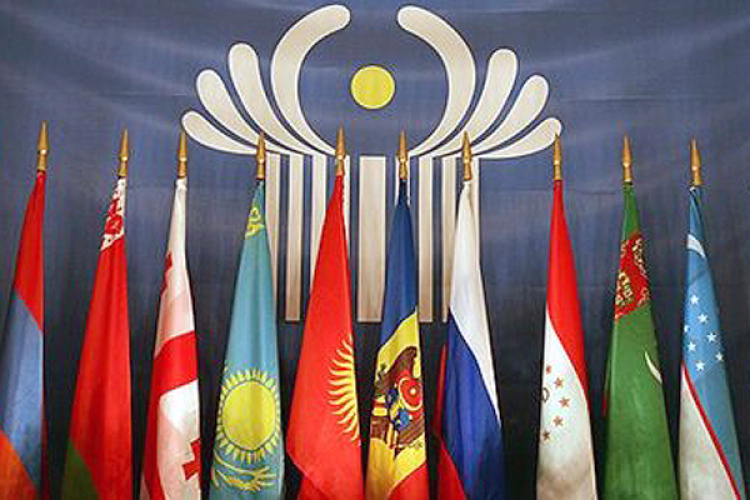
A decision was taken to initiate the procedure for denouncing the agreement on the Interparliamentary Assembly of Member Nations of the Commonwealth of Independent States (CSI), Parliament Speaker Igor Grosu has announced. According to him, after 30 years it became clear that Moldova’s presence in the CIS bodies didn’t help the country resolve the Transnistrian conflict and obtain the withdrawal of the Russian army from its territory. The CIS was created by Russia on the ruins of the USSR in order to keep the ex-soviet countries in its sphere of influence, IPN reports.

The Speaker noted that after the CIS founder Russia brutally attacked another founding state, Ukraine, occupying territories of this and killing its citizens, this organization can no longer be called a community. Moldova’s withdrawal from the CIS Interparliamentary Assembly is a first step. “At Government and Parliament levels, we are assessing the next steps. It is a process that lasts. One thing is clear. When the ban on our products was imposed, it was a lesson for the producers in Moldova. They made us find other markets, request European countries to lift the quotas and allow us to sell our products. And our producers convinced themselves that Europe is a large and stable market,” said Igor Grosu.

The official also said that Moldova is an independent, recognized state that is respected by its friends and neighbors and is free to take sovereign decisions. “We have the resolve and responsibility to distance ourselves from the source of evil, poverty, war and destruction. During 30 years, we showed that we want democracy, freedom and prosperity at home. We step by step do what the citizens expect from us. We build a stable, prosperous future full of opportunities – a European future – for our children,” stated the Speaker.

“According to procedures, at the next ordinary meeting of the Parliament’s Standing Bureau, I will propose requesting Prime Minister Dorin Recean to draft a legislative proposal on the denouncing of the Convention on the Interparliamentary Assembly of Member Nations of the CIS. Later, when this reaches Parliament, we will denounce the agreement,” said Igor Grosu


Prime Minister Vasile Tofan will make his first official visit abroad since taking office on Thursday. The Premier will go to Romania, where he will be received at the Victoria Palace by his acting counterpart, Ilie Bolojan, reports IPN.

According to a government statement, the two officials will discuss strategic projects of common interest, with a direct impact on the citizens on both sides of the Prut, economic cooperation and security developments in the region. The meeting will be followed by press statements.

During the visit, Vasile Tofan will also meet with the President of Romania, Nicusor Dan, as well as with the representatives of the leadership of the Parliament in Bucharest. Additionally, the Prime Minister will have a discussion with the representatives of the Basarabeni Businessmen’s Club, focused on attracting investments and supporting the business environment.

0 FacebookTwitterPinterestEmail


Moldova withdraws from CIS Interparliamentary Assembly

A decision was taken to initiate the procedure for denouncing the agreement on the Interparliamentary Assembly of Member Nations of the Commonwealth of Independent States (CSI), Parliament Speaker Igor Grosu has announced. According to him, after 30 years it became clear that Moldova’s presence in the CIS bodies didn’t help the country resolve the Transnistrian conflict and obtain the withdrawal of the Russian army from its territory. The CIS was created by Russia on the ruins of the USSR in order to keep the ex-soviet countries in its sphere of influence, IPN reports.

The Speaker noted that after the CIS founder Russia brutally attacked another founding state, Ukraine, occupying territories of this and killing its citizens, this organization can no longer be called a community. Moldova’s withdrawal from the CIS Interparliamentary Assembly is a first step. “At Government and Parliament levels, we are assessing the next steps. It is a process that lasts. One thing is clear. When the ban on our products was imposed, it was a lesson for the producers in Moldova. They made us find other markets, request European countries to lift the quotas and allow us to sell our products. And our producers convinced themselves that Europe is a large and stable market,” said Igor Grosu.

The official also said that Moldova is an independent, recognized state that is respected by its friends and neighbors and is free to take sovereign decisions. “We have the resolve and responsibility to distance ourselves from the source of evil, poverty, war and destruction. During 30 years, we showed that we want democracy, freedom and prosperity at home. We step by step do what the citizens expect from us. We build a stable, prosperous future full of opportunities – a European future – for our children,” stated the Speaker.

“According to procedures, at the next ordinary meeting of the Parliament’s Standing Bureau, I will propose requesting Prime Minister Dorin Recean to draft a legislative proposal on the denouncing of the Convention on the Interparliamentary Assembly of Member Nations of the CIS. Later, when this reaches Parliament, we will denounce the agreement,” said Igor Grosu


The Hydrometeorological Service in the Transnistrian region has established a yellow and orange hydrological danger code on the Dniester, valid from July 29 to August 7, due to the decrease in water level. According to the administration in Tiraspol, the orange code indicates “an increased risk of producing effects with significant impact”, reports the IPN correspondent from the Transnistrian region.

The decision comes after Chisinau extended until July 31 the hydrological warning regarding the reduced flow of the Nistru and other rivers. The yellow code is in effect in the Naslavcea-Dubasari sector, while between Dubasari and Tudora the orange code is maintained, where the water flow represents only 25-30% of the multiannual average.

In the context of the low level of the Nistru, the Government of the Republic of Moldova has instituted a hydrological alert for 30 days. The measure allows for quick interventions to manage water consumption and protect supply sources, so that drinking water for the population, medical institutions, and social ones remains a priority.

According to the Ministry of Environment, the reduction in the flow of the Nistru is caused by the lack of precipitation and unfavorable hydrometeorological conditions, with the risk of affecting the water intake structures and the water supply in the localities dependent on the river.

0 FacebookTwitterPinterestEmail


1 IANUARIE, 2025
1 IANUARIE, 2025