

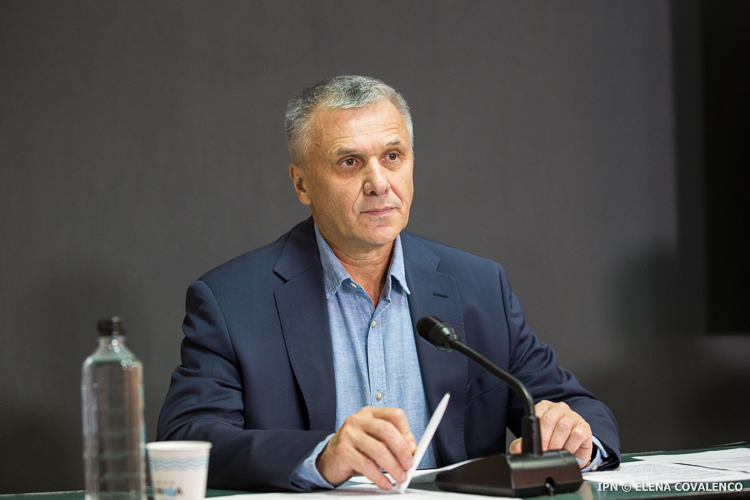
Igor Boțan: Warsaw Pact was a reply to reply

Expert Igor Boțan said the Warsaw Pact that was signed in Warsaw on May 14, 1955 in the meeting of European socialist states by eight countries, including the Soviet Union, was a reply to reply, namely to the formation of the North Atlantic Treaty Organization (NATO) in 1949. For its part, NATO was a reply to the forced communization of states of Central and Eastern Europe by the Soviet Union.

In a public debate hosted by IPN, the expert said the Warsaw Treaty was signed in 1955 by Albania, Bulgaria, Hungary, East Germany, Poland, Romania, the Soviet Union, and Czechoslovakia. The proclaimed goal was to ensure peace and security in Europe.

“The real goal of the treaty was to legalize the creation of a military alliance of European socialist states, with the Soviet Union playing the principal role, and to cement what was called bipolarity of the world, which lasted for 36 years. The states of the Warsaw Pact undertook to act in accordance with the United Nations Charter, to refrain in their international relations from threats or the use of force, to resolve the disputes by peaceful ways. But these principles were ignored when the Soviet Union intervened in Hungary in 1956 and then in Czechoslovakia in 1968,” stated Igor Boțan.

According to him, on April 26, 1985, following the expiry of the 20-year term, the treaty was extended for another 20 years. After the communist regimes collapsed in Central and Eastern Europe in 1989-1990, the existence of the Warsaw Treaty Organization as a military and political alliance of the socialist states simply lost any sense. That’s why the member states of the Warsaw Pact on February 25, 1991 disbanded their military bodies and signed a protocol on the nonexistence of this treaty in Prague on July 1, 1991.

The expert noted that both the Warsaw Pact and NATO should be regarded through the angle of Marxism. One of the pillars of Marxism was the classical German philosophy, Hegel’s dialectics, while the formula that was imbedded shows that “what is reasonable is real; that which is real is reasonable”.

“If NATO exists, it means that there are reasons for the existence of NATO. If NATO expands, there are reasons for this expansion. In fact, not NATO expands, but the European countries that feel threatened want to join this political and military bloc. The examples are Finland, Sweden and all the former member states of the Warsaw Pact, plus Ukraine, Georgia etc. If the Warsaw Treaty perished, according to Hegel’s dialectics, it means that this is reasonable and there are reasons for this collapse of the political and military bloc as it turned out to be inefficient. It turned out that the provisions of the treaty were not respected,” explained Igor Boțan.

The expert mentioned the three brutal interventions by three Soviet Union and two interventions on the part of the Warsaw Pacts in friend, allied states as a result of which tens of thousands of people died. “Recently, on September 26, it was 55 years of the publication of the so-called Doctrine of Brezhnev who after the intervention in Czechoslovakia justified the limited sovereignty of the member states of the Pact. Today we see the revanchism promoted by the Russian Federation in Vladimir Putin’s article published in 2020. On the occasion of the anniversary of the victory in World War II, in that article he justifies the German revanchism after World War I. Only after the invasion of Ukraine, it became clear why that article was a kind of prelude to the current invasion of Ukraine. Putin and his ideologists who developed the theory of sovereign democracy apply this sovereign democracy to themselves, but tried to violate Ukraine’s democracy,” stated Igor Boțan.

The public debate entitled “Warsaw Pact: History without propaganda” was the 20th installment of IPN’s project “Impact of the Past on Confidence and Peace Building Processes” which is supported by the Hanns Seidel Foundation of Germany.


Prime Minister Vasile Tofan will make his first official visit abroad since taking office on Thursday. The Premier will go to Romania, where he will be received at the Victoria Palace by his acting counterpart, Ilie Bolojan, reports IPN.

According to a government statement, the two officials will discuss strategic projects of common interest, with a direct impact on the citizens on both sides of the Prut, economic cooperation and security developments in the region. The meeting will be followed by press statements.

During the visit, Vasile Tofan will also meet with the President of Romania, Nicusor Dan, as well as with the representatives of the leadership of the Parliament in Bucharest. Additionally, the Prime Minister will have a discussion with the representatives of the Basarabeni Businessmen’s Club, focused on attracting investments and supporting the business environment.

0 FacebookTwitterPinterestEmail


Igor Boțan: Warsaw Pact was a reply to reply

Expert Igor Boțan said the Warsaw Pact that was signed in Warsaw on May 14, 1955 in the meeting of European socialist states by eight countries, including the Soviet Union, was a reply to reply, namely to the formation of the North Atlantic Treaty Organization (NATO) in 1949. For its part, NATO was a reply to the forced communization of states of Central and Eastern Europe by the Soviet Union.

In a public debate hosted by IPN, the expert said the Warsaw Treaty was signed in 1955 by Albania, Bulgaria, Hungary, East Germany, Poland, Romania, the Soviet Union, and Czechoslovakia. The proclaimed goal was to ensure peace and security in Europe.

“The real goal of the treaty was to legalize the creation of a military alliance of European socialist states, with the Soviet Union playing the principal role, and to cement what was called bipolarity of the world, which lasted for 36 years. The states of the Warsaw Pact undertook to act in accordance with the United Nations Charter, to refrain in their international relations from threats or the use of force, to resolve the disputes by peaceful ways. But these principles were ignored when the Soviet Union intervened in Hungary in 1956 and then in Czechoslovakia in 1968,” stated Igor Boțan.

According to him, on April 26, 1985, following the expiry of the 20-year term, the treaty was extended for another 20 years. After the communist regimes collapsed in Central and Eastern Europe in 1989-1990, the existence of the Warsaw Treaty Organization as a military and political alliance of the socialist states simply lost any sense. That’s why the member states of the Warsaw Pact on February 25, 1991 disbanded their military bodies and signed a protocol on the nonexistence of this treaty in Prague on July 1, 1991.

The expert noted that both the Warsaw Pact and NATO should be regarded through the angle of Marxism. One of the pillars of Marxism was the classical German philosophy, Hegel’s dialectics, while the formula that was imbedded shows that “what is reasonable is real; that which is real is reasonable”.

“If NATO exists, it means that there are reasons for the existence of NATO. If NATO expands, there are reasons for this expansion. In fact, not NATO expands, but the European countries that feel threatened want to join this political and military bloc. The examples are Finland, Sweden and all the former member states of the Warsaw Pact, plus Ukraine, Georgia etc. If the Warsaw Treaty perished, according to Hegel’s dialectics, it means that this is reasonable and there are reasons for this collapse of the political and military bloc as it turned out to be inefficient. It turned out that the provisions of the treaty were not respected,” explained Igor Boțan.

The expert mentioned the three brutal interventions by three Soviet Union and two interventions on the part of the Warsaw Pacts in friend, allied states as a result of which tens of thousands of people died. “Recently, on September 26, it was 55 years of the publication of the so-called Doctrine of Brezhnev who after the intervention in Czechoslovakia justified the limited sovereignty of the member states of the Pact. Today we see the revanchism promoted by the Russian Federation in Vladimir Putin’s article published in 2020. On the occasion of the anniversary of the victory in World War II, in that article he justifies the German revanchism after World War I. Only after the invasion of Ukraine, it became clear why that article was a kind of prelude to the current invasion of Ukraine. Putin and his ideologists who developed the theory of sovereign democracy apply this sovereign democracy to themselves, but tried to violate Ukraine’s democracy,” stated Igor Boțan.

The public debate entitled “Warsaw Pact: History without propaganda” was the 20th installment of IPN’s project “Impact of the Past on Confidence and Peace Building Processes” which is supported by the Hanns Seidel Foundation of Germany.


The Hydrometeorological Service in the Transnistrian region has established a yellow and orange hydrological danger code on the Dniester, valid from July 29 to August 7, due to the decrease in water level. According to the administration in Tiraspol, the orange code indicates “an increased risk of producing effects with significant impact”, reports the IPN correspondent from the Transnistrian region.

The decision comes after Chisinau extended until July 31 the hydrological warning regarding the reduced flow of the Nistru and other rivers. The yellow code is in effect in the Naslavcea-Dubasari sector, while between Dubasari and Tudora the orange code is maintained, where the water flow represents only 25-30% of the multiannual average.

In the context of the low level of the Nistru, the Government of the Republic of Moldova has instituted a hydrological alert for 30 days. The measure allows for quick interventions to manage water consumption and protect supply sources, so that drinking water for the population, medical institutions, and social ones remains a priority.

According to the Ministry of Environment, the reduction in the flow of the Nistru is caused by the lack of precipitation and unfavorable hydrometeorological conditions, with the risk of affecting the water intake structures and the water supply in the localities dependent on the river.

0 FacebookTwitterPinterestEmail


1 IANUARIE, 2025
1 IANUARIE, 2025