

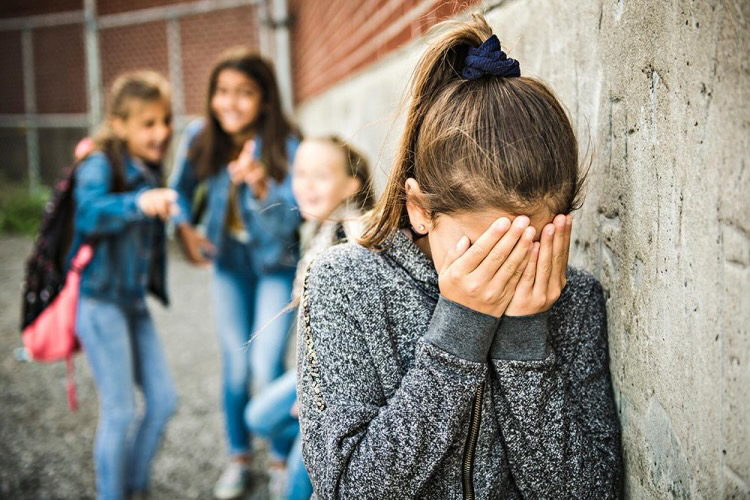
Media coverage of bullying. Expert recommendations and explanations

Bullying is not only a social problem but also a communication problem. Experts say that the way it is talked or written about influences people’s perceptions and the measures that can prevent it. The Ministry of Education and Research recorded more than 1200 cases of bullying last year, an increase on previous years. The figure represents 15% of the total number of suspected cases of abuse reported in schools, IPN reports.

Psychologists emphasize that bullying is not only characteristic of collectives in schools and kindergartens, but can also occur online, at work, in the community and public places, as well as in the family.

The president of the Press Council, journalist Viorica Zaharia, and the director of the Doctoral School of Psychology at the Pedagogical University “Ion Creanga”, psychologist Victoria Gonta, explained to IPN how this problem can be tackled correctly in the press and beyond.

How do we write correctly about bullying?

Journalist Viorica Zaharia says that this topic “is rarely dealt with in the press and even more rarely – professionally”. The president of the Press Council explains that bullying is a sensitive subject, which requires good preparation: “Maybe that’s why some journalists avoid it, so as not to make mistakes”.

According to Viorica Zaharia, the most common mistake is a superficial approach to the subject. The Press Council examined a case in which a student, a victim of bullying, was taken by an influencer to the hairdresser, to the movies, to the mall – all of which was filmed and reported. “This is an absolutely superficial and inappropriate approach,” the journalist emphasized.

Viorica Zaharia urged journalists not to forget that the media coverage of such a case is also accessible to the victim, and that the press coverage “can cause embarrassment and amplify the sense of suffering”. The journalist also recommends avoiding discussions with the victim as much as possible, adding that a dialogue with a specialist or the parents of the bullied child is sufficient, without recognizing the identity of the victim. “We write about bullying as a phenomenon, a trend,” explained Viorica Zaharia.

As for the ethical rules specific to reporting about violence and bullying, the president of the Press Council said that they are indicated in the Journalist’s Code of Ethics and other guides and guidelines published in Moldova and abroad.

According to Viorica Zaharia, journalists can help combat bullying by publicizing campaigns to prevent the phenomenon and by informing about its seriousness and consequences. In this regard, Zaharia gave examples of how this topic should be covered in the press: https://www.moldova.org/nu-mai-pot-suporta-atata-umilinta-din-cauza-bullying-ului-unii-elevi-renunta-la-scoala-iar-altii-la-viata/ and https://www.moldova.org/ce-facem-in-cazul-bullying-ului-explica-psihologii/.

What do psychologists say about media coverage of bullying?

Cases of bullying need to be covered in the media, but in a way that is very protective of the victims. Do not expose personal details, photos or images from the scene of the incident, as this could induce a stronger fear of the victim towards the bullies, as well as fears of social stigma. This is the finding of psychologist Victoria Gonta, director of the Doctoral School of Psychology at the State Pedagogical University “Ion Creanga”.

According to the psychologist, the media can approach the subject from the perspective of social responsibility for the protection of minors from bullying and abuse, and reflect the consequences of this phenomenon.

Referring to the ways of interpersonal communication of victims of bullying with other people, Victoria Gonta points out that in a safe environment, children will behave and function in a natural and appropriate way. However, “victims will show anxiety about uncertain situations, unfamiliar or aggressive places and people, will avoid conflicts and will prefer to stay at home more, reducing social contacts”, the psychologist added.

“The signs of bullying are visible and invisible,” said Victoria Gonta. Some bullies lash out in public and the victims are withdrawn, lonely, sad and demotivated. In other cases, victims experience a hidden terror and they are anxious, lack energy, sometimes aggressive towards family members. In the long term, they can develop victimizing or aggressive behaviour, neuroses or even mental and personality disorders, explains the psychologist.

Victoria Gonta points out that victims of bullying rarely accept interviews or referrals to specialists, especially adolescents. The psychology expert pointed out that open-ended questions and lack of insistence can generate many answers and reflections from the victim.

Programs and campaigns dedicated to the fight against violence can have an educational effect on the general public, says psychologist Victoria Gonta.


Musicians Timur Panteleev (vocals, guitar) and Alexandr Obîdennik (violin) are organizing a concert dedicated to the memory of Vladimir Vysotsky “Of course, I will return…” /State Russian Drama Theater “A.P. Chekhov” /at 03:00 PM/; at 06:00 PM/.

The audience is invited to the film “A Safe Place” presented at the Transylvania International Film Festival, sixth edition /Cineplex Loteanu /at 03:00 PM/.

The film “Yellow Tie” is presented at the Transylvania International Film Festival, 6th edition /Cinema Odeon /at 03:00 PM/.

Seniors from the capital are invited to a new edition of musical shows, held within the framework of the socio-cultural weekend project “Dialogue between generations” (July 25-26) /Public Garden “Stefan cel Mare si Sfant” /at 04:00 PM/.

The film “The Living” is presented at the Transylvania International Film Festival, 6th edition /Cineplex Loteanu /at 05:30 PM/.

The film “On Our Own” is being presented at the Transylvania International Film Festival, 6th edition /Odeon Cinema /at 05:45 PM/.

The Ciocana Sector Prefecture is organizing a new open-air dance evening /Ciocana Sector Amphitheater /at 06:00 PM/.

The film “Comatogen” directed by Igor Cobileanski is presented /Radical Theater /at 07:00 PM/.

A concert is taking place outdoors featuring Marcel Lazar – piano, Constantin Borodin – cello, and Ion Mosneaga – violin /Nicolae Donici’s Manor in Dubasarii Vechi /at 07:00 PM/.

The film “Green Wave” is presented at the Transylvania International Film Festival, 6th edition /Cineplex Loteanu /at 07:30 PM/.

Romanian short films are presented at the Transylvania International Film Festival, 6th edition /Artcor /at 08:00 PM/.

The film “Diary of a Chambermaid” is presented at the Transylvania International Film Festival, 6th edition /Odeon Cinema /at 08:00 PM/.

The immersive exhibition continues, inspired by the mythology and mystical folklore of the Republic of Moldova, “The Forest”, created by Milen Chelea /Plai Gallery /July 23-August 6/.

The exhibition “Urban Archeology and the Hidden Memory of Chisinau” continues /National Museum of History of Moldova /July 17-November 30/.

The contemporary art exhibition-competition continues: The municipal salon within the “Te salut, Chisinau!” Festival, the VI edition, dedicated to the 590th anniversary of the city /Constantin Brancusi Exhibition Center /July 8-26/.

The documentary exhibition “Echo from the past, for present and future” continues, dedicated to the memory of the victims of Stalinist deportations and one of the most tragic episodes in the history of Bessarabia /BNRM /July 3-August 3/.

The exhibition “The Thread of Identity! The traditional Romanian costume in book illustrations made by plastic artists from the Republic of Moldova” continues /BNRM /June 25-August 15/.

The graphic exhibition by Lica Sainciuc continues, opened as part of the Creative Industries Festival /Lutnita Gallery /June 5 – July 31/.

0 FacebookTwitterPinterestEmail


Media coverage of bullying. Expert recommendations and explanations

Bullying is not only a social problem but also a communication problem. Experts say that the way it is talked or written about influences people’s perceptions and the measures that can prevent it. The Ministry of Education and Research recorded more than 1200 cases of bullying last year, an increase on previous years. The figure represents 15% of the total number of suspected cases of abuse reported in schools, IPN reports.

Psychologists emphasize that bullying is not only characteristic of collectives in schools and kindergartens, but can also occur online, at work, in the community and public places, as well as in the family.

The president of the Press Council, journalist Viorica Zaharia, and the director of the Doctoral School of Psychology at the Pedagogical University “Ion Creanga”, psychologist Victoria Gonta, explained to IPN how this problem can be tackled correctly in the press and beyond.

How do we write correctly about bullying?

Journalist Viorica Zaharia says that this topic “is rarely dealt with in the press and even more rarely – professionally”. The president of the Press Council explains that bullying is a sensitive subject, which requires good preparation: “Maybe that’s why some journalists avoid it, so as not to make mistakes”.

According to Viorica Zaharia, the most common mistake is a superficial approach to the subject. The Press Council examined a case in which a student, a victim of bullying, was taken by an influencer to the hairdresser, to the movies, to the mall – all of which was filmed and reported. “This is an absolutely superficial and inappropriate approach,” the journalist emphasized.

Viorica Zaharia urged journalists not to forget that the media coverage of such a case is also accessible to the victim, and that the press coverage “can cause embarrassment and amplify the sense of suffering”. The journalist also recommends avoiding discussions with the victim as much as possible, adding that a dialogue with a specialist or the parents of the bullied child is sufficient, without recognizing the identity of the victim. “We write about bullying as a phenomenon, a trend,” explained Viorica Zaharia.

As for the ethical rules specific to reporting about violence and bullying, the president of the Press Council said that they are indicated in the Journalist’s Code of Ethics and other guides and guidelines published in Moldova and abroad.

According to Viorica Zaharia, journalists can help combat bullying by publicizing campaigns to prevent the phenomenon and by informing about its seriousness and consequences. In this regard, Zaharia gave examples of how this topic should be covered in the press: https://www.moldova.org/nu-mai-pot-suporta-atata-umilinta-din-cauza-bullying-ului-unii-elevi-renunta-la-scoala-iar-altii-la-viata/ and https://www.moldova.org/ce-facem-in-cazul-bullying-ului-explica-psihologii/.

What do psychologists say about media coverage of bullying?

Cases of bullying need to be covered in the media, but in a way that is very protective of the victims. Do not expose personal details, photos or images from the scene of the incident, as this could induce a stronger fear of the victim towards the bullies, as well as fears of social stigma. This is the finding of psychologist Victoria Gonta, director of the Doctoral School of Psychology at the State Pedagogical University “Ion Creanga”.

According to the psychologist, the media can approach the subject from the perspective of social responsibility for the protection of minors from bullying and abuse, and reflect the consequences of this phenomenon.

Referring to the ways of interpersonal communication of victims of bullying with other people, Victoria Gonta points out that in a safe environment, children will behave and function in a natural and appropriate way. However, “victims will show anxiety about uncertain situations, unfamiliar or aggressive places and people, will avoid conflicts and will prefer to stay at home more, reducing social contacts”, the psychologist added.

“The signs of bullying are visible and invisible,” said Victoria Gonta. Some bullies lash out in public and the victims are withdrawn, lonely, sad and demotivated. In other cases, victims experience a hidden terror and they are anxious, lack energy, sometimes aggressive towards family members. In the long term, they can develop victimizing or aggressive behaviour, neuroses or even mental and personality disorders, explains the psychologist.

Victoria Gonta points out that victims of bullying rarely accept interviews or referrals to specialists, especially adolescents. The psychology expert pointed out that open-ended questions and lack of insistence can generate many answers and reflections from the victim.

Programs and campaigns dedicated to the fight against violence can have an educational effect on the general public, says psychologist Victoria Gonta.


The “Eugen Doga” International Airport in Chisinau has launched a public tender for the current repair and maintenance of the asphalt concrete surfaces of the aerodrome platform. The estimated value of the contract is 67.2 million lei, excluding VAT, reports IPN.

According to the announcement published on the public procurement platform, bids can be submitted during the period of August 3-17, after the clarification request stage has ended, which will take place until August 3.

According to the technical documentation, a large part of the investment is intended for the repair of platform no. 1, where the aircraft parking spots are located. The verified estimate for these works is approximately 55 million lei, including VAT.

The repairs are not limited to the area where the aircraft are stationed, but also target the infrastructure used daily by airport services. Thus, the repairs also include the connection area between the control point and the aerodrome platform, the parking area designated for airport vehicles, the area where the workshops and material depots are located, as well as the area of the fuel supply station. At the same time, work will also be carried out on the access road to the passenger terminal.

The specification book indicates that the need for interventions was identified following technical inspections. The documentation further stipulates that the interventions will be carried out in operational areas and with restricted access, without affecting the airport’s activity.

0 FacebookTwitterPinterestEmail


1 IANUARIE, 2025
1 IANUARIE, 2025