

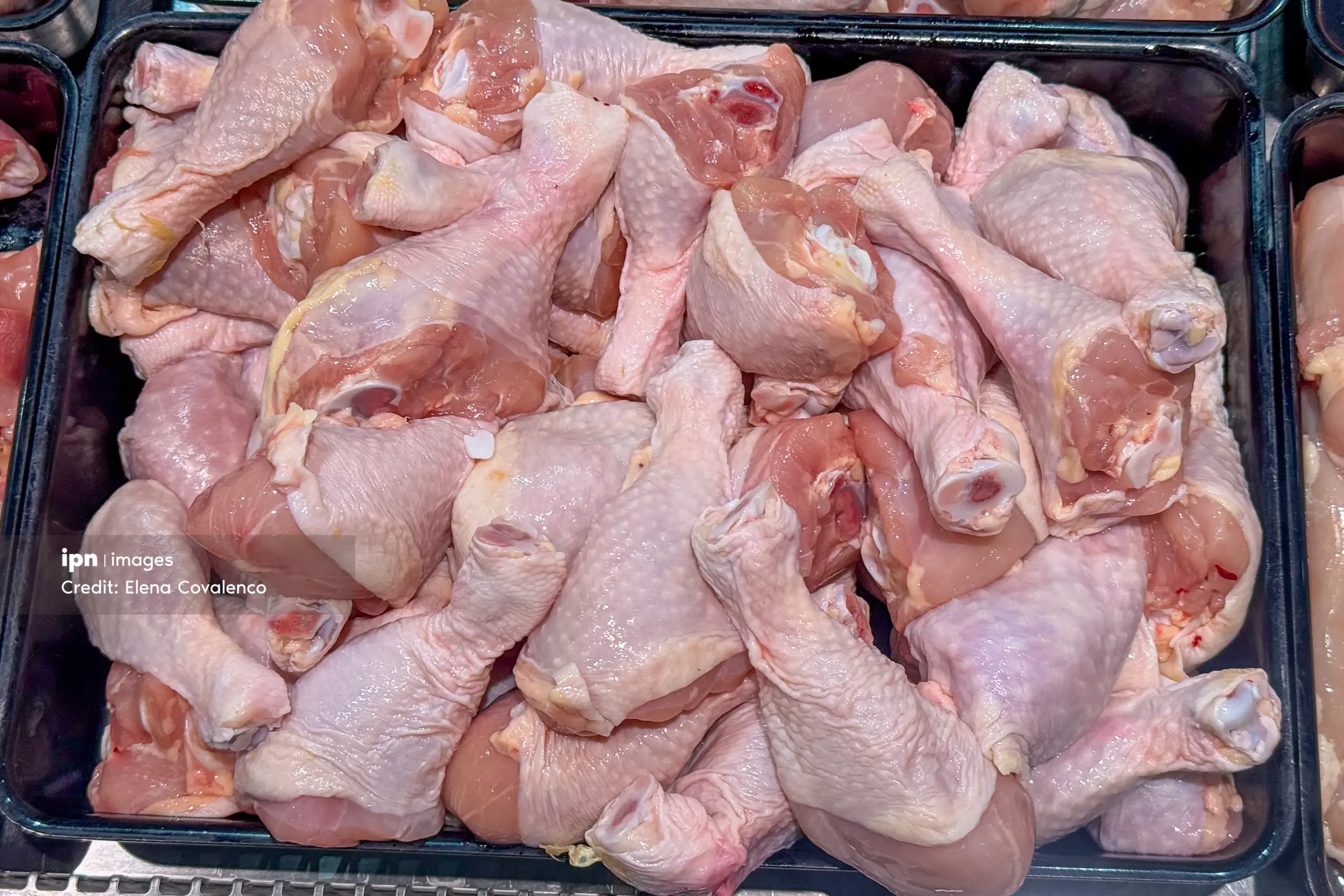
Moldova and Ukraine have agreed on measures to resume poultry meat imports

The Republic of Moldova and Ukraine have agreed on measures to resume poultry meat imports. According to the National Agency for Food Safety, the parties have established an action algorithm that will facilitate the restoration of the market for frozen and refrigerated poultry meat, as a result of implementing a common control mechanism between authorities, reports IPN.

ANSA specifies that for the resumption of the export of frozen and refrigerated poultry meat, enterprises that have the right to export to EU member countries (euro-number) and that carry out a closed production cycle (own slaughterhouses) will be able to export products after performing laboratory analyses of 10 blood serum samples in EU accredited laboratories.

“As soon as the test results confirm compliance with established safety standards, the export of both frozen and refrigerated poultry meat will be opened for the corresponding capacity. Such a step will be an important signal regarding the stability and reliability of the Ukrainian agricultural sector,” the institution mentions.

After the resumption of exports, the conditions and frequency of conducting additional laboratory studies will be further discussed between the competent authorities of the two countries.

ANSA further specifies that Ukraine has already taken concrete steps: it has selected a representative number of samples and sent them to the EU laboratory for analysis.

The Republic of Moldova suspended the import of poultry meat from Ukraine on January 26. As a result, Ukrainian authorities have prepared a project which provides for the introduction of a licensing regime for the import of grapes, wine, and alcoholic beverages from the Republic of Moldova.


The National Bank of Moldova, in partnership with the Bank of France and the National Bank of Romania, will organize in Chisinau the second edition of the international conference dedicated to the coordination of policies for European convergence. The event will bring together experts, decision-makers, and researchers to discuss the economic challenges of states in the process of integration into the European Union, reports IPN.

According to BNM, the discussions will focus on the challenges faced by EU candidate states in the process of accelerating economic and financial integration. Among these are the need to mobilize significant investments, while at the same time maintaining price stability and exchange rate predictability.

The Vice Governor of BNM, Mihnea Constantinescu, argues that accelerated European integration imposes a rapid pace of reforms and investments. According to him, the conference will facilitate the exchange of experience and the presentation of the best practices in this field.

The event program will include discussion panels, research presentations, and sessions dedicated to financial policies, with a focus on the experience of Eastern European countries.

The conference entitled “Fiscal space and monetary anchoring under accelerated integration” will take place from October 1-2, in a hybrid format. Researchers interested in participating with their papers can submit their proposals until August 16, to the email address [email protected].

0 FacebookTwitterPinterestEmail


Moldova and Ukraine have agreed on measures to resume poultry meat imports

The Republic of Moldova and Ukraine have agreed on measures to resume poultry meat imports. According to the National Agency for Food Safety, the parties have established an action algorithm that will facilitate the restoration of the market for frozen and refrigerated poultry meat, as a result of implementing a common control mechanism between authorities, reports IPN.

ANSA specifies that for the resumption of the export of frozen and refrigerated poultry meat, enterprises that have the right to export to EU member countries (euro-number) and that carry out a closed production cycle (own slaughterhouses) will be able to export products after performing laboratory analyses of 10 blood serum samples in EU accredited laboratories.

“As soon as the test results confirm compliance with established safety standards, the export of both frozen and refrigerated poultry meat will be opened for the corresponding capacity. Such a step will be an important signal regarding the stability and reliability of the Ukrainian agricultural sector,” the institution mentions.

After the resumption of exports, the conditions and frequency of conducting additional laboratory studies will be further discussed between the competent authorities of the two countries.

ANSA further specifies that Ukraine has already taken concrete steps: it has selected a representative number of samples and sent them to the EU laboratory for analysis.

The Republic of Moldova suspended the import of poultry meat from Ukraine on January 26. As a result, Ukrainian authorities have prepared a project which provides for the introduction of a licensing regime for the import of grapes, wine, and alcoholic beverages from the Republic of Moldova.


The production of apricots and peaches in Moldova is increasing compared to the previous season, and the quality of the fruits allows for the expansion of exports to international markets. Producers say that this year’s fruits stand out for their size, color, firmness, and high sugar content, which makes them attractive for foreign trade, reports IPN.

According to the Moldova Fruct Association of Fruit Producers and Exporters, the larger harvest is the result of investments made in recent years in irrigation systems, orchard protection, and modern production technologies. At the same time, producers are increasingly opting for varieties adapted to local climatic conditions and are developing the necessary infrastructure for storing and preparing fruits for export.

This year’s apricot production is estimated at 15-17 thousand tons.

In the past season, the main market for Moldovan apricots was Romania, followed by Ukraine and Serbia. At the same time, deliveries to Germany, Poland, Slovakia, Latvia, Croatia, and Hungary indicate a growing presence of Moldovan fruits on the European Union market.

0 FacebookTwitterPinterestEmail


1 IANUARIE, 2025
1 IANUARIE, 2025