

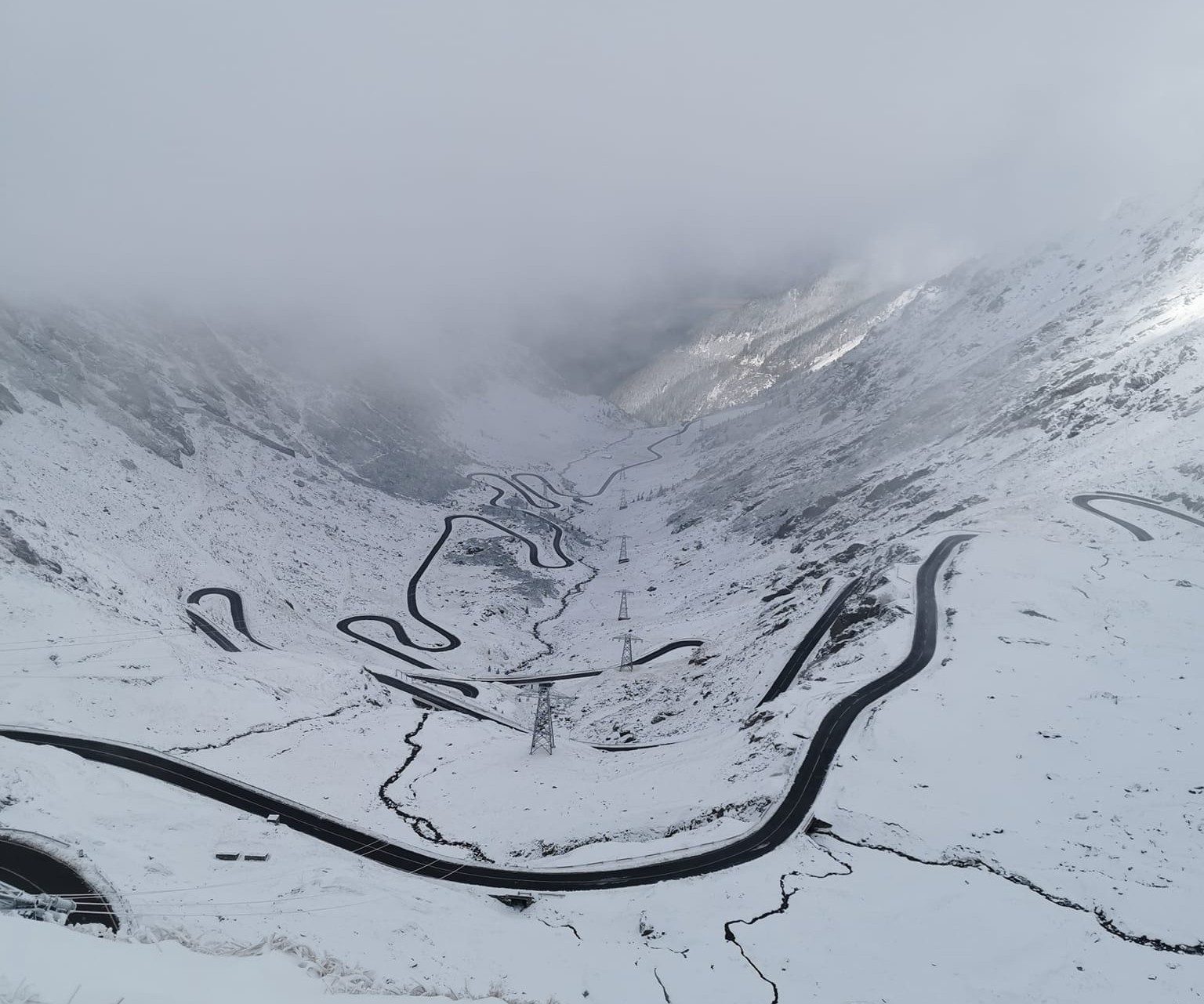
Traffic has been closed on the Transfagarasan and Transalpina routes

Sursa foto: Meteoplus

Road traffic on the Transfagarasan and Transalpina routes in Romania has been closed since Monday, October 20, due to unfavorable weather conditions. They are expected to reopen to traffic in the spring, reports IPN.

The traffic restrictions target the section of the Transfagarasan between the Piscu Negru river and the Balea Waterfall. And on the Transalpina, the section between the Ranca tourist resort and the Curpat river has been closed to traffic.

The National Road Infrastructure Administration Company has announced that the decision to restrict traffic was made due to the risks caused by heavy snowfall, blizzard, avalanches, rockfalls, and black ice.

The Romanian authorities warn that atmospheric instability is high at great altitudes, and extreme weather phenomena can occur at any time.

Transfagarasan and Transalpina are open to road traffic only during the warm period of the year. In winter, traffic is suspended due to low temperatures and to prevent road accidents.


Traffic has been closed on the Transfagarasan and Transalpina routes

Sursa foto: Meteoplus

Road traffic on the Transfagarasan and Transalpina routes in Romania has been closed since Monday, October 20, due to unfavorable weather conditions. They are expected to reopen to traffic in the spring, reports IPN.

The traffic restrictions target the section of the Transfagarasan between the Piscu Negru river and the Balea Waterfall. And on the Transalpina, the section between the Ranca tourist resort and the Curpat river has been closed to traffic.

The National Road Infrastructure Administration Company has announced that the decision to restrict traffic was made due to the risks caused by heavy snowfall, blizzard, avalanches, rockfalls, and black ice.

The Romanian authorities warn that atmospheric instability is high at great altitudes, and extreme weather phenomena can occur at any time.

Transfagarasan and Transalpina are open to road traffic only during the warm period of the year. In winter, traffic is suspended due to low temperatures and to prevent road accidents.


The Congress of Local Authorities of Moldova challenges the way the administrative-territorial reform is promoted and argues that the deadline of July 31, set for the voluntary amalgamation of localities, is used to exert pressure on local elected officials. In a letter addressed to the country’s leadership, the prosecutor general, and the director of the SIS, CALM requests urgent intervention, asserting that the process is taking place outside the legal framework and affects local autonomy, reports IPN.

CALM asserts that the reform is based on a concept not approved by a normative act, but used as a foundation for the amalgamation of localities. The organization claims that mayors and local councilors are pressured to accept the process, even though it is presented as voluntary.

According to CALM, the deadline of July 31 and the actions taken to comply with it affect local autonomy and the principles of the rule of law. The congress representatives also argue that the reform is being promoted before the necessary legal framework is adopted.

CALM invokes possible violations provided by the Penal Code, including abuse and exceeding job duties, forgery in public documents, and usurpation of state power.

In the address sent to President Maia Sandu, Parliament President Igor Grosu, deputies, Prime Minister Vasile Tofan, Attorney General Alexandru Machidon and SIS Director Alexandru Musteata, CALM requests the restoration of legality, the cessation of pressures on local authorities and the resumption of dialogue with communities.

Previously, the State Chancellery clarified that the deadline of July 31 is an operational one for the completion of administrative and legislative stages related to the current stage of voluntary amalgamation and does not limit the initiation of such processes in the future. The institution also mentioned that the decision to amalgamate belongs to the communities and local councils, and the role of the Government is to provide methodological and legal support and to verify the legality of the procedures.

0 FacebookTwitterPinterestEmail


1 IANUARIE, 2025
1 IANUARIE, 2025