

Infested fish do not pose danger if properly processed, ANSA talks

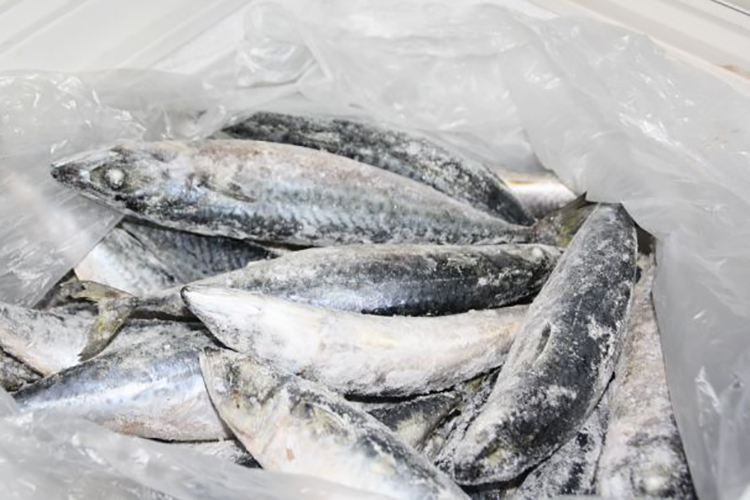
Infested fish do not pose danger to human health if properly processed, which implies that they should either be frozen for more than 24 hours at -18 degrees Celsius or thermally processed, for at least one minute, at +60 degrees Celsius. However, it is inadmissible for the infested fish, regardless of the degree of infestation, to be distributed in schools, preschools and other social institutions. Opinions in this regard were expressed during a meeting organized by the National Agency for Food Safety.

Elena Malai, ANSA deputy director, said that following the verifications carried out by inspectors at social institutions, including schools, several irregularities were detected. Products are delivered and received in the absence of origin documents. Some products have incorrect labels, while the frozen fish has altered organoleptic indicators when thawed. Inspectors detected over 250 kg of infested fish, over 100 non-compliant food products and altered eggs. According to ANSA deputy director, the most affected fish is cod, herring and mackerel. Most of it comes from Spain, Norway and Ireland.

According to Ștefan Rusu, head of the Laboratory of Parasitology and Helmintology, Institute of Zoology, the parasite contained in fish is called Anisakis and the disease that it can cause is called anisakidosis, which causes allergic reactions. According to Ștefan Rusu, the parasite is resistant to saline environments, but is sensitive to the low temperature and thermal processing. 90% of the existing fish in nature is infested with this parasite.

The specialists said that importers must ensure that the fish comes from authorized establishments, must ensure the traceability of the fish and should inform buyers if the fish has parasites. In case the fish is infested, it can be marketed under certain conditions. It must be processed and cleaned, so that the parasites are eliminated.

Roman Vengher, the head of the Municipal Department for Food Safety in Chișinău, issued recommendations to importers to develop self-monitoring programs for fish, which is a measure provided by law. Roman Vengher added that the most frequent deviations are found in the food batches of educational institutions where the correct handling of the product is not ensured.

A fish importer representative said that by publicizing the subject, the monopolization of the fish market is attempted. He said that the prices for customs clearance for fish import are high. As a result businesses are unable to pay. Additionally, according to the economic agent, no state institution is correctly handling fish, however, the economic agent who delivered the product gets the blamed. The representative added that other countries certify and market parasitic fish, yet it is not clear whether these certificates are also recognized in Moldova.

Following the discussions, ANSA representatives expect “fish quality regulations” from the Ministry of Agriculture, Regional Development and the Environment. Additionally, ANSA said that it will review the fish sampling method. The institution issued recommendations to producers and importers to inform consumers about the existence of parasites in the product.

Prime Minister Maia Sandu announced two weeks ago that 73 batches of frozen fish, out of 124 imported into the Republic of Moldova between August 20 and October 4, have been found to be infested with parasites. According to the prime minister, the Republican Veterinary and Diagnostic Centre did not inform ANSA about the detected irregularities during laboratory checks, thus veterinary certificates with import rights were issued for non-compliant batches. The fish was distributed to social and educational institutions. Afterwards, ANSA opened an internal investigation which led to the suspension from office of the head of the Republican Veterinary and Diagnostic Centre.


The Independent Analytical Center “Expert-Grup”, in collaboration with Maib and with the support of the Embassy of the Kingdom of the Netherlands in the Republic of Moldova, organizes the launch event of the public offer regarding the municipal bonds issued by the Ceadâr-Lunga City Hall /maib park /at 10:00 AM/.

The PRESS AGENCY IPN invites media representatives to the public debate on the topic: “Neutrality and the defense capacity of the citizen and the state”, the 354th edition of the series “Developing political culture in public debates”. Participants: Dionis Cenusa, political scientist, associate expert at the Center for Eastern European Studies, Lithuania; Andrei Curararu, expert in international and national security, WatchDog Community; Igor Botan, permanent expert of the project /Conference room of the IPN Agency, Teatrului street, 2/2, 3rd floor, online on the YouTube channel of the Agency, on the Facebook page IPN Press Agency and accessed later in the archive; Realitatea TV, live or replayed, as well as on www.Rlive.md /at 11:00 AM/.

The Ministry of Education and Research, in partnership with the Interethnic Relations Agency, the Ethnographic Association of Roma and the “Voice of the Roma” Coalition, is organizing a roundtable discussion entitled: “The Memory of the Roma Holocaust – lessons for the present and future”, in the context of the European Day of Remembrance for Victims of the Holocaust against the Roma /Government House, entrance from Banulescu-Bodoni Street /at 11:00 AM/.

The exhibition “Bessarabian Authors in the World” is inaugurated as part of the Diaspora Days 2026, which takes place under the theme “Wherever we are, Moldova unites us!” /National Library of the Republic of Moldova /at 11:00 AM/.

The People’s Assembly of Gagauzia convenes for a meeting /APG, Comrat /at 02:00 PM/.

Flower laying and the unveiling ceremony of the commemorative plaque dedicated to the memory of the Holocaust victims against the Roma during the Second World War will take place /at the Visterniceni Station area in the city of Chisinau, Petricani street no. 3 /at 03:00 PM/.

The Minister of Foreign Affairs of the Republic of Latvia, Baiba Braže, is making a working visit to the Republic of Moldova /August 3-4/.

0 FacebookTwitterPinterestEmail


Infested fish do not pose danger if properly processed, ANSA talks

Infested fish do not pose danger to human health if properly processed, which implies that they should either be frozen for more than 24 hours at -18 degrees Celsius or thermally processed, for at least one minute, at +60 degrees Celsius. However, it is inadmissible for the infested fish, regardless of the degree of infestation, to be distributed in schools, preschools and other social institutions. Opinions in this regard were expressed during a meeting organized by the National Agency for Food Safety.

Elena Malai, ANSA deputy director, said that following the verifications carried out by inspectors at social institutions, including schools, several irregularities were detected. Products are delivered and received in the absence of origin documents. Some products have incorrect labels, while the frozen fish has altered organoleptic indicators when thawed. Inspectors detected over 250 kg of infested fish, over 100 non-compliant food products and altered eggs. According to ANSA deputy director, the most affected fish is cod, herring and mackerel. Most of it comes from Spain, Norway and Ireland.

According to Ștefan Rusu, head of the Laboratory of Parasitology and Helmintology, Institute of Zoology, the parasite contained in fish is called Anisakis and the disease that it can cause is called anisakidosis, which causes allergic reactions. According to Ștefan Rusu, the parasite is resistant to saline environments, but is sensitive to the low temperature and thermal processing. 90% of the existing fish in nature is infested with this parasite.

The specialists said that importers must ensure that the fish comes from authorized establishments, must ensure the traceability of the fish and should inform buyers if the fish has parasites. In case the fish is infested, it can be marketed under certain conditions. It must be processed and cleaned, so that the parasites are eliminated.

Roman Vengher, the head of the Municipal Department for Food Safety in Chișinău, issued recommendations to importers to develop self-monitoring programs for fish, which is a measure provided by law. Roman Vengher added that the most frequent deviations are found in the food batches of educational institutions where the correct handling of the product is not ensured.

A fish importer representative said that by publicizing the subject, the monopolization of the fish market is attempted. He said that the prices for customs clearance for fish import are high. As a result businesses are unable to pay. Additionally, according to the economic agent, no state institution is correctly handling fish, however, the economic agent who delivered the product gets the blamed. The representative added that other countries certify and market parasitic fish, yet it is not clear whether these certificates are also recognized in Moldova.

Following the discussions, ANSA representatives expect “fish quality regulations” from the Ministry of Agriculture, Regional Development and the Environment. Additionally, ANSA said that it will review the fish sampling method. The institution issued recommendations to producers and importers to inform consumers about the existence of parasites in the product.

Prime Minister Maia Sandu announced two weeks ago that 73 batches of frozen fish, out of 124 imported into the Republic of Moldova between August 20 and October 4, have been found to be infested with parasites. According to the prime minister, the Republican Veterinary and Diagnostic Centre did not inform ANSA about the detected irregularities during laboratory checks, thus veterinary certificates with import rights were issued for non-compliant batches. The fish was distributed to social and educational institutions. Afterwards, ANSA opened an internal investigation which led to the suspension from office of the head of the Republican Veterinary and Diagnostic Centre.


One in ten students in Moldova comes from abroad. Their number has reached a record level in the academic year 2025-2026 – 6,423 people, 667 more than the previous year. Economic expert Veaceslav Ionita believes that this segment has significant potential, but it remains insufficiently exploited, reports IPN.

The proportion of foreign students in the total university population has significantly increased in recent years, from 1.3% in 2010 to 10.2% in 2026. According to the IDIS “Viitorul” expert, attracting young people from other countries can contribute both to the financial consolidation of universities and to the improvement of education quality and the development of educational services export.

The majority of foreign students come from Romania – 56.4% of the total. This is followed by India, with 19%, Ukraine – 8.6%, Turkey – 6.9% and Israel – 6.7%.

Veaceslav Ionita asserts that the Republic of Moldova has several advantages in attracting international students, among which are the cultural and linguistic proximity to Romania, but also the possibility of developing training programs in Romanian for young people from other countries.

In the last two decades, the total number of students in the Republic of Moldova has decreased from about 128 thousand in 2006-2007 to 62,900 in 2025-2026. However, in the last two years, their number has increased by about 6,400, and approximately 20% of this increase was generated by the rise in the number of foreign students.

0 FacebookTwitterPinterestEmail


1 IANUARIE, 2025
1 IANUARIE, 2025