

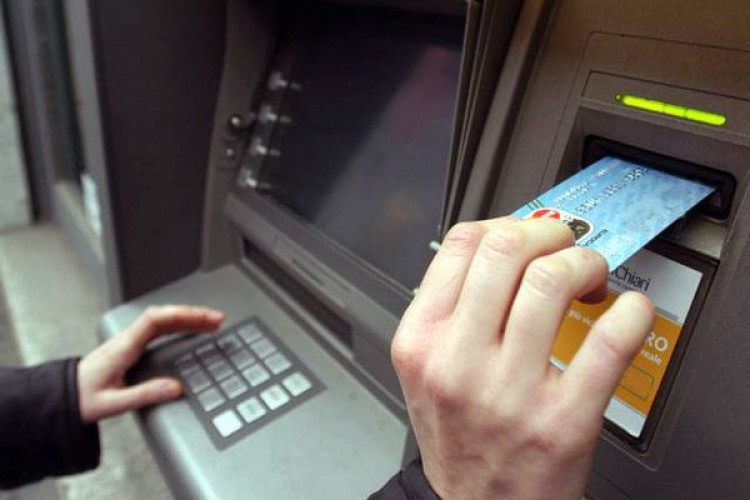
Security recommendations for payment card use

In order to prevent fraud, payment card holders are advised to activate transaction limit options. In the event of loss, theft or other suspicious situations, the cardholder should immediately inform the bank and request the card to be locked. Payment card support services are provided non-stop. Additionally, it is recommended to activate the SMS-notification service whereby the cardholder is immediately informed regarding transactions. The National Bank of Moldova issued these recommendations in order to increase payment card security.

The BNM recommends that the PIN, CVV2/CVC2/CID code or any other password related to the payment card be kept secret. If the person cannot memorize it and writes it down, the code must be kept safe, separate from the payment card. The PIN should be entered in a discreet manner when making payments at POS terminals or withdrawing cash from bank ATMs in order to avoid fraudulent reproduction and use by third parties.

It is recommended to change the PIN periodically and to avoid using the same combination for access to all payment instruments. In case of suspicion regarding unauthorized access by other persons, it is recommended to immediately contact the bank and change the PIN. Moreover, BNM recommends to set daily transaction limits for payment cards. According to BNM, the limit should represent the maximum value of transactions or a maximum number of transactions that can be performed on a daily or weekly basis or other period of time.

In the event of a payment card transaction failure, it is necessary to promptly check the account balance to which the payment card is attached and to carefully examine the received notifications. This can either be performed via web-banking, mobile-banking or other means made available by the issuing bank. The card must be kept under conditions that would exclude its deterioration, loss and theft or would compromise the data it holds. The card should not be entrusted to third parties.

As for the safe use of the payment card in the online environment, the BNM recommends checking the presence of 3D-Secure symbols (Mastercard SecureCode, VERIFIED by VISA, American Express SafeKey) on the e-commerce platforms. These are usually displayed at the bottom of the merchant’s webpage. It is also recommended to check whether the merchant’s website is secured by the presence of the SSL logo or its address starts with “https: //”, which indicates the encryption of the transmitted information.

The PIN should never be provided, as online transactions do not require it. Thus, no online retailer has the right to request its inclusion in a dedicated field on the e-commerce platform. It is advisable to avoid using the “data storage” option, which allows for future transactions without the need to enter the payment card details. Cardholders are advised to avoid using public Wi-Fi networks for online transactions, as they can be used to capture transmitted data.

The BNM recommends to avoid accessing suspicious links in emails, social networks, instant message transmission programs, especially in cases where personal data or card information is required. In the case of online transactions, it is recommended to use a virtual card, which only holds the amount required for the transaction. Also, it is advisable to keep confirmatory documents related to the performed operations until the final settlement of the amounts from the card account.


The show “Solar Line” is presented at the Iusty Art Gallery at 07:30 PM/.

The exhibition “Bessarabian Authors in the World” continues, inaugurated during the Diaspora Days 2026 /National Library of the Republic of Moldova /August 3-September 3/.

The exhibition “The Unknown Work of the Bessarabian Masters” continues /Constantin Brancusi Exhibition Center/ /July 30-August 16/.

The personal exhibition Untitled by the artist Konstantin Benkovich continues, organized by the National Art Museum of Moldova, in partnership with the ALT Foundation /MNAM /July 30-August 30/.

The immersive exhibition continues, inspired by the mythology and mystical folklore of the Republic of Moldova, “The Forest”, created by Milen Chelea /Plai Gallery / July 23-August 6/.

The exhibition “Scent of Warm Bread. Bread in the Iron Age” continues /National Museum of History of Moldova /July 22 – September 4/.

The exhibition “Urban Archeology and the Hidden Memory of Chisinau” continues /National Museum of History of Moldova /July 17-November 30/.

The exhibition “The Thread of Identity! The traditional Romanian costume in book illustrations made by plastic artists from the Republic of Moldova” continues /BNRM /June 25-August 15/.

0 FacebookTwitterPinterestEmail


Security recommendations for payment card use

In order to prevent fraud, payment card holders are advised to activate transaction limit options. In the event of loss, theft or other suspicious situations, the cardholder should immediately inform the bank and request the card to be locked. Payment card support services are provided non-stop. Additionally, it is recommended to activate the SMS-notification service whereby the cardholder is immediately informed regarding transactions. The National Bank of Moldova issued these recommendations in order to increase payment card security.

The BNM recommends that the PIN, CVV2/CVC2/CID code or any other password related to the payment card be kept secret. If the person cannot memorize it and writes it down, the code must be kept safe, separate from the payment card. The PIN should be entered in a discreet manner when making payments at POS terminals or withdrawing cash from bank ATMs in order to avoid fraudulent reproduction and use by third parties.

It is recommended to change the PIN periodically and to avoid using the same combination for access to all payment instruments. In case of suspicion regarding unauthorized access by other persons, it is recommended to immediately contact the bank and change the PIN. Moreover, BNM recommends to set daily transaction limits for payment cards. According to BNM, the limit should represent the maximum value of transactions or a maximum number of transactions that can be performed on a daily or weekly basis or other period of time.

In the event of a payment card transaction failure, it is necessary to promptly check the account balance to which the payment card is attached and to carefully examine the received notifications. This can either be performed via web-banking, mobile-banking or other means made available by the issuing bank. The card must be kept under conditions that would exclude its deterioration, loss and theft or would compromise the data it holds. The card should not be entrusted to third parties.

As for the safe use of the payment card in the online environment, the BNM recommends checking the presence of 3D-Secure symbols (Mastercard SecureCode, VERIFIED by VISA, American Express SafeKey) on the e-commerce platforms. These are usually displayed at the bottom of the merchant’s webpage. It is also recommended to check whether the merchant’s website is secured by the presence of the SSL logo or its address starts with “https: //”, which indicates the encryption of the transmitted information.

The PIN should never be provided, as online transactions do not require it. Thus, no online retailer has the right to request its inclusion in a dedicated field on the e-commerce platform. It is advisable to avoid using the “data storage” option, which allows for future transactions without the need to enter the payment card details. Cardholders are advised to avoid using public Wi-Fi networks for online transactions, as they can be used to capture transmitted data.

The BNM recommends to avoid accessing suspicious links in emails, social networks, instant message transmission programs, especially in cases where personal data or card information is required. In the case of online transactions, it is recommended to use a virtual card, which only holds the amount required for the transaction. Also, it is advisable to keep confirmatory documents related to the performed operations until the final settlement of the amounts from the card account.


The President of Ukraine, Volodymyr Zelenskyy, has appointed Rustem Umerov as the head of the Foreign Intelligence Service. The appointment decree was signed by the leader in Kiev, reports IPN.

Until this appointment, Rustem Umerov held the position of Secretary of the National Security and Defense Council of Ukraine. In his place, the former Minister of Interior, Igor Klimenko, has been appointed as the head of the Council.

Volodymyr Zelenskyy stated that Rustem Umerov will continue to coordinate the “Drone Deal” initiative. According to the Ukrainian president, the new role will allow him to continue managing cooperation in the field of defense and diplomacy, negotiations with the United States and other partners, as well as the negotiation process regarding the end of the war triggered by Russia against Ukraine.

Rustem Umerov was a deputy, head of the State Property Fund, Minister of Defense, and later Secretary of the National Security and Defense Council. In recent years, he has coordinated international negotiations on military support for Ukraine and led the Ukrainian delegation in talks with the United States and Russia on ending the war.

0 FacebookTwitterPinterestEmail


1 IANUARIE, 2025
1 IANUARIE, 2025