


Moldova faces multiple flaws in ensuring integrity at state level, study

The Republic of Moldova experiences multiple shortcomings in ensuring integrity at state level and this is due to the fact that the current legislation explains the political property-related reasons in too general terms, shows a study entitled “Sector of state-owned companies: corruption risks and necessary reforms” that was produced by the independent think tank “Expert-Grup” with the support of the National Endowment for Democracy (NED), IPN reports.

A shortcoming is also the fact that the specific expectations of state-owned companies haven’t been formulated. The institutions of the central public administration, which are empowered to work out policies, are directly involved in the management of state-owned companies. The quality of owner is not concentrated in one institution, being divided, and is held together with authorities of the central public administration. The boards consist exclusively of public functionaries who perceive the appointment to the board as a financial stimulus, study author Vitalie Rapcea stated in the presentation of the study.

“There are no procedures related to the method of selection, appointment, assessment and dismissal of members of the Administration Board. The boards do not include independent members and the current legislation does not ensure the independence of these boards. There is no direct connection between the remuneration of the manager and the long-term objectives. The operational freedom of the executive body of the state-owned companies is extremely limited, while the manager is named by the founder,” stated Vitalie Rapcea.

“Expert-Grup” executive director Adrian Lupușor said that after 30 years, the sector of state-owned companies remains encompassed by multiple obscure interests and problems. “The current government assumed a series of reforms that were also stipulated in the memorandum with the International Monetary Fund. We also saw the opinion of the European Commission that clearly says that the reform of the state-owned enterprises is one of the main conditions for opening EU accession negotiations,” stated Adrian Lupușor.

Minister of Economy Sergiu Gaibu said that a good reform of the state-owned enterprises is necessary and privatization is necessary indeed. There are companies that are fundamental for particular strategic aspects. For example, a pharmaceutical company had the capacity to store vaccines during the COVID-19 pandemic. The government is yet to learn a lot to ensure proper management of commercial organizations and public institutions. The privatization procedures should involve not only portfolio investors, but de also professional investors that know how to organize those sectors and that would bring know-how, modern technologies and functional mechanisms.

Tatiana Savva, vice director of the Public Property Agency, said that few reports with valid data about the situation of state-owned enterprises and joint stock companies existed the past 30 years. “We speak about privatization and the fact that the state is a bad manager of the public sector. Indeed, the private sector has more instruments and more freedom to manage goods, to bring value added. This does not yet mean that if there are good and well-paid managers in the state sector and these are interested in developing these enterprises, they do not achieve results. The glass factory sustained losses the last few years, but the new manager during only a year ensured profit and covered the losses. There are also less efficient state-owned enterprises,” stated Tatiana Savva.

Statistics show that the state-owned companies in 2020 contributed 15% to the GDP, a 6% decline over the last decade. In 2020, these companies employed 10.5% of all the salary earners of companies. The central public administration and the local public authorities are entitled to found state-run companies.
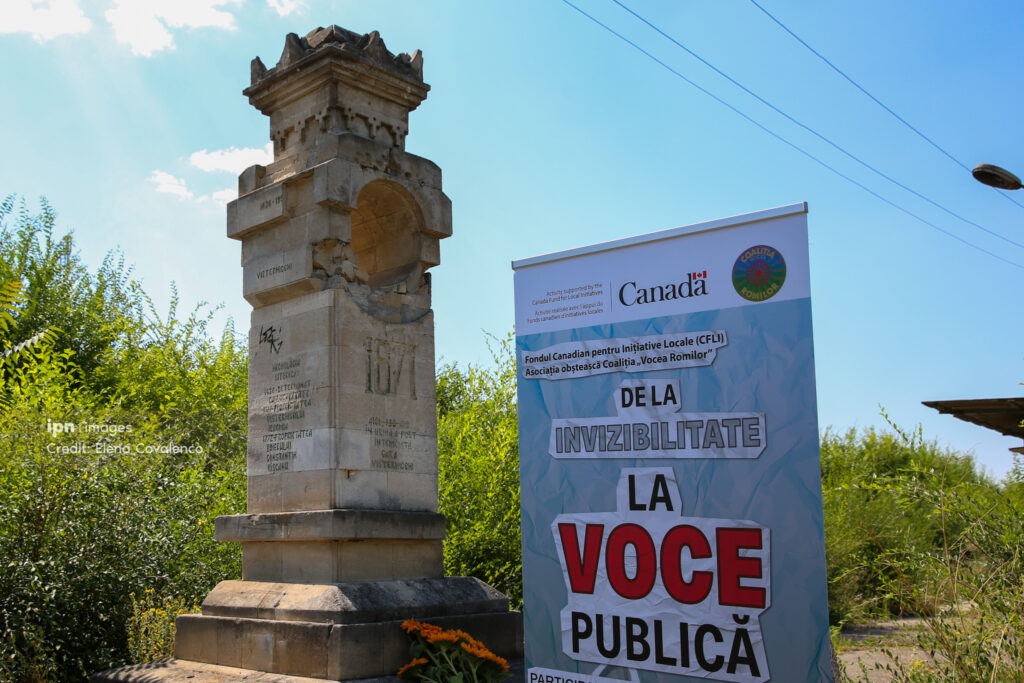
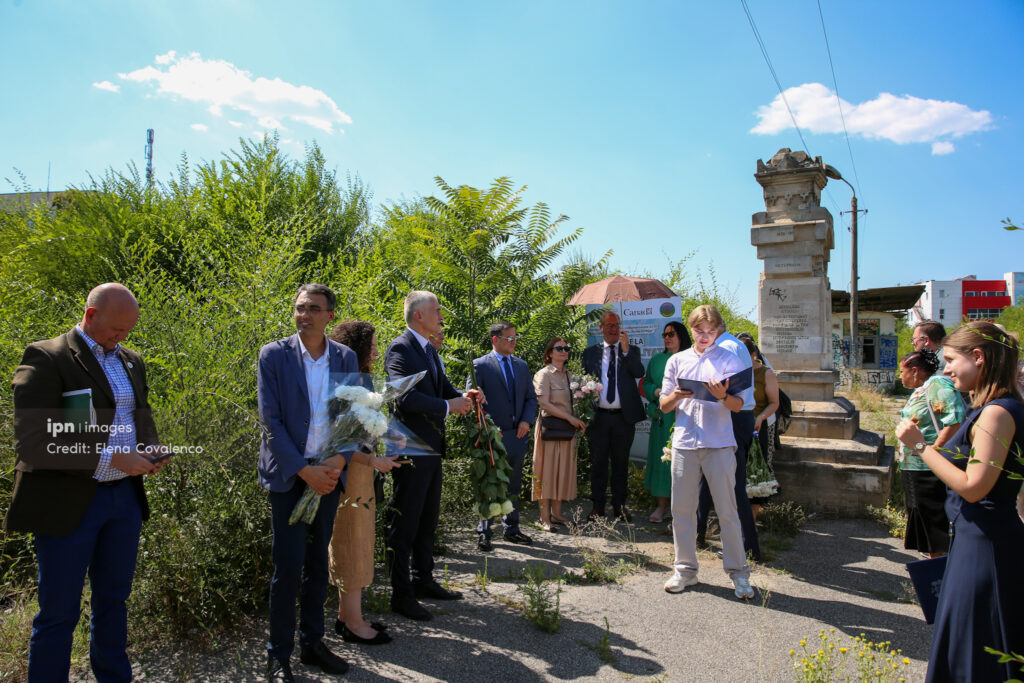


A commemorative plaque dedicated to the victims of the Holocaust against the Roma during the Second World War was unveiled on the territory of the Visterniceni Station in the city of Chisinau. The unveiling ceremony also included the laying of flowers in memory of the victims, in the context of the European Day of Remembrance for the victims of the Roma Holocaust, reports IPN.

The initiators of the project specified that the commemorative plaque is made in five languages – Romanian, Romani, Russian, English, and German – and represents a first step towards the arrangement of a memorial complex dedicated to the victims of the Roma Holocaust. They mentioned that, before the inauguration, symbolic elements placed near the plaque were vandalized and expressed their hope that the commemorative plaque will be respected and preserved.

According to the data presented at the event, between September 12 and 16, 1942, from Visterniceni Station, thousands of Roma, mostly women and children, were loaded into freight wagons and deported to camps in the Transnistrian region. During the period 1942-1944, approximately 25 thousand Roma were deported, and about 11 thousand died due to hunger, cold, diseases, and lack of medical assistance.

On the same day, the round table “The Memory of the Roma Holocaust – lessons for the present and future” took place, during which actions to promote the memory of the Roma Holocaust and combat discrimination were presented. Participants highlighted the role of education in preventing hate speech and intolerance.

The State Secretary of the Ministry of Education and Research, Valentina Olaru, stated that the new action plan for the years 2027-2030 will include measures to combat racism, anti-Semitism, anti-Roma discrimination, xenophobia, and other forms of intolerance. According to her, the explicit inclusion of the term “anti-Roma discrimination” reaffirms the state’s commitment to prevent discrimination and promote education based on respect for human rights.

0 FacebookTwitterPinterestEmail


Moldova faces multiple flaws in ensuring integrity at state level, study

The Republic of Moldova experiences multiple shortcomings in ensuring integrity at state level and this is due to the fact that the current legislation explains the political property-related reasons in too general terms, shows a study entitled “Sector of state-owned companies: corruption risks and necessary reforms” that was produced by the independent think tank “Expert-Grup” with the support of the National Endowment for Democracy (NED), IPN reports.

A shortcoming is also the fact that the specific expectations of state-owned companies haven’t been formulated. The institutions of the central public administration, which are empowered to work out policies, are directly involved in the management of state-owned companies. The quality of owner is not concentrated in one institution, being divided, and is held together with authorities of the central public administration. The boards consist exclusively of public functionaries who perceive the appointment to the board as a financial stimulus, study author Vitalie Rapcea stated in the presentation of the study.

“There are no procedures related to the method of selection, appointment, assessment and dismissal of members of the Administration Board. The boards do not include independent members and the current legislation does not ensure the independence of these boards. There is no direct connection between the remuneration of the manager and the long-term objectives. The operational freedom of the executive body of the state-owned companies is extremely limited, while the manager is named by the founder,” stated Vitalie Rapcea.

“Expert-Grup” executive director Adrian Lupușor said that after 30 years, the sector of state-owned companies remains encompassed by multiple obscure interests and problems. “The current government assumed a series of reforms that were also stipulated in the memorandum with the International Monetary Fund. We also saw the opinion of the European Commission that clearly says that the reform of the state-owned enterprises is one of the main conditions for opening EU accession negotiations,” stated Adrian Lupușor.

Minister of Economy Sergiu Gaibu said that a good reform of the state-owned enterprises is necessary and privatization is necessary indeed. There are companies that are fundamental for particular strategic aspects. For example, a pharmaceutical company had the capacity to store vaccines during the COVID-19 pandemic. The government is yet to learn a lot to ensure proper management of commercial organizations and public institutions. The privatization procedures should involve not only portfolio investors, but de also professional investors that know how to organize those sectors and that would bring know-how, modern technologies and functional mechanisms.

Tatiana Savva, vice director of the Public Property Agency, said that few reports with valid data about the situation of state-owned enterprises and joint stock companies existed the past 30 years. “We speak about privatization and the fact that the state is a bad manager of the public sector. Indeed, the private sector has more instruments and more freedom to manage goods, to bring value added. This does not yet mean that if there are good and well-paid managers in the state sector and these are interested in developing these enterprises, they do not achieve results. The glass factory sustained losses the last few years, but the new manager during only a year ensured profit and covered the losses. There are also less efficient state-owned enterprises,” stated Tatiana Savva.

Statistics show that the state-owned companies in 2020 contributed 15% to the GDP, a 6% decline over the last decade. In 2020, these companies employed 10.5% of all the salary earners of companies. The central public administration and the local public authorities are entitled to found state-run companies.


Oncology patients from the Anenii Noi and Soroca districts can undergo chemotherapy treatments in regional hospitals, without having to travel to Chisinau for each treatment session. The service is part of the expansion of the oncology program in the territory, reports IPN.

The Ministry of Health specifies that the measure aims to facilitate access to treatment and to reduce the time, costs, and effort involved in the repeated travels of patients and their families. Only chemotherapy treatments that can be safely administered will be provided in district hospitals.

The treatment indication and regimen will be established by the Multidisciplinary Oncology Council of the Oncology Institute, following the initial assessment of the patient and, if necessary, subsequent reassessments.

The program is already implemented in the district hospitals of Briceni, Cahul, Floresti, Orhei, Sangerei, and Stefan Voda. According to the Ministry of Health, between August 2025 and June 2026, in the six hospitals included in the pilot stage, 432 patients were treated, who were administered 597 chemotherapy treatments.

The Ministry mentions that the service will be gradually extended to other districts, depending on the capacity of medical institutions and the availability of trained staff.

0 FacebookTwitterPinterestEmail


1 IANUARIE, 2025
1 IANUARIE, 2025